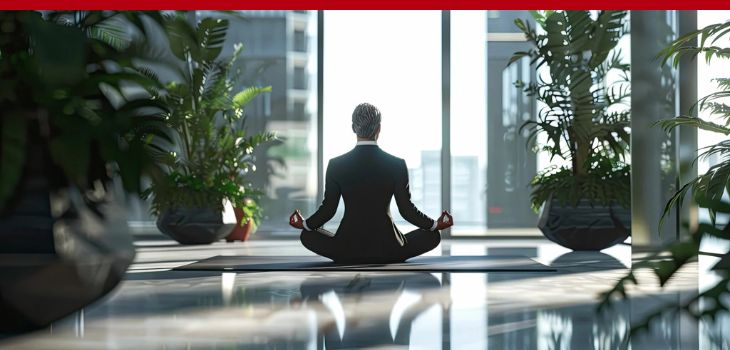
You know you’re doing all the “right” things—training, eating clean, pushing through the day—but somehow, your tank still feels empty. The real problem? It might not be your diet or your workouts. It could be your brain.
In this episode, Ted sits down with Emily Fletcher, founder of Ziva Meditation and one of the world’s leading experts on meditation for performance. Emily has taught Navy SEALs, Olympic athletes, and high-level executives how to rewire their brains, reduce stress, and unlock deeper recovery and mental clarity—without chanting, candles, or hours of sitting still.
They dive into the science of how stress affects your body, why most meditation methods fail, and how a simple daily practice can make you feel younger, sharper, and more alive.
If you’re tired of feeling tired and ready for a high-performance edge that doesn’t involve another supplement or stricter diet—this episode is for you. Listen now!
Today’s Guest:
Emily Fletcher
Emily Fletcher is a former Broadway performer turned meditation powerhouse. After a decade of performing in high-stress environments, Emily discovered meditation as the key to reclaiming her health and vitality. She left the stage, trained for three years in India, and went on to found Ziva Meditation—teaching over 50,000 people the Ziva Technique, a powerful blend of mindfulness, meditation, and manifesting. She’s the author of Stress Less, Accomplish More, host of the podcast Why Isn’t Everyone Doing This?, and creator of Ziva Magic, a transformative course that blends science-backed practices with somatic and energetic tools to help people manifest their dream life.
Connect to Emily Fletcher:
Website: Zivameditation.com
YouTube Chanel: Ziva Meditation
Facebook Group: Ziva Community
Instagram: @zivameditation
Podcast: Why Isn’t Everyone Doing This?
You’ll learn:
- Why meditation is critical for high-performers
- How stress is silently sabotaging your recovery and performance
- Why most people fail at meditation—and what to do instead
- The difference between mindfulness and meditation (and why it matters)
- How to “de-excite” your nervous system to build real resilience
- How meditation can remove years of stress from your body
- What it takes to rewire your brain for better sex, deeper sleep, and stronger focus
- And much more…
Related Episodes:
503: How Meditation Could Be The Missing Piece Of Your Weight Loss Puzzle with Simone Tai
Ted Talk 217: How Stress & Sleep Deprivation Can Sabotage Your Weight Loss Efforts (And What To Do About It)
Ted Talk 189: The Resilient Mindset: Strategies for Coping with Stress and Anxiety
Links Mentioned:
Connect with Ted on X, Instagram, Facebook, LinkedIn
READY TO TRANSFORM YOUR BODY AFTER 40?
Watch my Lean After 40 free masterclass to discover how successful men are losing 15-20 pounds and building lean muscle in just 12 weeks—without weight loss drugs, time-consuming workouts, or giving up their social lives.
Podcast Transcription: How to Use Meditation to Rewire Your Brain for Stress-Free Productivity with Emily Fletcher
Ted Ryce: Emily, welcome to the Legendary Life podcast.
Emily Fletcher: Hey, thanks for having me.
Ted Ryce: Absolutely. Emily, I'm so excited because you are here to talk about a powerful and ancient form of technology meditation, and it's just blowing up in the past, I guess, 10 years, and I was looking for an expert to come on and talk more What is mindfulness? What is meditation? Can we exercise and meditate? I found you and I had to have you on.
Emily Fletcher: Well, I'm so happy to be here. And, uh, yeah, those are all my favorite topics you just mentioned.
Ted Ryce: Absolutely. Well, in case someone doesn't know about meditation, the different types.
you, can you talk just briefly about what it is that you do, how you define what it is that you do?
Emily Fletcher: Sure. So I'm the founder of a company called Ziva Meditation, ZI va, which is actually a Sanskrit word that means bliss. And it's also a Hebrew name that means one who is radiant or kind, and since bliss, radiance, and kindness. Are very common side effects of meditation. I thought it'd be a good name. Plus I thought it would look good on a t-shirt, which it totally does.
And so that's the name of our company, Ziva Meditation. And basically what we do is we train people to be self-sufficient meditators. We give people a practice, we give them the keys to the car, we give them the driving instructions, we teach them how to drive the car, and then they don't need me anymore.
'cause the thing about meditation is that it's only as good as if you actually do it. Mm-hmm. You know, it doesn't matter how fancy your tool is, you have to. Pick up and use it. And the beautiful thing about meditation is that the benefits are cumulative. Meaning the longer you have a daily practice, the more benefit you're gonna get out of it.
And so I really like to give people the tools so they can do it on their own. And so in case your phone is dead or you don't have your finger symbols or your incense is out, or you don't have your cave, you know, then uh, you could actually meditate without them being dependent on technology or guidance.
I think we're basically all about meditation for better performance. I like to work with high performers. I teach, you know, CEOs and hedge fund managers and Tony Award winners and Oscar award winners and Grammy award winners and NBA players, and I really like working with people who have big event horizons and who are already changing the world because it's like if you teach one CEO to meditate, they bring you on to teach their whole company.
You teach one celebrity to meditate, they tweet about it and boom, 4 million people are now interested in it. It's an interesting time. To be in this space because like you said, it's been blowing up, it's been gradually blowing up over the past 10 years, but it's been really big the past two to three, and I think that's happening because neuroscience is catching up to what these Indian dudes have been saying for so many thousands of years.
Great point. Yeah, I mean, like, you don't have to meditate, but you can't write it off anymore, right? Like, you can't just be like, that's mumbo jumbo nonsense because we just have too much neuroscience out there proving that it's good for you. And, and the cool thing that's happening now with neuroimaging is that you can start to see not only that meditation is good for you, but actually how different styles of meditation are impacting the brain and body differently.
So I think that, you know, right now people are just, just starting to get on board of like, okay, I really need to get serious about meditation. Like I don't, I can't just. Say that I meditate. I can't just talk about meditating. I can't just be like, oh yeah, meditation's cool. I have to actually do it. But I think the next phase that we're gonna move into is gonna be like cross training for the brain to where I do this focused style of meditation and I do this, you know, surrendering style of meditation.
And we think about it just like we do cardio and lifting weight.
Ted Ryce: Wow. That is so interesting. I love that and I want to dive more into that, but I also want people to know how you got started. And I also wanna be upfront, I meditated 10 minutes before I got in to talk with you with my Headspace app. We're gonna be talking about the technology you prefer, the apps you prefer, and whatever.
Else you could maybe even direct us to with zebra meditation. But I'll be honest, I am a person who tends to like the adrenaline more than turning off the stress. I like to turn it on. I like coffee. I like lifting weights. I like martial arts. I like intense things, but I find like I can easily burn out.
But I have an easy time doing that, and meditation is harder for me. I, I have a 10 day program and it's taken me like three months.
Emily Fletcher: Could finally get through it. So how did, do you, do you wanna know why I think that's happening? Sure, of course. Okay. 'cause I, you're not alone, right? Like there's a lot of adrenaline junkies out there and there's a lot of people who really love their stress and actually, like their identity is based around it.
You know, they're like, I need my stress. Like, this is the thing that gives me my competitive edge. That's what my CEO clients say. And then when I teach, like my actor clients, they say, Emily, I need my stress. Like I need my. That my creativity comes from. And so I think a lot of us are terrified at who we will be without our stress because that that adrenaline and cortisol has been the thing that's been moving our ship forward for so long.
Like that has been the fuel source for so many of us for so long that we're a little scared that once that goes away, that we'll just be like chilling out on the couch all day. We'll be like, I've got everything I need right here. Why would I ever go outside? I'll just wallow around in my bliss and fulfillment all day.
But that is not the way it works. The style of meditation that I teach was actually designed for people with busy minds and busy lives. So it's actually designed to be integrated into your day. It's designed to make you better at your workout. It's designed to make you better at sex, better at your job, better at being a parent, not turning you into a monk that just.
Sits in a cave all day. And so one of the reasons why, and here's my hypothesis about why your 10 day program has taken you three months to get through, is because what you're doing is something that's adapted from a style of meditation that was actually originally made for monks. Mm. So if you think about it's Headspace and I'm, I love it.
I think it's beautiful. I think they've done a great job, and I think that they've really thrown the net a lot wider for meditation. But Andy was a monk, right? Like the founders of that company was a monk. And so he is teaching the style of meditation that was made for monks. Whereas what I teach, even though it's 6,000 years old, was actually designed for people like us.
And so I find that it's just more enjoyable to do. It makes sense for our brains. So you actually look forward to it versus resisting it. Does that make sense?
Ted Ryce: Yeah. And you know, it's not something I. Psychologically think of. In fact, I really enjoy it. It doesn't sedate me. It makes me feel good, but I still have this like, oh, I got some time.
I'm gonna go out even though it's 10 minutes. Yeah. Well, well listen, Emily, but thank you so much for explaining that because this is, it's pretty new to me, even though I've been learning about meditation for a long time, and I guess I've done it before in some of my martial arts classes, although I probably was not doing it correctly.
What got you started in this.
Emily Fletcher: Yeah, so I was actually on Broadway for about 10 years. I was singing and dancing and acting on Broadway. And my last show I was understudying three of the lead roles. I was in a chorus line, which is like the gold leotards with the kicking and cool. I mean, there's more to it than that, but that's what everyone knows when they think about a course line.
And so anyway, at the end of my, uh. Time there, I was basically understudying three of the lead roles, which means that you show up to the theater and you have no idea which character you're gonna play that night. Sometimes you start the show as one character and halfway through they switch you to a different character, or you're just chilling in your dressing room, doing your taxes.
And someone gets on a loud speaker and says, Emily Fletcher, we need you on stage. And I would start panicking, 'cause I wouldn't know which character I was gonna play, so I would just grab all three of my costumes, run down seven flights of stairs. Someone would throw me in a leotard, and I'm not kidding.
Sometimes I would be on stage before I knew which character I was. So I would look down and be like, well, there's no Val, so I guess I'm Val. And just into Tit and Ass, which is the name of her song. I was not a stripper. And so I started singing the six page song and. I was fine at it like I did it. But I was not good.
And there are some people who are good at this job. I am not one of them. And so it's really embarrassing to be standing on a Broadway stage with 2000 people looking at you in a leotard, singing a song and sucking at it and knowing that you're sucking at it. And then that night, I would be so amped up from it and so embarrassed that I wouldn't be able to sleep.
And then the next day I'd be exhausted, which would make my performance worse, which would make my stress higher. And then it just became this, this spiral. And it got so bad that I was, I had insomnia for about 18 months. I couldn't sleep. I was gray at 27 years old. I was getting injured, I was getting sick.
And so it was really confusing to me why I'm living my dream, like why I'm on Broadway doing the thing I'd wanted to do since I was seven. You know, like I had arrived, quote unquote, and I was miserable. And so thankfully this amazing woman was sitting next to me in the dressing room. She was understudying five of the lead roles, which is like, it's, it was such a hard job, I can't even say.
And this woman was nailing it. Like every song she sang was a celebration and every dance she danced was a celebration. And every bite of food this woman ate was a celebration. And I was like, alright lady, what do you know that I don't know. She said, I'll meditate. And I was like, come on, this is 10 years ago.
Right? So that was not the neuroscience then that there is now. So I didn't really believe her. So I just kept sucking at my job and going gray and having insomnia. And then finally it got so bad, I was so embarrassed that I said, you know what? I gotta try something. So I went along to this intro to meditation talk.
I liked what I heard, it made sense to me. So I signed up for this four day class, and on the first day of the first class, I was meditating. To be honest, I had no idea what that meant, but I was in a different state of consciousness than I had ever been in before, and I liked it. And then that night, I slept through the night for the first time in 18 months.
Wow. And I have every night since. And that was about 10 years ago. And then I stopped getting sick and then I stopped getting injured, and then I stopped going gray. And then I started enjoying my job again. And I was like, wait a minute. Why does everybody not do this? So I left Broadway in 2009. I went to India.
I went to a place called Rakesh, India, which is in the foothills of the Himalayas. And I, it became a three year training process to teach this. What I have is, uh, it's not like a 200 hour yoga certification. It's a little bit more like a PhD in the Vedas. So it was thousands of hours of apprenticing. It was thousands of hours of meditation.
It was transcribing books and sanscript by hand. It was intensive and beautiful. And then once I graduated. I opened up Ziva and then I've been teaching full-time now for about two and a half years, and it's been the single best thing I've ever done. You know, people ask me if I miss being on Broadway, if I miss performing, and the answer is decidedly no.
I feel like now I get to use my lifetime of performance training, but now I get to help other people. And selfishly why I do what I do is that I get to wake up to emails from people every single day saying, Emily, you know, my insomnia is gone. My IBS is gone. My PTSD is gone. I was able to get off my meds.
I wrote that book, I started this company and so selfishly, like that's what I get off on. Like, I like knowing that I get to share this tool with people, you know, it has nothing to do with me. Their transformation has zero to do with me. I can't transform anyone. If I could, I would, I'm not controlling, but I can't.
And so, but it is nice to know that I can help to be a facilitator, to give people this tool so that they can basically upgrade their own hard drive. You know, they can start to defrag their own brain computer. So that they can start to act in accordance with what they already know to be true.
Ted Ryce: Emily, that's just an incredible story.
Incredible.
Emily Fletcher: Thank you.
Ted Ryce: And going to India and, and spending thousands of hours and, and being an apprentice and actually being with the people who do this and learning how to do it. Then coming back and starting this company and your story from becoming that Broadway person, having these, these terrible issues and then.
Overcoming all that through this ancient form of technology. Just blown away by that story, and I'm even ex more excited to dive into this and something that we talked about before we started recording was that how so many people focus on, like you probably were on stage when you were, how you said, just messing up and not doing a good job and stressing about it, then not sleeping, then the stress got worse.
Although I've never danced on Broadway, I relate to that and I think a lot of people listening relate to that as well. And I made the shift where I started to understand after, you know, I shared some of the tragedies I've been through with you, I started to understand like I need to stop talking about things.
I need to stop analyzing things. I need to stop. The victimhood. I need to take control of my physiology because it's these bad moods, this bad feeling that is bringing me down. And you, well, you just said something so super important. You said this meditation, it upgrades your hardware, meaning your brain.
Can you talk a little bit about how people kind of try to intellectualize their issues and. What you can tell us about why maybe this other approach is better and how meditation fits into that.
Emily Fletcher: Yeah, a hundred percent. This is something I think is, it is so, so important because you know, the wellness industry is obviously, you know, taking off.
It's like a multi-billion dollar industry and the thing that I'm seeing more and more is that people are actually profiting from and actually capitalizing on something that I would call the be happy when syndrome and actually preying on people's. Issues. And basically what I'm saying is that like there's, there's a big, big self-help industry right now and like, you know, we're both part of it.
Sure. And but the, but the trick is I think that people wanna start to refine the way that they look at things and start to look at it is like, is this a software upgrade or is this a hardware upgrade? Now I actually think that there's room for both. And the way I would describe this is like software upgrade would be information, operating systems, self-help books, even this podcast, anytime you listen to a talk or, um, basically any knowledge that is a framework or an operating system for how to live your life.
Even religion could be viewed as an operating system. Now what I see with like what you say, the physiology and the nervous system, this to me is the hardware, your actual brain, your actual body, your nervous system. This is like the computer. Okay? And all the self-help books, all the knowledge. These are the operating systems.
And what most of us have is infinite access to knowledge. Like we're living in the information age right now. Absolutely. If you don't have. As much information as you want. You know, spend one night online, listen to a few podcasts, go on Wikipedia, read any of the ancient philosophers books that you can read for free.
You know, and you can get the software like there's no lack of information. But the trick is people are trying to run all this fancy new software on an old, stressed out computer. So imagine trying to take like Mac Os. Snow leopard, mountain lion Mavericks, or whatever the fanciest one is from today. And imagine trying to run that operating system on an old, stressed out PC from 1995.
It literally will not work. There's not even a place to put the, you know, the jump drive in. And that's what most of us are doing. We're trying to run this very elegant, advanced. Software because, you know, technology is, is speeding up and, and the people who are tapped in are, are really moving the information age forward.
And yet we're trying to implement these philosophies on old, stressed out nervous systems. And this is why I'm so passionate about meditation because what it does is that it actually goes in and it defrags your computer. When you practice the silent meditation that I teach, you're giving your body rest.
That's five times deeper than sleep. And this is not an insignificant point because as you know, I'm sure you've talked about, you know, sleep hacking on here. You know, sleep is really important, but so is meditation because you're giving your body a different kind of rest when you meditate than you do when you sleep.
And one of the ways that we know you're getting that deep rest is that your metabolic rate decreases, which is the rate with which the body consumes oxygen. Your heart rate slows and your body temperature cools, which is the thing that's giving you that deep rest, which is very restful, and then you're more awake in your waking state.
So that's part of the story. Meditation's giving you deep rest so you can be more awake in your waking state. Super important. The other piece of this defragging the hardware puzzle. That when in the style of meditation that I teach, you're given a mantra. And a mantra is not like a slogan. Okay? It's not like I'm a strong angry woman or like, I want a million dollars.
Those aren't mantras, those are slogans. The mantras that we use at Ziva, they're called beja mantras, and they're meaningless primordial sounds, and it actually is the sound quality of the mantra that actually de excites the nervous system. Interesting. So think about this for a second. When you de excite something, you create order.
- Hmm. And when you create order in your body, in your cells, then the lifetime of accumulated stress that we all have in our nervous system can start to leave the building. So basically, every time a dog has ever barked in your face, or anytime you've lost a loved one or gone through a divorce or lost a company, or lost a job.
Or even been around a siren, you know, anytime we've had a stressor, it leaves a little imprint in our cellular memory. And some people are now saying, actually, in your DNA, like, if you, you know, are on board with this whole epigenetics phenomenon, that it's every stress you have is actually, you know, rewriting your genetic code as well.
And so it, it matters, you know, and it's not about being a victim. It's not about getting stuck in all the hery poos that have happened to me in the past. It's about knowing. This stress is stored in your cellular memory and that there are ways to, to alleviate it. So what we do in this silent meditation is that you utilize this mantra.
The mantra induces that deep rest, and it also de excites the nervous system. And just like if you were to de excite the molecules in a drop of water, it would freeze and it would create a snowflake that creates. Beautiful sacred geometric patterns. Same thing happens in our cellular body. So you utilize the sound quality, it creates orders.
So something that people could look it up is, uh, the, the science of somatics, uh, somatics is basically the, the science of sound. And there are YouTube videos where you can watch this, where they'll have like a sheet of metal and they'll put a blob of sand on it, and then they'll play the metal with like a violin bow at a certain frequency, and then that blob of sand will take these beautiful, sacred geometric patterns.
Well, the mantras are doing the same thing with our body. It's creating order. In the nervous system so that you can actually relieve the lifetime of stresses. And then it's basically has the effect of defragging the hardware so that you can run whatever software you have. Does that make sense?
Ted Ryce: Yeah, it does.
And it, and it's basically that it's right, it's stress that we've had over the years starts to affect the quality of how we perform, how our brain specifically performs and. As we start to accumulate more, we start to perform worse, and then we try to look for books or podcasts, which many people are listening to this podcast right now for that very reason, and that they have to keep coming back, which is great.
I, I'm glad people keep listening, but they may not be getting for all the time that they spend on those software upgrades. They're not seeing change and, and you're saying it's because of this mismatch you're trying to upgrade with this, this fancy new El Capitan is, I think the new one for match. Okay.
Thank you. Right. It's like, okay, you just went from, from animals to, I don't know. Anyway, but, but it's not working because our hardware is all messed up. And the style of meditation that you teach is. Helps with this specifically. And you said other types don't. Yeah. So many, so many places to go. What, let me ask you about this.
What else can you say just for the people who are more geeky like me about the neuroscience? 'cause you, you talked a bit about that. Can you talk a little bit about what we know? About how the brain changes with the style of meditation that you do versus the other, I guess, mindfulness types of training or the monk based meditation.
Emily Fletcher: Sure, so, so yeah. There's thousands of different styles of meditation. Most of them fall into one of two categories. This is an oversimplification, but I think just for the purposes of of this, I think it's easy to lump things under two umbrellas, which basically you have mindfulness. Which is like a directed, focused style of meditation where you're really focusing on something, you're concentrating on something.
And when most of us hear the word meditation, what we're actually thinking of is mindfulness. We think of a guided visualization, or we think of like looking at a flame or a walking meditation or visualizing your chakras or visualizing a waterfall. And then all that stuff is beautiful, but it's keeping you in your left brain, it's keeping you in the realm of thinking, and you're basically training that focused attention part of the brain.
Whereas what I teach at Ziva, it's more about the deep rest that you're getting. It's more about that de excitation, and I like to call it like the surrendering style of meditation or the lazy man's meditation.
Ted Ryce: I like that. I'm lazy. Yeah. We like as much as I exercise, I'm la I'm,
Emily Fletcher: yeah. We do all this work so that we can chill, you know what I mean?
Like we do all this work so that we can actually have the path of least resistance. So in the style of meditation that I teach, it's not about focusing, it's actually about, you know, like I said earlier, inducing that deep rest and letting go. It's like you're pulling the lens of your awareness back and starting to train the simultaneity of consciousness.
'cause if you think about the really high performers, you know, the, the CEOs, the amazing stay at home moms. The hedge fund managers, it's not their ability to multitask, it's their ability to hold many things in one awareness at the same time effortlessly. Mm. And that happens as a byproduct of your nervous system not being stressed.
So I'll talk more about the stress and what that's doing to our productivity in a moment. But just to stay on this, so we've got thousands of different styles of meditation. Most of them fall under one of two categories, mindfulness, which is a directed, focused style of meditation, which is actually derivative of a style that was made for monks.
Right. And then we've got this other style, this lazy man's meditation, which even though it's 6,000 years old, was made for people like us, people with busy minds and busy lives, people who have jobs and kids and shit to do. And so this was news to me when I first started learning about this. 'cause I thought, well, whatever monks are doing, it must be so much more advanced.
They must be like vibrating or levitating or something. But it's actually the other way around. If you have a job and kids and you live in society, then you have less time in your day with which to meditate. So you actually wanna do a practice that's gonna go in and really clean house so that you can deliver the most amazing version of you to your job, to your family.
And because you have less time with which to meditate. And so that's why when you do it, when you do the style that I teach, you're basically inducing a verifiable fourth state of consciousness. So it's different than waking, it's different than sleeping, and it's different than dreaming and in verifiable state of consciousness.
All like all, if you were to hook your brain up to an EEG machine, like a electro and topography hardware, then like there's eight classic points on the left brain. Eight classic points on the right and in waking, sleeping and dreaming states of consciousness. The right and left brains are functioning separately from each other, but in this fourth state of consciousness that you access with Ziva meditation, all 16 leads of EEG rise and fall in unison, which is a pretty cool party trick.
But like, who cares? And well, everyone should, and here's why. The left brain is in charge of the past and the future. It's in charge of critical thought, analytical, thought math, balancing our checkbooks. And most of us have been taking our left brain to the gym for a very long time. Oh, yeah. Now our, our right brain is in charge of the, right now, it's in charge of present moment awareness, intuition, creativity, creative problem solving, music connectedness.
And if you actually look at a human brain, it splits right down the middle. 50 50, and I don't think that nature makes mistakes. I don't think that nature would've given us 50 50 if it wanted us to use 90 10. And so what we're up to at Ziva is that we're taking this right brain to the gym. And the beautiful byproduct of that is that as you start to utilize a more even balance of right brain, left brain, not only do you increase your neuroplasticity, which is.
You know, basically the brain's ability to change itself. You're also increasing neurogenesis, which is the brain's ability to generate new cells, basically. Yeah, yeah, sure. Um, and then the other cool thing that happens is that over time of this right brain, left brain activity, you're strengthening something called the corpus callosum.
And the corpus callosum is the thin white strip that connects the right and left hemispheres of the brain. It actually is the only thing that connects them. We've known for a long time that meditators have thicker corpus callosums than non-meditators, but we weren't able to prove if it was causal or correlated.
But now we know that the longer you meditate, the thicker this corpus callosum becomes, which again, I think is a pretty cool party trick that's sitting quietly in a chair could make you have a thicker corpus callosum. Absolutely. But why on earth? But I want a fat one of those, and again, I think everybody should, and here's why.
Your corpus callone, quite literally is the bridge between your critical mind and your creative mind. It is the piece that connects your past and your future with your present moment. It is the thing that allows you to be in the middle of a high demand situation and simultaneously able to come up with creative problem solving ideas.
So like, you know, if your boss comes to you and is like, we have this travesty going on, we need a solution by tomorrow. And you just like freak out and shut down. Mm-hmm. Or like if your significant other, you know, you start talking to your significant other and it gets pretty heated. You start fighting a little bit and it gets pretty intense, and then eventually you shut down and retreat to the bedroom and about two hours later, once you calm down, you start coming up with all these hilarious, witty comebacks and you're like, why?
Why couldn't I have thought of that in the moment? Now, my hypothesis here is that the thicker your corpus callosum is, the easier it is for you to come up with all those creative, witty comebacks in the moment when it's go time interesting. And that's why I like working with high performers because nobody cares how good your presentation is the night before.
Nobody cares how funny your comebacks are two hours after the fight. It matters how well you perform when it's go time, and that's what the style of meditation allows you to do.
Ted Ryce: Wow, that is so interesting. I'm like dying to experience it now, and what you said was very interesting and I, I just want to.
Point it out. So with the mindfulness, it's like, focus on your breath, pay attention to the sounds, visualize the waterfall. And with what you teach, it's make this sound and it's the sound that calms your brain down. We're not talking about. Thinking, we're not using words or symbolism, we're just creating the sound.
And that has this effect that causes your brain to change and create new neurons. We've got a pretty educated crowd here. I've had a couple of neuroscientists on, and it increases the connection between the right and left brain via the the corpus callosum and strengthens that. And don't women have a naturally larger corpus callosum.
Emily Fletcher: I do think that is true, and I'll, I'll tell you a funny story. On my first date with my now husband, I thought it was a date. He did not think it was a date. And we got into a full blown fight over Eckert Tolle's, the power of now. Okay? And, and at the end of it, I was like, I will never date this person. But the fight that we got into was a, there's a passage in the book where Eckerd says that women are closer to enlightenment than men.
My husband was just thought that was total crap. And he had lived in this like wellness center in Thailand and he took this woman's copy of the Power of Now and he threw it into the ocean and he basically, the point he was making, this is back in the day when everyone was quoting Eckhart all the time, said, you know, it's a great quote too.
Yeah, it is a great book. And, but he, he threw it in the ocean and he said, now what do you think? He was basically just challenging her to think for herself. You know, cut too many years later, were married. But I think that the point that Eckhart was making is that, you know, yes, women do have this naturally, or I guess in like they're born with thicker corpus callosum than men.
But I think that that just like men have faster twitch muscle fibers than women, that doesn't mean that every man is stronger than every woman. So it's just, it's basically like, what are you born with? Just go to a CrossFit
Ted Ryce: gym.
Emily Fletcher: Yeah, exactly.
Ted Ryce: Yeah. No, so, so thanks for sharing that. Very, very funny story and glad that he was able to, to win you back and, uh, it's a good story. So very cool. We've talked about why it's so hot, why everybody should be interested in this. We've talked about. The science behind meditation, how should we get started on it?
Because right now, probably a lot of people, including myself, I'm like, I've tried the guided stuff. That's all I've tried. How can we get, you said it's the the lazy way to meditate, to I'm fascinated. Where can we get started and how should we get started with this type of meditation?
Emily Fletcher: Yeah. So I'd say if you can find a teacher that lives in your hometown, you know, to learn face-to-face, that's definitely the best way to learn.
There's nothing that can take the place of in-person training. There's a whole phenomenon of mirror neurons that happens when you're actually in the room with someone. And, and when people come to New York or LA and they take my full, you know, four days even meditation class, there's a full like initiation ceremony and I give them their own mantra and it's, it's quite beautiful.
And there's a also a group dynamic and a group learning that happens. And they're pretty intimate. They're like, you know, 20 to 30 people and we split it into two sessions. So that's my favorite way for people to learn is, you know, they can come to New York or la and that you could just learn@zivameditation.com.
If you can't make it to New York or la, you could check and see if there's a Vedic meditation teacher in your hometown. Vedic
Ted Ryce: so, so, Vedic. Vedic, sorry.
Emily Fletcher: Yeah. V-E-D-I-C who comes from the Sanskrit word veda, which means knowledge. And that's really, you know, this sort of like, uh, this lazy man style of meditation or a self-induced transcendence style of meditation.
And then if people don't have access to a teacher face-to-face, this is why we actually created the world's first online meditation training. And I'm really proud of it. It's called Ziva Mind and that people can find it. Just ziva mind.com. And that is, um, we made that because so many of my students in person were saying, Emily, this has changed my life.
I want my cousin to learn. I want my aunt to learn. But they didn't have access to a teacher. And so Ziva mind is not Vedic meditation. It's a little bit gentler than that, but, but it is changing people's lives. You know, people are saying, my insomnia is gone, my anxiety is gone. And, you know, they're, they're reporting so many of the benefits.
It's just a little bit gentler because I'm not there in the room with them face to face. So the ways even mind works is that it's eight days of video training. It's about. 30 minutes a day of video training and each day builds upon the previous day. So it's a full matriculation. And by the time you graduate from that eight days, you have a practice to take with you for life.
You'll be self-sufficient. You won't need me anymore. And then you graduate with a 15 minute, twice a day practice. You would do it in the morning before breakfast. And then you would do it again like somewhere mid-afternoon, like when you would want that coffee or that nap or that chocolate. Then you would seal away to like a coat closet or your car and you do a 15 minute meditation.
And then people are amazed that the few hours after that second meditation, the most creative, the most productive and the most efficient of their whole day. And then their sleep gets better. So they need less of it. And the serendipity and synchronicity increases. And so. I'm really proud of this community and we have thousands of meditators all around the globe, and we have an online community where people can get support.
There is also a bit of mindfulness training in is a part of Ziva Mind, so people get four guided visualizations sort of to supplement it, and that's to help with travel, insomnia, stress release, and performance. So yeah, so that's Diva mind.
Ted Ryce: Very cool. So right ziva meditation.com and look for Ziva Mind. On your website, on zeba meditation.com.
Yeah, I am really curious to try it after trying the guided visualization and, uh, I've heard about mantras. I've never done that before. And it's, uh, what is that transcendental meditation or is that something different?
Emily Fletcher: That, that's something different. So, so that is like a, that's a brand, right? Like so TM is a brand and they are, it's like a multinational corporation and they've taught millions of people to meditate, which is awesome, right?
Uh, and they've done a lot of good in the world, but I'm not affiliated with that particular organization.
Ted Ryce: It's not even a style meditation. That's a business, a company. Okay. It's
Emily Fletcher: the name of a company. Okay. But I think it's so popular and it was one of the first things that came to the West that people sort of think of it like, you know how we'll say like, hand me a.
A Kleenex. Mm. Right. You know, but like they really mean hand me a tissue. But because Kleenex and tissue are so synonymous Sure. We sort of think that Kleenex is the tissue when actually it's the brand. So that's a little bit what's happening. Or like, I would like a Coke when really you want a soda. I. But Coke is a, is a version of that.
You know, it's a fun whole family of people and, and the reality is all roads need lead to Rome. You know what I mean? Like, and this goes from mindfulness and what I teach. I really think that if you, whatever practice you do, if you love it and you find a teacher that you respect and you trust, you know it's going to bring you to the most amazing version of you, which is great.
But I do think that it's important that people take the time. To figure out what style was made for them and do they actually trust and respect this teacher and do they have a connection with them? Because at Ziva, like once you take the course with me, if you want, like you're in for life, you can come to group meditations every Sunday at six.
We do. You can sit on the course as many times as you want to. So it really can be a lifelong relationship if you want it to be. Mm-hmm. Some people just want the technique and they wanna piece out, which is fine too. But I do think it's great to get some guidance from someone that you trust and respect.
Yeah.
Ted Ryce: Yeah, I'm a coach too, so even though you, you don't call your, your meditation teacher, you, you help people. You're teacher, I believe there's nothing like that one-on-one. I've got some CEO clients who could benefit from this. Maybe we'll talk a little bit after I. I would love to see if I could get something together here with, with a handful of them to, to see what we could do.
Emily Fletcher: Yeah, absolutely. I love teaching CEOs. I love, and I do private courses if people, you know, get, you know, 15 people or so together. I travel around the world and I teach at companies. I've taught at Google, Harvard, Harvard Business School, Viacom, Coca-Cola, like I, I teach at corporations a lot as well, sweet Green, and so I'm, I'm happy to do that if the demand and the interest is there.
Ted Ryce: Yeah, well I got one of my clients, John, very cool guy. He's, uh, the CEO of restoration one. I'm probably, it's a, like a disaster. They come in and clean things up. But, uh, anyway, I got him onto meditating. I said, Hey man, you gotta try this. And he tried it because he trusts me. There's a lot of woo as you know, around meditation, but much less so now because of, like you said, all the neuroscience.
And he was like, whoa. And I think he actually does it more than I do and uh, nice. Yeah, maybe we could connect there. We gotta talk about that. So. Okay. Is there anything else that we haven't covered that you think is just ultra important for people to know about meditation and what you do in particular?
Emily Fletcher: Actually, yeah. There's one point that I think really, it really helped me when I first started learning about meditation, and it was basically why my body was reacting to stress in the way that it did. Because to be honest, I was judging myself as a failure. Like when I was so stressed, I was like, you know, listening to Eckhart Toe's, the power of now and fetal position under my dressing room table, like having panic attacks and I was judging myself.
I thought that I was failing and I felt like, well, I must not believe in myself, or I must think that I'm a bad actress or something. And that wasn't true at all. It was actually just my body trying to protect me from the stress. And so when we get stressed, the body launches involuntarily into a fight or flight stress reaction.
And the trick is, if you are in that, if you're in that fight or flight, you're not in the driver's seat anymore. And that's what I mean about the software hardware. You can read as many self-help books as you want. But if you are in fight or flight mode, your body, your meat suit is basically fighting 10 million years of evolution to stay alive.
Hmm. And so if you're in fight or flight, your brain is now programmed to fight, feed on, or the other f word, anything it can find to survive. And, and so you don't really have a choice as to how you want to handle those demands if your body is stressed. And so the thing that really was revelatory to me about this is when I understood why the human body reacts to stress in the way that it does.
And if we wanna understand that we have to cut back in time, like 10,000 years since they were hunting and gathering in the woods. Sure. And you know, I'm sure your audience knows this, but I just feel like it's, it's a really clear way of, of learning it. So like, let's say Tiger jumps out at you, your body's gonna launch into a series of chemical reactions.
Your digestion will flood with acid to shut down digestion because you need all hands on deck to fight or flee this tiger. That same acid then seeps onto your skin so you don't taste very good if you get bitten into by the tiger. And that same acid is the thing that prematurely ages the body when we're stressed.
That's why every president looks at a hundred years older after four years. So then the bladder and bowels will evacuate, so we can be light on our feet if we, you know, get attacked by this tiger, our immune system goes to the back burner because who cares if you're gonna get cancer, if you're about to be killed by a tiger?
Your adrenaline levels increase, your cortisol levels increase, which as you know, create infertility, erectile dysfunction, belly fat, balding, and so basically this series of chemical reactions is good for you. If your demands are saber tooth tigers.
Ted Ryce: Right,
Emily Fletcher: but if it's, you know, because it's
Ted Ryce: over fast, right?
Either you're gonna flee and you're gonna live or you're over, and no more worries at all.
Emily Fletcher: Exactly, and back in the day if it actually was a tiger, then we'd get to outrun that tiger or we'd get to fight that tiger. So we would actually burn off that adrenaline and cortisol in the moment. And PS that is why people say exercise is my meditation.
Oh, because they say I, well I got to go to the gym and I got to get on the treadmill and outrun that tiger. Where I got to get in the boxing ring and fight that tiger and exercise is great for you, but exercise will only be able to burn off the new stress that you're picking up today. If you wanna get rid of the dog that barked in your face when you were 10, or your parents divorced when you were 12, then you actually have to give your body rest.
You have to de excite the nervous system, and that's what meditation does. And so it goes in and it gets rid of that adrenaline and cortisol, but in a couple of days it gets rid of it. And then you simultaneously start flooding the brain with dopamine and serotonin, which are bliss chemicals. So they not only feel amazing, but they're also alkaline in nature.
So they can actually help to reverse body age and you know, make you feel better, which brings you back to your original point.
Ted Ryce: I love that and thanks for bringing that up. There's this idea keeps coming up, this mismatch between our genes. And our environment, especially how our environments have changed and our genes haven't as much except, you know, you mentioned epigenetics and the methylation and all that, but we're still very much hunter-gatherers in this society, and we don't get to fight tigers or run from them.
We get stuck in traffic. We have work deadlines, we have fights with our, our partners have kids that are crazy. Yeah. And, and it just. This is a powerful technology that should be in addition to exercise, not an either or. And I've, that was a breakthrough for me. Like I think also there are a lot of people who are addicted to exercise and like you said, they're burning it off all the time and that can be bad for your body.
I know because I've done it and I've worked with a lot of people who've done that and wear out their joints, get injured. It's a form of mental fitness is the way I look at it. It can help you develop your mental six pack, which is just as important. So you don't have to like, oh my God, life is crazy. I gotta go work out, even though I just worked out yesterday or even, or this morning, or whatever it is.
Like, no, just chill. Do this thing that's easy on your body and has this restorative. Effect on your brain and brings down your nervous system excitation. I love it. So Emily, this has been such an enlightening and amazing interview. Your story, your understanding of meditation, just incredible. And I feel like I just got a, a mini seminar.
On understanding meditation so much better.
Thank you so much, Emily, for sharing your time, your knowledge, your wisdom, and helping people step up their lives with this, this powerful and ancient technology that is needed more than ever in our modern world.
Sign up to receive email updates
Enter your name and email address below and I'll send you periodic updates about the podcast.