Financial insecurity affects more than just your bank account—it influences stress, health decisions, and the freedom to live life on your own terms.
In this episode, Ted sits down with land investing expert Mark Podolsky to discuss a little-known approach to building passive income through raw land. Mark explains how land investors buy undervalued property, sell it with owner financing, and generate recurring cash flow without the typical headaches of traditional real estate.
Along the way, they explore the mindset shifts required to build wealth, the parallels between financial discipline and physical health, and why creating financial freedom can unlock more time, purpose, and control over your life. Listen now to learn how this unconventional strategy works.
Today’s Guest
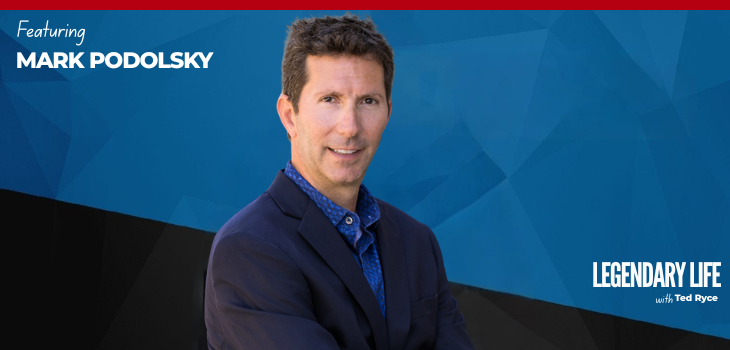
Mark Podolsky
Mark Podolsky—also known as “The Land Geek”—is a raw land investor, entrepreneur, and author. Since 2001, he has completed more than 5,500 land deals through his company Frontier Equity Properties. Mark is also the author of Dirt Rich, where he teaches investors how to build passive income by buying and selling raw land without dealing with tenants, rehabs, or property management.
Connect to Mark Podolsky:
Website: TheLandGeek.com
X: @TheLandGeek
You’ll learn:
- How raw land investing works and why it avoids many challenges of traditional real estate
- The simple model investors use to turn small land deals into recurring monthly cash flow
- Why financial freedom can reduce stress and improve long-term health decisions
- The mindset shifts required to build wealth and escape financial insecurity
Related Episodes:
Happy Money: The Japanese Art of Making Peace with Your Money with Ken Honda
Links Mentioned:
Connect with Ted on X, Instagram, Facebook, LinkedIn
Books mentioned:
The Second Mountain: The Quest for a Moral Life
Want More Strategies Like This?
Join Unstoppable After 40, my weekly newsletter for high-performing men who want to get leaner, stronger, and more energized after 40.
Each Friday, I share practical insights on fat loss, longevity, performance, and mindset — without hype or fluff — so you can build a body that matches your success in about 2 hours per week.
 Join the Newsletter
Podcast Transcription: How Passive Income Can Reduce Stress and Help You Live a Healthier Life with Mark Podolsky
Ted Ryce: Mark Podolsky, thanks so much for coming on the show today. Really excited to dive in to what you do and what you teach. And I love the whole idea, like this is about building an antidote to financial insecurity. 'cause as we were just discussing before I clicked, record, financial insecurity is one of the biggest drivers of poor health and the decisions that lead to poor health. So thanks for coming on.
Mark Podolsky: Ted, thanks for having me. Uh, big fan of, of the pod, and, um, super excited to, to share with the listeners the process in the machine to solve not just their money problems, but their time problems as well. And, uh, and look, protein's not cheap, so
Ted Ryce: there you go.
Mark Podolsky: It all goes together.
Ted Ryce: Yeah, so funny you say that because not only is protein not cheap, but I was having a conversation with a one-on-one client and we were talking about this supplement called ULI a, which has some really promising research on it for improving strength and endurance. It's like 125 bucks a month. And even though he's quite successful, he is got like $5 million plane, you know, and he, he's done well for himself.
He, but, but he was like, whoa. Right? Like, who can afford, you gotta be rich to afford this stuff, right? So it, it is true, you know, and let, let's even, you know, kick it off like this. Let's talk about what you teach because your. Your, um, your motto, if you will, if I've gotten this right, is that financial freedom leads to time freedom, which leads to life freedom.
Can you talk about that?
Mark Podolsky: Yeah, absolutely. And really my mission is very simple, is I wanna help along, help everyone along the economic spectrum, create enough passive income where it exceeds their fixed expenses. And they're working 'cause they want to, not because they have to, and then become self actual, self-actualize.
Like what does he really wanna do in life? And so often people are just grinding away, grinding away, and they're exhausted trying to, to get where they want to get. And they never, they never fulfill their highest purpose. And so. You know what I could do, Ted, if it, if it's helpful, is just kind of walk you through the model.
Is that, is that a good starting spot? Good, good starting place.
Ted Ryce: Let's do it.
Mark Podolsky: Okay. Let's use you as a case study. So Ted, where do you live?
Ted Ryce: Uh, I, I've been nomadic since 2018, so I'm currently in the capital of Brazil, Brazilia Brazil, but only until Sunday.
Mark Podolsky: Okay, amazing. Well, let's assume that you own. Five acres of raw land where I live in Arizona.
And let's say that you haven't paid your property taxes, you owe like $200 in back taxes. And so essentially you're advertising two important things to me. Number one, you have no emotional attachment to the raw land. You're nomadic, you're all over the country and over the world. And number two, you're distressed financially in some weird way.
'cause we don't pay for things like our property taxes. We don't value them in the same way. As a result, kind of treasurer keeps sending you notices saying, Ted, if you don't pay your property taxes, you're gonna lose your property to a tax deed or a tax lien investor. So all I'm gonna do is look at the comparable sales on your five acre parcel, the last 12 to 18 months.
I'm gonna take the lowest comparable sale. Let's just use easy math. Let's say it's $10,000. I'm gonna divide by four, and that's gonna get me what Warren Buffet would call. A 300% margin of safety. So I'm gonna send you an actual offer of $2,500. Now you're in Brazil, so you accept it. Why? Because for you, $2,500 is better than nothing In reality, three to 5% of people are gonna accept my quote unquote top dollar offer.
Now that you've accepted it, I have to go through due diligence or in-depth research. I have to confirm you still own the property. I have to make sure that the back taxes are only $200. I wanna make sure there's been no breaks in the chain of title, no liens or encumbrances. And so I outsource this to my team in Jamaica, they're connected to an American title company and it costs about $11.
Now, if I was investing, say more than $5,000, I wouldn't take any title risk and I would close traditionally through an American title company. But this is only $2,500, so we'll assume everything checks out. I send you a check for $2,300. I send a treasurer a check for $200. I own it free and clear. And now Ted, I'm gonna sell it in 30 days or less.
I'm gonna make a cashflow like a rental home. So I have a built in best buyer. Do you know who it is?
Ted Ryce: Tell me.
Mark Podolsky: It's the neighbors. The neighbors. So I'm gonna send out neighbor letters saying, Hey, here's your opportunity. Protect your privacy, protect your views, know your neighbor. Oftentimes the neighbors will buy.
Now if they pass, I'll go to my buyer's list. The buyer's list passes. I'll go to a little website you may have heard of. It's called Meta. Or Facebook buy sell groups in the marketplace. There's only 2 billion people on there. And then I would go to the Lands land.com, land moto.com, land farm.com, land watch.com, land flip.com, land hub.com.
These are platforms where people buy and sell raw land, but the secret is in the pricing. So all I'm gonna ask for is a $2,500 down payment, and then I'll make it a car payment, let's say 2 99 a month. 9% interest for the next 60 months. So I'm gonna get my money out on the down payment. I could go six to 10 months out and now I'm getting 2 99 a month and 9% interest for the next 60 months head.
No renters, no rehabs, no renovations, no rodents. And because I'm not dealing with a tenant, I'm exempt from Dodd-Frank Re on the State Act. Oh, this owner's real estate legislation. So then it's a simple game. Can I create enough land notes where my passive income exceeds my fixed expenses? Now I can get supplements, I can get protein, I can get that personal trainer that I've been saving up for, and I can do all the things that really lack in my health without having that little, you know, person on my shoulder saying, oh, well, you know, the money, the money, no.
The money's irrelevant. Now, now I can really focus on the most important things to me in my life, which is most likely gonna be my health.
Ted Ryce: Yeah. I, I love that. It, it seems simple. I, I will say this though, for someone like myself and, and probably many people who, let's say that, yeah, I'm good at what I do. I run my business well.
Um, we're profitable. But when it comes to. Investing in the stock market or what you're talking about, real estate, it's something that I have very little knowledge about, very little understanding of. And the way you put it, it makes it sound very simple, but at the same time, especially when you use the term like passive income, right?
Because 'cause there is w work involved w the work that you just said, right? Finding the place, making the offer. Taking care of everything. So, so it, but what you're saying is I don't have to grind it out. Can you talk a little bit, like, uh, well, let's start, let's even rewind. What pushed you into this?
What's the story behind getting you into land investing?
Mark Podolsky: Yeah. Yeah. I mean, if we rewind the tape, we go to 2000. I was a miserable, micromanaged, 45 minute commute to work and back investment banker specializing in mergers and acquisitions with private equity groups. And Ted, it got so bad for me, I wouldn't get the Sunday blues.
Anticipating Monday coming around. I'd get the Friday blues, anticipating the weekend going by really fast and having to be back at work on Monday. So my firm hires this guy and he is telling me that as a side hustle, he's going to tax deed auctions. He's buying up raw land, pennies on the dollar. He's flipping it online and he's making a 300% return on his money.
And Ted, I'm looking at companies all day long. A great company great. Has 15% EBITDA margins or free cash flow Average companies, 10%. I'm looking at companies all day long, less than 10%, so of course I don't believe them, and I've got three grand saved up for car repairs. I go to New Mexico with him. I do exactly what he tells me to do.
I buy 10 half acre parcels and average price of $300 each. I flipped them online and they all sell for an average price of $1,200 each. 300% it worked. So I took all that money, went to another auction. This is in Arizona where I live, and remember it's 2000. There's no one in the room. I'm buying lots in acreage for nothing.
I sell all that land and I made over $90,000 cash. So I go to my wife, I said, honey, she's pregnant. I'm gonna quit my job and become a full-time land investor. And she said, absolutely not. So I said, okay, okay. Okay. So it took 18 months for the land investing income to exceed the investment banking income, and then I quit.
I've been doing it full-time ever since. I've done over 6,500 land deals and counting, and I absolutely love it. To get to your point before the, the, the great question was, well, this doesn't sound passive and this sounds simple. Well, number one, it is a simple model, but I think if I'm listening to give you realistic expectations, it's like anything else in life, it ain't easy.
Getting in shape is simple, but it ain't easy. Anything in life worth doing is not easy. This is not get rich quick. This is get wealthy slow. So that's number one. Number two, passive income is a great marketing term, but let's be honest, nothing is passive. If I inherited a billion dollars tomorrow, I'd have to go out and find a financial manager.
I'd have to be efficient with the, with the money. I mean, there's just no way I'd pay taxes. All these things, there's no, there's nothing passive. So when I say passive, it's a one time build. It's a one time doing something, and then. The machine works for you over and over and over again. Now, the way that we work this, and the way that I teach the model is that we don't wanna create another job for ourselves.
So we wanna use three levers. The first level lever is other people's time. So we would hire inexpensive virtual assistants. Then we wanna use software and automation, and then that's gonna get us 90% automated. And then once we've got this down and we have a track record of success, we pull the third lever for scale, which is other people's money.
Ted Ryce: Yeah. Thanks for saying all that because I had a hunch there was more to it, although, you know, I, I know you weren't trying to be disingenuous by using that term, but, uh, because I've watched your content and everything before we ask you to come on the show, but it's so important and thanks for also saying like anything that there's a lot of things that are simple, but they're not easy.
And when it comes to. What you're teaching this, this type of land investing, what are the, what? Like I could tell you what the, the tough parts are with getting in shape. It's, you want to go, you, you want to eat something because you've had a bad day or have some drinks, but. You, you need to control yourself or you don't feel like going to the gym and hitting your workout because you just, you know, you haven't quite built the habit, but you have to do it or else nothing.
You know, you have to do the, the actions. Um, you have to learn about health and nutrition in a way you haven't before. And more experientially, right. You it, because so many people are like, oh, uh, broccoli has sulforaphane. Creatine, you know, that people can, people will know trivia and can have great in-depth conversations about things, especially if you listen to Andrew Huberman or you know, Peter Attia, the Rhonda Patrick.
Great, great, uh, podcasters. But you, you look at their body or. You talk to 'em about what their biometrics are, their health metrics. It's like, yeah, there's a big disconnect between what you know and what you're actually doing and the results that you're getting. What would you say is like that for what you teach?
Mark Podolsky: I hate to say it, but is exactly the same thing. Same thing.
Ted Ryce: Interesting
Mark Podolsky: in just another niche. So if I'm starting a new workout, it's hard. I'm gonna be in a lot of pain. I'm gonna get Doms. I don't have the habit number one. I'm not, I'm not in shape, so it's gonna be really hard while I'm doing it. So I have to embrace the suck.
At some point, it might be 30, 60, 90 days later, I'll start seeing some improvement, but it's not gonna be the first week. It's not gonna be the first two weeks. It's going to suck. It's the same thing with starting any new endeavor and the land business is no different. It is going to suck. You are going to be uncomfortable learning something new, especially as an adult because you think, well, if I'm good at this, I should be good at this.
Why do you think that? It's like, you know, I go out and play golf and I'm duffing it and I think, oh, I should be able to hit this ball. No, I don't even know the proper mechanics yet. It just looks simple. It's like, well, if this person could do it, I should be able to do it. You have to get educated. You have to do the thing you wanna do, and you have to do it long enough and you have to feel uncomfortable, not long enough to get results.
It's like kind of like building a bridge and so often how many times Ted do you see people where they're building their bridge of health? They're doing it one brick at a time, one brick at a time, one brick at a time. And then all of a sudden they go and they hear another podcast and they're like, oh wait, screw it.
There's an easier way. I'm gonna go do this thing. And they never get to the other side of it. And so it's the same thing with this land business or any, any business in general. If you stick with something long enough to get competence on a long enough timescale. Everyone gets paid, but so often people don't stick with anything long enough to get to the other side and build their bridge and get the results they want, and it's just, that's.
What makes things difficult in life, and I think there's a guy, Gregor j Jersey or something, he's famous, like easy choices, hard life, hard choices, easy life. And it's, it's literally that simple.
Ted Ryce: Yeah, I, I love that quote. And I actually was interviewed on someone else's podcast and I said something similar, right?
Uh, it's like, if you want an easy life, try to give yourself an easy life. It ends up becoming very hard and we have to expose ourselves to challenge both sometimes physically and certainly in this like psychologically to grow as a person. I would love to hear like some of the people that you've helped, what are some of the transitions or, or.
More importantly, the transformations may be the shift in mindset or even identity that you saw, what, what people had to overcome to be better with money.
Mark Podolsky: Yeah. I just, I just got a message this morning from Brian Larke. He's a, he's a former pastor, and he sent this to me and he wrote, Hey Mark, I wanna just give you an update on how things are going in my business lately, I'm still plugging away at it and have a fairly complete team in place.
Now it's just January. Uh, 13th in this month has already been my best in the business so far, with $122,000 in revenue so far. This month in this revenue is a 10 acre property. I bought in Colorado for $4,300 and just got a wire transfer today after selling it for $51,000 cash. Passive note income is $21,000 a month, and pretty much all this is based on what I learned in the LAN model while adding a few extra twists of my own.
Anyway, just wanted to once again tell you thank you for your input into my life and business and sharing the dream. Hope you're doing well.
Ted Ryce: Is that someone who read your book or took your course? So
Mark Podolsky: yeah, he found, he, yeah, he, he started with the book and then he went into our coaching program. He just followed the recipe, no business background.
He's a former pastor and he's living his best life now. He is solved his money problems, he solved his time problems, and, and that's really, you know, the transformation that we're looking for is, and, you know, our, our mission is, uh, like our mission. Our mission and our vision is creating freedom through purpose, joy, and financial peace.
So. Once your passive income exceeds your fixed expenses for our clients, they're really gonna be able to work on their highest purpose. It's gonna be joyful for them. Life's gonna be joyful, and then they're gonna have financial piece, the antidote to financial insecurity, and that's all we want. That's the transformation, that's the outcome that we, we focus on getting for all our clients.
Ted Ryce: Have you ever seen people who are afraid of, of success? I used to not believe that existed, and then I started seeing some people who, it just seemed like they, I think there's something very. Very, let's say I, I don't wanna say comforting, but it gives certainty to know like, oh, this is my whole struggle is like financial, oh man, gotta pay the bills.
Gotta, okay, gotta pay these bills. Gotta make this happen. Gotta grind it out. Gotta Right. And then. I feel like some people, this wasn't me, thankfully. Uh, I, I wanted to get, I was in a bad place financially after, you know, a, a family tragedy and some other things and some bad choices, but, but I've seen other people where I'm like, if you have to, if you end up solving this financial problem.
You're gonna have to, you're gonna remove that and the thing that's left over, maybe it's your relationships, maybe it's the lack of a relationship. Maybe it's your health, right? Like you're justifying putting off your health, for example. Like, I can't focus on my health or weight loss and I don't give a shit what my blood work says.
I've gotta, I've gotta make this happen. I've gotta pay these bills and put the, you know, take care of these kids. Or Have you ever seen that? What are your thoughts?
Mark Podolsky: Yeah, I mean, I think again, it's so parallel. Transformation is transformation and there is a price to be paid. So using the fitness analogy, if I'm, if my five best friends that I'm hanging out with.
Don't eat clean, don't work out. They spend their weekends watching Netflix, and here I am working out every day eating clean. We're hanging out, they're ordering pizza. I'm getting a salad with protein. At some point, the relationship is going to be redefined because I'm growing past them as a human. And it's the same thing where we want homeostasis, we want comfort.
These are uncomfortable things. These are hard things. It's so easy to eat the pizza. It's much harder to say, no, I'm setting a boundary. I'm not eating pizza. I'm eating a salad of a chicken. And, and so to do that consistently, and if you have everyone in your life undermining you unconsciously, either you are gonna fail or you are going to move on from that group and you're gonna five, there are five people you're gonna hang out with now.
Are gonna be growth people. They're gonna be rooting for you. They are not gonna order the pizza. They're gonna know we're ordering shrimp cocktail, we're throwing out the cocktail sauce, we're putting lemon on it, and we're eating vegetables, and we're getting our protein in first. And then we're gonna go hike, and then we're gonna talk about how we're growing our businesses and what we're doing to grow in our life.
And we're gonna talk about what we're doing to, to improve our relationships. And we're growing as people now. We're not watching Netflix. Maybe we're reading a book about some other thing in our life that is gonna help us grow. And so at some point you will outgrow those people and you, it's like a video game.
You move up to that next level. It's a harder level uncomfortable, but that's life. And so you have to choose your heart if you wanna grow. If you don't wanna grow, you wanna stay at base camp, you wanna be comfortable, then no judgment, you just are not going to, to get the things in life that you want to get, whether it's a fit body, a calm mind, a house full of love, all these things are earned, you're not gonna get it.
Ted Ryce: Yeah, I, I like how you went there and talked about the people who we spend time with. I think it's very underappreciated, and I'll give a personal example. When, when I, me and my business partner, we've been in a ton of different, uh, business coaching programs, and I don't want to not be in one to be honest, right, because it, it is just not, it's just not my area of expertise.
I've learned a lot, I'm much better at business than before. But I'm still very much learning. You know, if you've ever seen, have you ever seen the people who are really like, whoa, man, A for effort? Probably, you know, C results though, you know. And I say that because every time we get into a group and we're hearing people like we may have thought, oh, making this amount of money a month is like, it's a lot.
And then I remember someone telling me like a million dollars a year for a business. It's a really small business. It's a really small business. Making a million dollars a year and hearing that shifted everything. For me, and it was just like, I'm thinking way too small and far too often to, uh, your, to your point, it's like the reason why we think small, it might be because of the way we grew up, but certainly, um, you know, the people that we hang out with.
Do you talk, what, what do you I would love to hear like. This is what I, where I wanna take this mark if you're cool with it. And right now I should say Mark's done a great thing. He's also offering his book here. It's called Dirt Rich. How One Ambitiously Lazy Geek Created Passive Income and Real Estate Without Renters Renovations and Rehabs.
So he gives you. The book, all you have to do is pay for shipping. And that link will be on the show notes for this podcast. I'll make sure at the end of the show, uh, I'll give the specifics. But, uh, you can, he's gonna give you this book and you can start to get into and learn about his strategies, what he's talking about, the Lean Geek method.
But I would love to hear like, when. You in inside your book, in in your coaching program? Like what kind of shifts do you coach people on beyond just teaching them the mechanics of your system?
Mark Podolsky: So we we're gonna teach them how to build a business essentially. So it's not, this system can be applied to any business, but I just think that the land business happens to be the best business.
For a variety of reasons, but you can take these skills that we teach and you can apply it really to any business. And so that is the Trojan horse, is we don't want to have you build another job for yourself. We want you to build a business, and so we're going to have systems and processes and automation.
Built in so that you're really becoming the CEO of your business. And I talk about it in dirt Rich and my other book, dirt Rich too, how to Scale Land Business as well. And Dirt rich too could be applied to lots of different businesses. I just like talking about a land business. So that's, that's really what we teach.
But from a mindset perspective, we really help people get out their own way. And that's where. Group coaching comes in, the one-on-one coaching in the community, because now you're surrounded by like-minded people who are all growing, who all have this big why bigger than themselves.
Ted Ryce: Yeah. From one coach to another.
Right? It's like, what, what would you say? Why is coaching so necessary? And you're, I mean, you know, I have my own answer, but why, why is it so necessary?
Mark Podolsky: I, I'll tell you a story. So first of all, I've had mentors and coaches my whole life. It's been the greatest ROI on anything I've done. And if I don't pay, I won't pay attention.
It's just the, the way it is. So true. So, so anyways, I joined this high end mastermind group and it's, um, they have a speaker come in. I won't say his name. You probably know, you know him. He's probably, you know, relatively famous in, in fitness areas. He is like, oh, 10 minutes a day with these bands and you're gonna get tremendous results.
You know, weightlifting is a waste of time. And I'm like, oh, this sounds great. My buddy's doing it. So I order this thing and I start doing it for like two years and I think, oh, I'm, you know, I'm not going up in bands. Um, you know, it's hard. The 10 minutes are hard. But, and I'm doing a lot of hiking and walking and so, you know, my weight's fine, staying fine.
And um, and I'm not real intentional. I'm not tracking what I'm eating. I'm not tracking my protein. I'm just living my life last two years. So my doctor's like, you know, mark, you, you should get a DEXA scan. So I go, I get a DEXA scan and I am thin fat, essentially.
Ted Ryce: Mm. What was your body Fat range and visceral fat.
Do you remember?
Mark Podolsky: Yeah, not good. I was like a B minus. Not good at all. And um, and I, you know, I do all these things. I take the supplements, I've got a sleep aid, I dial in my sleep. I'm doing all the things I think I should be doing right, like I'm listening to Andrew Huberman as well, and all these, you know, all the things.
So as soon as I get the DEXA scan, I'm like, that's it. What do I do? I go out and hire a personal trainer three days a week, hit workout, and all of a sudden, a month later, I'm tracking my food. Tracking everything and I'm getting results. So I'll do my DEXA scan, uh, in a few more months again. But I can tell you right now it's, it's night and day.
And you know, my friends are like, oh, what are you paying this money for? I'm like, I'm not paying for the workout. I'm paying for the last rep. That's what I'm paying for. 'cause even when he turns around, he's like, okay, I'm gonna go do something. You do this on your own. I never work out as hard when he's right there pushing me.
That's what we do as coaches. We believe in you more than you Believe in yourself. We know what you're capable of. 'cause you won't do it unless we tell you No, you can do it, you'll do it. But we need that other person there to push us and show us what's capable and left to our own devices. We just wanna do what's more comfortable, what's easy.
My trainer's like 95% of the gyms are entertainment. If you watch people work out, you're socializing. You know, they're not, they're not doing their best on every rep. They're not going to total failure. They're not doing the thing that gets you results. And so it's better than nothing. But when you have a coach and you're paying, you work out 10 times harder.
It's the same thing in business. When you go into a coaching program for, for your business and our land business, you will do what we tell you to do even when it's uncomfortable because you made that investment in yourself and you're not gonna fail.
Ted Ryce: Yeah, you know it, it's so funny, right? You hear that over and over.
It's about the accountability. It's about the accountability. But if we're honest, the way most people are wired, like I'm at the point in my business where if you showed me a strategy that worked, uh, and I didn't need to pay for it, I would do it. But it never ends up being that way, right? You always have to.
Uh, you, you just, you know, anyway, so the point is like,
Mark Podolsky: well, you're paying either way. That's the truth. You're paying either way. You're either paying with your time.
Ted Ryce: Yep.
Mark Podolsky: And learning through mistakes. Or you go to an expert who's already made all the mistakes and you just smart cut it. So you're gonna pay either way.
There's no, there's no not, there's no free lunch here.
Ted Ryce: No free lunch. So true.
Mark Podolsky: There no one, no one's riding for free. I wish we could do it, but yeah. You're and I, two years of being outta sheep. I thought I, I hacked it. There's no free lunch.
Ted Ryce: Yeah, and thanks for saying that too, man. I mean, it, it just is what it is, right?
Like you, you either pay with your time and with your, I would add to that frustration making mistakes and then having, and, and the lack of certainty about whether what you're doing is the right thing or not. And, uh, that's why, I mean, that's why I'm in business coaching right now. It's like, uh, is this the right thing?
I don't know. If you give me a client to get 'em in shape, I know exactly what to do. I've been doing this so long, it's just I, I have to calm myself down when I'm talking to someone and they're telling me what they think the problem is. Like I already know the problem. I already. Know what to do. I have the whole plan in my head.
It took me seconds to think of not because you know, it, it just so many repetitions, right? So anyway, that, that's food for thought for. If you're listening, you're always paying. There is no free lunch. You pay with your time, with the mistakes, with the frustration, the lack of certainty. Or you're paying experts to guide the process, man, and I think about, I, I would love to hear, you know, I don't want to turn this into like a, a pitch about coaching, but man, I've, the reason I turned to coaching in business, I, I got coaching.
I, I'm a, got my Brazilian, uh, jiujitsu black belt last year. But when I first started, I sucked at Brazilian Juujitsu. I was athletic, I was strong. But I was just not good at it. It's very technical and complicated. And so I started paying for private lessons and I ended up winning con, you know, I was not, not a world champion or, or whatever, but like, I'm pretty good, but it wasn't because of my natural, my natural talent.
I, I, I was not good at it, and I wasn't good at business either. I, I was even worse at business. Right. And it, and I don't, I'm not trying to be like, uh. I'm not trying to be modest about it either. It's just, it just didn't click. And I think for some people there are certain things, like to go back to what you said before, oh, I'm good in this thing.
Why am I not good in this other thing? It's like you can't, that I feel like I've been very unsuccessful in my life starting, starting out and I learned, I find experts read books. Get better. If I'm not getting better, I, I go deeper. I invest more. I figure out who, who I need to learn from, but I feel like there's some people, mark.
They're just, maybe they were just great at something. Maybe they started practicing law or medicine or whatever it is, and they're just amazing at it. And then all of a sudden they feel like they should be able to be great at other things. In fact, some of my clients say. They're very successful. I, I work with, you know, financially very successful people, right?
And, uh, they say, I feel like a failure in other areas because I don't have this thing with my health. And I was like, right. And it's like, well, it, it, it's too, that's like saying I feel, I feel like a fail even though I'm like a top NBA player. Right with, I don't know, whatever the medal is for the NBI, like I don't watch basketball, but, but because I'm not good at football, like I'm a loser.
And can you, have you seen that too, like when you say getting help, you help people get out of their own way? What are the things that are in the way?
Mark Podolsky: Well, a lot of it is scarcity mentality. You know, we have so many emotions bundled up when it comes to money, and we've been so conditioned. In so many different ways with our family, and oftentimes those, those scripts that we inherited aren't even ours.
We don't even question them. And so when you have to go and you say, okay, this is what I want, well, then you're gonna have to do those things again that are outside your comfort zone. Because I might say, Hey, look, you're, you know, you might need to borrow money to make that acquisition, to get that return.
Oh, I don't do debt. Like, no, you don't do debt when it comes to buying a television. That's, or, or an appreciating asset when it comes to an appreciating asset, that's good debt. And this is why, and let me walk you through it and let me show you. You know, the best companies on their balance sheet, they have debt to grow.
This is what you have to do. And so we push them. Outside their comfort zone to do the thing that they have to do to get what they want. If you want this outcome, you're going to have to pay some type of, of uncomfortable price, and it's, it's hard. And so again, I'd say that 90% of life is mental. 10% of it is how to, and I think that goes with fitness.
I think that goes with your, your relationships. I think that goes with. You're, if you wanna make a lot of money, it's, it's all mental. And the truth is, and I know it's cliche, but I think it was Henry Ford, whether you think you can or you think you can't, you are right. And so we are gonna help you in a way that, you know, we believe in you probably more than you believe in yourself.
And that's, that's what we do. We hope you get out of your own way. Yeah. So you're gonna have to be uncomfortable either way when you do something that. And so when I say get out of your own way, I'm gonna push you through your comfort zone, and so I'm gonna walk you through it. I'm gonna hold your hand through it and, and keep you calm and, and breathe that confidence and breathe that certainty in the same way my coach knows I can do that last rep, my brain says I can't, but he knows.
Yeah, you're not fatigued yet. Do it. You have to do it. And I do it, and we'll do the same thing right. If you're afraid of debt, no, you're gonna go out and you're gonna get debt. 'cause this deal is gonna make you 1200%. So if you don't do the deal, I'm gonna do the deal. You want me to do the deal? I'll take it like, no, no, no.
I'll do the deal. Great. Now we have a new problem to solve. How are we gonna get the money? Where are we gonna get the money? No problem. Here's how we're gonna do it. And so we just take people step by step through this, this transformative process so that they create that passive income, exceeds their fixed expenses, and they can go and live their best lives.
Ted Ryce: Love it. And you said something really important about money scripts. Can you talk about what money scripts are and maybe give some of the most common ones that you've seen in your coaching business?
Mark Podolsky: Yeah, I mean, I mean, can talk about myself. I, I grew up with a mom that didn't cook. My parents were very frugal and so I have the kind of family that's like, you know, everybody doesn't grow on trees.
So as a kid I knew. You don't order anything above this price, and we don't order appetizers. We don't order dessert, and we certainly don't order a drink. So even to this day, you and I go out for dinner, Ted, and the server comes by, what do you wanna drink? Just water and like, and go, oh, you're drinking enough water.
You're like, you might have a drink, you might have do this or that. I'm like, no, no, no. I'll lie to you and say, no, no. That's for health reasons. It's not for health reasons. I grew up this way. I'm more comfortable. Not spending the 2 39 for a drink or whatever it is. Right. I quit drinking alcohol, but when I was drinking alcohol, I, I would drink at home.
I didn't, I didn't wanna spend the money 'cause that's how I grew up. And I remember my son, he's after his basketball practice and we're going to the In-N-Out Burger. It's like, I'm starving dad. We're going in out Burger. I'm like, what do you want now? She's like, I want two hamburgers, two orders of fries and a shake.
And I'm doing the math. And this is like years ago. This is before, you know, McDonald's was like 12 bucks or whatever. So this is like a $16 in out burger should be like $8. And I'm doing the math. I'm like, absolutely not. I'm like, you get one burger, one order of fries and a water, $8, that's reasonable to me.
And he's hungry. He is like, no, no, no. I'm hungry. I'm not gonna waste. I'm like, no, no, no. This is what we're doing. So he goes home and of course he's mad and I'm mad. And you know, the story I'm telling myself is this kid's entitled. But the truth is, is that he wasn't, he was just hungry. And I was upset 'cause I couldn't ask my dad for that.
And I was projecting that anger onto him and I was putting the money ahead of the relationship and my wife looks at me, she's like, is that extra $8 really worth the, your son being mad at you? And it, and it was true. I mean, my stuff was getting in the way of the relationship. And so today I over order.
And I went the other way because I never want, I want that abundance mentality. I want everyone to be with me to know it's about being together. It's not about the food. It's not about the money. And there's plenty. We live in an abundant world, but I had to fight and scrap my way to this, this mentality. I had to break the scripts and they still come up.
I still have to have that awareness and I still run on autopilot from time to time. I have to watch it and then what I do, I have to repair. It's hard. Sucks.
Ted Ryce: Yeah. Thanks for sharing that. And I think a lot of people can relate with that. Example where you're starting to put the money ahead of the relationship, that's your wife made such a a, an important observation there.
And it's something where if nobody points that out to you, you may not ask yourself that question. 'cause you won't look at it like that. You'll look at No, I'm being financially responsible. But, and, and you can make that argument and it's not untrue. Right. But yeah. I, I'll give you a a a funny example too.
Just, uh, um, to give, you know, a very different example. I had a client, and this is, uh, very wealthy client, had a Ferrari collection. One of the Ferrari was, he bought for like 6 million bucks. 'cause it was like from 1969 and it appreciated 8 million. And the reason why I build it up like this is because. He tried to talk me down for 10 bucks, one personal training session, and I'm like, dude is the, I, I didn't say it to him 'cause I didn't have that relationship and I was in, you know, in my twenties.
But I was just like, man, I don't wanna work with you. Like I'm, I do not like you as a human being right now. Right. That 10 bucks. Is important for me. It's not even that. It isn't, it's not. I wasn't crushing it then. Right. And, um, and I, I was still like making my way and it's like, it's such an important point, you know, where you have to ask yourself, are you making these?
Are you making these choices? And uh, I even saw him not to throw him completely under the bus. 'cause because I, I, I do like, uh, the guy in a way, but we, we didn't keep in touch after we stopped training. And I tried to get him another, uh, personal trainer after I left. But anyway, it didn't work out. But, well, I, I won't belabor the point, but it's like we have to watch out for those situations.
Right, and what we're valuing and are we running scripts that we picked up when we were younger and they're just not serving us? Or maybe they service us in some situations, but not in others. That's really, is that the biggest work that you would say?
Mark Podolsky: Yeah. Yeah. I mean, you know, at the end of the day, are you free?
And when I say free. I mean, are you living completely in reality or are you running on autopilot? And you know, you think you're your thoughts, you think you're your feelings. Well, you know, not to get too woo woo Ted, but look for it. Can you find it? You can't. So we're living in this sort of dream state, and if we wake up to it, life becomes so much simpler and you're just living in the reality.
Of the moment, and you don't have to really even do anything. It's sort of this, this, this effortless flow of life and when the thing needs to be solved at the time you solve it at the time, right? But how many times are you in your, your head, right? And you're like, oh, you know, you're thinking about what you said, uh, two days ago to somebody, or you're thinking about.
The problem you need to solve that's gonna be due in three weeks. You're not living in the moment. And I'm not saying planning's not important, it is important. I'm not saying goals aren't important, they are important, but most of the time if you're not aware of what you're doing, those scripts are running and you're living in this dreamlike state.
And so one of the best books that I've read, and I keep reading it over and over and it's a great audio book too, is Awareness by Anthony Dello. And he just, you know. He just keeps these, all these pointers. And so it's, to your point, like men, like mentally speaking, are you free or are you living someone else's dreams because that's what your parents wanted for you or that's what your spouse thinks is important, or you know, you think that's what society wants and then it's never enough and you're always trying to fill this void.
And I've experienced it myself and there's a great book called The Second Mount. The first mountain, and again, it's an important mountain. If you're young, you're in your twenties or thirties. It's a very important mountain. I'm not discounting it, but it's an egoic mountain. You do the things that culture tells you to do.
You get the good education, you get the good job, you get the house, you get the cars, you go on the vacations, you get the things. If you get lucky, you get to the top of that mountain, you realize, oh my gosh, pretty empty. So then you jump to the second mountain. This is usually about middle age, and the second mountain is other focused.
It's about vocation. It's about your relationships and love and intimacy. It's about your community. It's about your faith and spirituality. And it's a harder mountain to climb, but, and there's no top to it, but it's fulfilling. It's fulfilling. And oftentimes. You'll find people in their forties or fifties who are still first mountain people and they're absolutely miserable 'cause they keep moving the goalposts and you see it, and then you see the people who are doing the thing and they're, they're, they're satisfied because they're helping others.
Through their, their va, like their most important values. And so a second mountain person isn't putting their stuff ahead of the relationship. They're, they're doing things to improve their community. They're taking that time to, to have that personal relationship with that higher power because it's important to 'em.
And they're not doing a job anymore. They're doing their highest calling. It's a vocation, and they're waking up energized every single day. If you don't have that, then it is time to just maybe read awareness and start working on it.
Ted Ryce: Love it. Mark. Yeah, I'm, uh, I'm not familiar with either of those books.
I'll have those on the show notes for this episode as well. Very important. And, um, yeah, agreed with you on the awareness part. Uh, so, so important. Well, well, listen, mark, we've talked about a lot here and you've given this great, you, you've developed this great system for helping people really build a business.
It's not passive income in other, like, like you said, even if you inherit a billion bucks, you're gonna have to work hard to manage that money to where it doesn't go to waste to, you know, yeah. You've, you, you've created this system, you've done this great. Uh, you, you've given this, you're booked dirt rich as a gift.
All you gotta do is to pay the shipping. Again, that's, that'll be on the link and, uh, on the show notes page. And I would just ask you, what do you want someone listening right now to leave this interview with?
Mark Podolsky: I, I think we really covered the points. I mean, I think that the most important thing to walk away from.
Is the basics of easy choices, hard life, hard choices, easy life, and are you willing to choose your heart? And I think that's, I think that's really it, is what, what hard are you gonna choose so that you can have an easier life and you can travel even more. You can donate even more. You can spend even more time with your most important relationships.
And that's really what I, I, I want people to leave. And I think that in a, in a lot of ways, life is like hockey and you're gonna get your teeth knocked out and do you have a higher purpose that's big enough that you're gonna get back up and keep going?
Ted Ryce: Mark Podolsky. Thank you for ending us on that strong note.
It was really a pleasure to have you on today on the show. And if you enjoyed Mark's, uh, interview today, what I want you to do, go to the land geek.com. I. Check out his information and definitely make sure, if you want that book, go to the show notes for this episode, all you gotta do is pay shipping, and also you can go to the Lane Geek YouTube channel where you can watch, uh, interviews.
Mark's own videos and more. So Mark, again, thanks man. This was inspirational. Uh, love riffing with another coach from a different area and seeing the similarities there. There's so many similarities and I love what you ended us with, right? So really appreciate your time and you coming on the show today.
Mark Podolsky: Thanks Ted. Appreciate you.
Sign up to receive email updates
Enter your name and email address below and I'll send you periodic updates about the podcast.