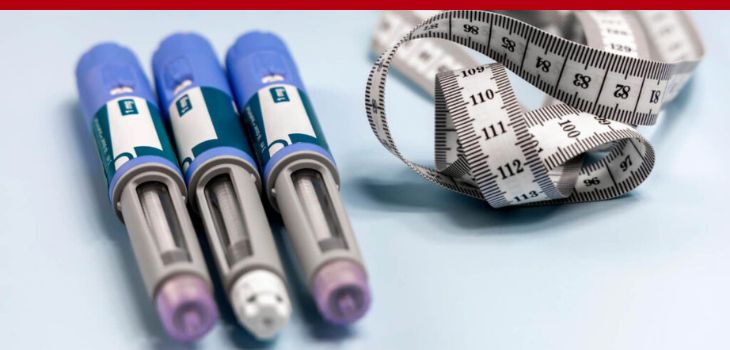
Ozempic, Wegovy, Mounjaro, Tirzepatide, microdosing, … You’ve probably seen the ads or heard celebrities raving about them. These so-called “miracle drugs” promise 15–20% weight loss, far beyond what most diets achieve.
But are they really the magic solution to fat loss?
In this episode, Ted breaks down exactly what GLP-1 agonists are, how they work, and what you must know before considering them.
Ted also explains why lifestyle still makes or breaks your success, and why weight loss drugs without proper exercise and nutrition can leave you weaker, slower, and frustrated when the weight comes back.
If you’ve been curious about Ozempic or considering these drugs yourself, this episode will give you the real story behind the hype — and the clarity you need to make an informed decision. Listen now!
You’ll learn:
- What’s really happening in your body when you take GLP-1 drugs?
- The surprising way these drugs silence “food noise” and cravings
- The side effects no one talks about—and how to avoid them
- Why these drugs might cost you more than just money
- The hidden danger of losing muscle instead of fat
- Why taking these drugs without lifestyle changes could backfire
- The one question you need to answer before starting GLP-1 medication
- And much more…
Related Episodes:
The Hidden Truth About Obesity: What Every Man Over 40 Must Know
Carbs, Weight Loss Drugs, and the Future of Fitness with Danny Lennon
Links Mentioned:
Connect with Ted on X, Instagram, Facebook, LinkedIn
READY TO TRANSFORM YOUR BODY AFTER 40?
Watch my Lean After 40 free masterclass to discover how successful men are losing 15-20 pounds and building lean muscle in just 12 weeks—without weight loss drugs, time-consuming workouts, or giving up their social lives.

Podcast Transcription: Ozempic, Wegovy, Mounjaro: Miracle Drugs or Misleading Hype? (What You Need to Know) — Part 1
Ted Ryce: GLP-1 agonist drugs like Ozempic, Wegovy, and Mounjaro are everywhere. Now they're being called miracle drugs. What are they really? Today I want to cut through the hype and explain what they are, how they work, and what you really need to know before considering them. And look, I'm not a doctor. This isn't medical advice, but I am a coach who's worked with clients using these drugs.
I've seen both success stories and frustrations. So if you're just tuning in for the first time, welcome to the Legendary Life Podcast. I'm your host Ted Rice health expert and coach for over 25 years. I specialize in working with executives, entrepreneurs are and high performing professionals who struggled to get in.
Despite being intelligent, successful, and having a busy life. Like how do you do all that together? That's what I'm an expert in. And more recently I've been working with clients who are either taking Dr. These drugs, which I'll, uh, share stories about. I'll share a couple stories of one client who came to me already taking it, and another client who we ended up.
Deciding together that it was worth trying. So if you want to hear how those went, you're gonna want to tune in. But first, let's get into the first part, which is what GLP one agonists are and how they work. So GLP one is a hormone your body produces naturally after eating. It helps regulate blood sugar and your appetite.
So these drugs, they're called GLP one agonists because they. Pretend to be that hormone. Your body thinks the drug is that hormone. Now it's not, and we'll talk about the side effects and risks in a minute, but it pretends to be that hormone. That's what agonists kind of means. No need to, uh, drop a science class on you, but just know that's what it means.
So they're not GLP one, they're GLP one agonists, and there's also antagonists, but these are agonists. Okay. Don't worry, I won't test you at the end of this. So these drugs mimic that hormone. They pretend to be that hormone and so you have more of it. And what happens? Well, they slow how fast food in your stomach leaves your stomach.
So in other words, it slows down the digestive process. They make you feel fuller and they quiet down the constant food chatter in your brain. A lot of what, what many people refer to as food noise. So what's the effect? People eat less without having to try so hard, without having to white knuckle it. Now, originally they were designed for type two diabetes, but now they're prescribed for obesity, and the studies show that the average weight loss around like 15 to 20% of BO body weight.
That's huge, far beyond what most diet programs achieve. Now I get better results than that, but. We're not gonna be talking about my coaching today, my coaching program today. And if you're listening to this, you're like, whoa, it's the magic pill. Sounds amazing, right? 15 to 20% of your body weight, but every drug has its trade-offs.
So let's talk about what they don't tell you in those ads. So what are the side effects and risks? The most common side effect is nausea. Some people vomit, others get diarrhea or constipation. Why? Because the drug slows down. Digestion causes some changes. You can feel overly full, bloated, or just uncomfortable with food sitting in your stomach longer than normal.
Now, there are also more serious but rare risks including pancreatitis and problems with your gallbladder. That's why these drugs, they require medical supervision. Another big issue is cost and access. Some people can't afford to stay on them long term, or insurance won't cover it. It's somewhere in the neighborhood of $1,000 a month, so.
What I've read, and I'm no expert in insurance by any stretch of the imagination, but insurance typically covers like a year or two years, something like that. But eventually you have to take on the cost yourself. And a lot of people don't do it or wanna stop doing it 'cause they don't want to pay for it, and they end up gaining the weight back.
So there's two, there's two things to talk about here. One is muscle loss. And look, GLP one agonists. They don't cause you to lose muscle by taking them. What ends up happening is so many people, they don't eat as much. They end up not eating enough protein, and so many people, they just want the magic pill and they don't exercise, so they end up losing muscle.
Now, if you're very obese, you have muscle to lose, but this is where lifestyle makes or breaks your results. There's no need to lose muscle at all, and. So if you're going, the point here is that if you're going to. Use one of these. Make sure you combine it with proper diet and exercise. I'll talk a little bit when I talk about a client who, uh, is on this and we, we decided that she should give it a try.
I'll talk about some of the more practical sides to this. That'll be in part two. But I just want you to understand here, it, this is not a magic pill. That means you can do whatever you want with your diet. You can skip the gym and you can just lose weight. It will happen, but you'll also lose muscle. Um, and if you stop taking it, the research shows people just gain the weight back.
So you have to, the, the way to think about this is you have to ask yourself, is this something that I'm gonna do for long term? Can I afford it? Is it worth it? Am I learning the, the other important things like do I know how to exercise properly? Do I know how to, do I know enough about nutrition to maybe even reduce my dose?
Like, do you know enough and if, and here's how, how, you know. You already have good results, right? You al already, you already have good results. And I don't mean I lost 20 pounds three years ago when I went keto, but I gained it all back and I just need to go back to keto. That's not what I'm talking about.
Or I was so good in CrossFit until I got injured and then, um, yeah, I just need to, you know, get back to CrossFit. That's not what I'm talking about, right? Most people don't realize what they're really missing. They don't know as much as they think. Right? It's kind of, and, and I love making this analogy. If someone teaches you how to run a business or start a business, they better have started and are running a business, a successful business right now.
Otherwise. They're, they're not talking to you from experience and during experience is where you learn the most important things. Let me, I, I've been a coach for 25 years. I can tell you I'm a very different coach than I was before, so just keep that in mind. Ask yourself those questions, keep it in context.
Let's talk a little bit right now why lifestyle still matters, even though I kind of went off on a tangent already. So look, yes, these drugs help you eat less, but if you just slash your calories without lifting weights or eating enough protein, you'll lose muscle to, that's the point. Think of it like this.
The drug turns down your. Super powerful, but it doesn't choose what you eat or whether you move your body. And if you don't lift weights and keep your protein up, you'll come out lighter on the scale, but weaker with a slower metabolism and you're not gonna look the way you want without your clothes on.
That's not the transformation most people want. If you're okay with that, that's okay. If that's where you are, that's okay, but if you're thinking like it's gonna give you. What you've been missing. It's exercise in a pill or whatever, you know, however you're thinking about it. It's not that. So are these drugs worth it?
The answer is, it depends. And in part two, I'm gonna share with you what I've seen with my own clients because I'm gonna share a situation where one of my clients, he's been taking it for a while. It's not really, it was not the game changer I thought it was gonna be. And then also with my other client.
Now look, when they work brilliantly great. And when they don't, you're gonna have to try something else. , So let me recap briefly what we've talked about. GLP one agonist mimic a natural hormone called GLP one. They reduce appetite and cause dramatic weight loss, but the side effects are real.
And without lifestyle changes, they can back backfire. And when you quit the drug, you people gain the weight back. They're not magic, they're tools and like any tool, they're only as good as the person using them. So keep that in mind.
In part two, I'm gonna share real client stories. The mistakes I've seen how to make these drugs work for you instead of against you. So make sure you subscribe to the podcast so you don't miss it.
Sign up to receive email updates
Enter your name and email address below and I'll send you periodic updates about the podcast.