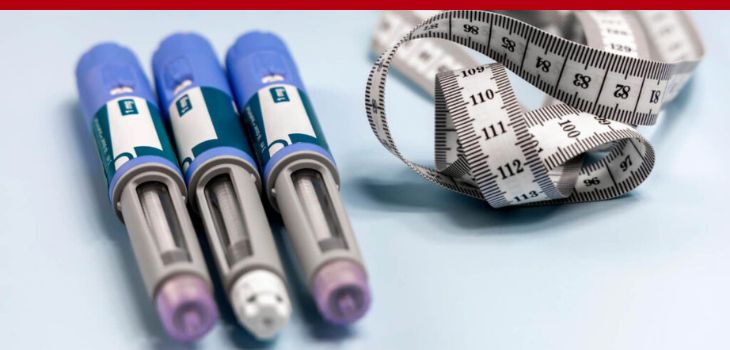
Ozempic and other GLP-1 medications have become some of the most talked-about drugs in the world. They promise powerful weight loss results, and many people see them as the solution they’ve been searching for. But are they really the magic bullet?
In part 1 of this GLP-1 series, Ted talked about how these drugs work, the results people are seeing, the potential downsides, and why lifestyle choices still play a key role in long-term success.
In Part 2, he takes you beyond the science and into real-life stories. He shares two powerful client experiences—one where the drug didn’t create the expected transformation, and another where it provided the breakthrough she needed.
Ted explains why these drugs can be valuable tools, but never replacements for habits, skills, and strategies. You’ll discover how social life, stress, and daily choices can either amplify or cancel out the benefits, and why coaching and support often make the deciding difference. Listen now!
You’ll learn:
- How lifestyle factors like socializing, alcohol, and travel can override the effects of weight loss drugs
- The role of mindset and psychological leverage in achieving breakthroughs
- Why treating GLP-1 drugs as a “magic bullet” often leads to disappointment
- How a client used the medication successfully after building a foundation of habits and skills
- Why GLP-1 drugs reduce food noise but can’t fix emotional eating or stress-driven habits
- The truth about plateaus — and why they’re rarely about hormones or metabolism
- How to treat Ozempic and similar drugs as tools, not cures, for sustainable fat loss
- And much more…
Related Episodes:
Ozempic, Wegovy, Mounjaro: Miracle Drugs or Misleading Hype? (What You Need to Know) — Part 1
The Hidden Truth About Obesity: What Every Man Over 40 Must Know
Carbs, Weight Loss Drugs, and the Future of Fitness with Danny Lennon
Links Mentioned:
Connect with Ted on X, Instagram, Facebook, LinkedIn
READY TO TRANSFORM YOUR BODY AFTER 40?
Watch my Lean After 40 free masterclass to discover how successful men are losing 15-20 pounds and building lean muscle in just 12 weeks—without weight loss drugs, time-consuming workouts, or giving up their social lives.

Podcast Transcription: Ozempic, Wegovy, Mounjaro: Miracle Drugs or Misleading Hype? (What You Need to Know) — Part 2
Ted Ryce: In the last episode, I explained what GLP 1 agonists are and how they work. Those are drugs like Mounzaro, Ozempic, et cetera. And today I want to go deeper. I'm gonna share two client stories, one where the drug didn't deliver and one where I feel like it really helped. And then I'm gonna break down what the deciding factor was.
So let me talk about client A, or before I do that, welcome to the show. If this is your first time listening, I'm your host, Ted Ryce. I'm a health expert and coach for over 25 years, and I specialize in working with executives, entrepreneurs, and other high performing professionals. Why? Because those people are busy and they don't know how to get in shape without giving up their lifestyle or giving up their favorite foods.
And that's what I'm an expert in because that's how I live my life. So let's get to the first client. This client. Came to me already on a GLP one agonist. He was taking Majaro. I thought the weight was just gonna fall off. 'cause he started taking it as soon as he joined my group pro program. But it didn't.
And he also wasn't following what I was teaching in the group. And whenever I see a, a, a client join my group, but I know they can afford to work with me one-on-one. This is a very important point because a lot of this is psychology. I end up having a conversation with them and saying, look, you're in the group.
I don't mind if you stay there. It's a better value for the money. Now, I don't wanna say a better value, but it's less expensive. But here's the issue. You're not showing up, you're not doing the work, and I feel it's because you don't care enough. But if you work with me, you're gonna pay more money and you're gonna work with me one-on-one.
You're gonna start to care and you'll get better results. Now, I had enough trust with him and he had been following me for long enough on social media. He was like, okay. I, he, and he really wanted, and this is key, you really want to get this handled because he's in a great place in life, just sold his business, has more money than he ever has had in his entire life.
But he's in his early fifties and he is gonna get older and he doesn't want to have all this weight on him because of the psychological consequences where he doesn't like how he looks, and also the eventual health consequences. So when he started working with me, he started getting results. Why? Because I held him more accountable.
I made sure he was following the strategies and he got results. So it wasn't the GLP one. Because it was a few weeks into my group program where this happened. He should have lost weight right away. And I was like, whoa, this is strange. Because I was expecting the GLP one to cause magic to happen. I was expecting the weight just to fall off, but it didn't.
And when he started working with me, that's when the big changes happen. Could it have been, his dose wasn't high enough? Could it have been that he wasn't taking the shots as uh, you know, did he get lax? I don't know. When he started working with me, what I do know is this, when he started working with me, he started getting results.
But again, he hit a plateau. And for those of you who think plateaus happen because of metabolism, hormones or some other thing, they don't. Why did he hit a plateau? Because he has a very busy lifestyle, lot of entertaining, a lot of drinking, going out, having a good time. Guy's in a great place in life, he's not unhappy.
Nothing like that. Great place in life. A lot of socializing basically has the freedom to do almost whatever he wants to do. And what's very interesting too, and I think worth mentioning here, is this is, this is a interesting point. In the past, he had said to himself that he was working too much, didn't have time to get in shape, but here he is with so much more time, so much more money than he ever has, and he's still struggling to get in shape.
Right? Struggling to lose fat specifically. Actually, fitness wise, he is pretty good. So, so once he started working with me, that was the leverage that we needed to get him results 'cause it my working with me one-on-one, it's more expensive. I have an expensive program. Why? Because we deliver great results and we take you by the hand.
We hold you accountable. We are there for you. We step up for you. And if you think that doesn't matter, well that is the number one reason why you're not where you want to be. 'cause you give up on yourself. I don't know you, but it's so easy to give up on yourself. But when you pay and when you have a connection with someone like me and you know we're gonna be talking every week, the accountability is huge.
It's a game changer. And for him, the group wasn't enough, but when he started working with me one-on-one, it was enough leverage to get him to take action and he lost weight. But guess what? Again, he hit another plateau, and as I said, the plateau wasn't anything hormonal or anything like that. It never is.
He was, uh, entertaining too much, traveling too much, having the time of his life. The GLP wasn't working and he wasn't implementing the strategies, and I should say this too, it's not that he hit a plateau, he was just losing weight very slowly. So he was still losing weight. Maybe a pound every two weeks.
But that's really slow when you have someone who has a lot of weight to lose. Okay. And then the next thing happened. I was like, look, you invested in the one-on-one program and gave up the group, but now you're in this, you're, you're in this comfort zone again. What I want you to do, I want you to meet me in person.
Let's meet in Playdo car in Mexico. We'll spend a weekend together. I'm gonna teach you this stuff in person. We're gonna work out in person, we're gonna work on a lot of things in person. And you know what? It was the trick and here's what happened. Because he committed to meeting me in person, in play, Al Carmen.
And he had a, I think it was a couple months before we were meeting, he started to get serious. It was the motivation because he didn't want to show up in play. Al Carmen, the same weight that he was now. He wanted to feel like a winner, and that was the motivation he needed to start making progress again.
So he lost a significant amount of weight before we met. And then when we met. It was a really fun time. Play. Del Carmen's always a good time and I meet clients in different places in the world, but we chose Play Del Carmen because he likes scuba diving. He likes Mexico, and I wanted to show my client. I show my clients in these VIP intensives where I meet with them.
That's what I call when I meet with a client for a weekend. Wanted to show 'em like, Hey, listen, you don't have to live a strict lifestyle. You can have your cake and eat it too. But you gotta, you gotta learn better skills. You gotta have a better mindset. You have to learn more, and you have to step your skills up.
You have to learn skills. If you can't get in shape and maintain your fitness, it's because you have mindset issues. Your strategies aren't effective for your lifestyle. You probably lack skills, not probably. You definitely lack skills. I'm being nice when I say probably, but let me tell you something.
I've been doing this for a long time. It's like if you can't hit the tennis ball in bounds, it's because you lack skills. Okay? Everyone knows, oh, you just do a forehand or a backhand. Yes, but the way you're doing it, you keep hitting it out out of bounds. And when you work with the right tennis coach. Help you to dial in so that you're hitting inbounds at a higher percentage.
And that's what I help my clients. 'cause so many people, they think they know what they're doing, but they don't get good results. Why is that? It's a skill issue. A mindset issue and possibly a knowledge issue. If you think your metabolisms, uh, metabolisms your metabolism or your hormones are holding you back.
So again, my point in sharing this with you is that the two big, the, the things that made him lose weight were more psychological in nature. Now, could he be on a higher dose of GLP one? I don't know enough about like what the dosing should be. I'm not a medical doctor, and we did have a conversation about it.
But the things that helped him get to the next level were psychological in nature. They were psychological in nature. He didn't have enough accountability. And when he did, by shifting from my group program to working with me one-on-one, and then when we met in person and then even I couldn't meet him in person again, we had him go to a retreat for a week, and it ended up being another one of those situations that motivated him to lose more weight.
The, the levers that we ended up pulling with him were psychological in nature. They were the lead up to, uh, either meeting in person or going to a retreat or, uh, moving from the group to one-on-one. Right. I hope you learn something from that because so many people think that it's. They don't understand why they're not getting results.
And it's, and it's, these are the reasons that I see people struggle. So let me talk about my second client. Now, this client originally lost weight with me. In fact, she got to her lowest weight ever without a GLP one agonist. But life happened. Stress crept in the weight came back. So I don't need to get into what happened in her life because it's private and the, the details don't matter as much as what ends up happening, and you can just chart your weight.
And she started gaining weight back. Now she's lost, oh, I forget. Close to 30 pounds. More, but she still wants to lose more. And she had been really trying hard and I'm ju I was at the point where, you know, I can't meet up with her in person. I didn't even suggest it. 'cause I'm in a, a place right now with my business where I'm working a lot.
So I suggested. What do you think about trying one of those GLP one agonists, like a majaro or something? And very interestingly, she's like, oh, you know what? I was thinking about that, but I didn't want to bring it up to you because I heard you on the podcast 'cause she was a podcast listener that you didn't like them.
So, and, and it's quite possible I said something about GLP one agonists when they first came out. Now I view them a a little bit differently. I view it as a tool. Sometimes tools are the right tools. Sometimes a hammer is exactly what you need when the problem is a nail. Other times it's a screwdriver if you've got a screw.
But sometimes, again, like my first client, we weren't able to get great results with just the GLP one. It was more, it was more lifestyle changes, the accountability, et cetera, that got him to where he is now almost 30 pounds down. So with her. She had said, going back to the story, oh, I thought you didn't like them because I heard you on a, a podcast.
Uh, I heard you say on your podcast, you know, you didn't like them. And I've changed a lot. I mean, when they were new, I'm just like, oh man, people are taking a pill. And if the pill was amazing, it would be one thing, but pills never are right. They always have side effects or they always have, they always have drawbacks.
But here I am, this is a person she already knows a lot 'cause she's been working with me for almost two years and we had tried so many things and I'm just like, you know what time to give the GLP one a try. She was already exercising consistently. I coached her on so many things. I mean, you know, I'll, I'll get her on the podcast to share her story.
She's got an amazing story and we have a long history of working together. She's an amazing person, so anyway. But I felt like she needed help. And just the coaching again, where it was the key coaching with me in the first situation was the key, do you understand, was the key thing to get him to the next level.
Even the retreat that he did was my idea, but here we are and the accountability with her, it's not working. The other suggestions that we tried. We would, it would work a little bit then go backwards. And so it was like time to try a GLP one. So she did, and for her, it quieted the food noise and gave her control.
Again. She said it made her feel nauseous, but at the same time, it, it was starting to get better after a few weeks. And we had some fast progress, but really interesting. Actually gonna bring up her, her stats right now. I had her at the lowest, her lowest weight back in April. At the beginning of the year, actually, in, in Decem, uh, December of 2024 and January actually were lower than April even.
So her weight started climbing up at the beginning of the year, and there was a point where in March it just started spiking up and she ended up gaining around, uh, let's say around 15 pounds. 14, 15 pounds, depending on, you know, 'cause there's some up and down in the, the weight in the weigh ends. As there always are, and then when we started, she had some things going on that was, again, not hormones, not her age, not being a woman, not estrogen, not cortisol.
It was some things went on in her life. It threw off her habits and she ended up gaining the weight back. Right. And just to be clear, I should throw this out there, what causes weight gain eating more calories than you burn? Oh no, that could maybe her hormone shifted around from January. I mean, we've been working together for a long time.
Okay. For a long time. And she was actually in a better place for most of 2024. And then. In 2025, these these things happen. She started giving into emotional eating, drinking a little bit more alcohol, and all of a sudden the weight comes back on. So she started taking it and we're still not back to her lowest weight.
Even taking this medication, it's fascinating because I thought, again, it would work like a magic bullet. That's why I suggested it, but it hasn't. And again, it's like this is proof. It's a tool, not a cure. Now I won't get into her life and you know what might be causing the issues here, but just know it's a tool, not a cure.
And so here are some coaching lessons and I'll wrap things up. Here are the patterns that I see. When GLP one agonists work, it's because people also improve their habits. So their strength training, eating protein, managing stress, they're not eating emotionally. They cut down on drinking, but when they don't work.
It's because people are expecting the drug to do everything for them. And the same is true of any diet. You can cut carbs, do keto, you can do fasting, but if you don't manage your lifestyle apart from that, meaning what are you gonna do on vacation? What are you gonna do? Are you gonna stay keto on vacation in Italy?
Are you gonna fast do fasting when with the family during the holidays if you don't learn the skills to manage? Nutrition, exercise, et cetera, or alcohol consumption, it's not gonna work. So the drug lowers your appetite, but it doesn't teach you how to, it doesn't help you to stop reaching for alcohol when you're unhappy, or food when you're a little stressed out, or it doesn't fix your sleep.
It doesn't help you build muscle. So look. The big picture is this. GLP ones are powerful, but they don't erase the need for coaching. They don't erase the need for strategy, and ultimately you have to change your behavior because the real reason people, I, again, this is my opinion here that gained the weight back, is because they relied on instead of dealing with the issues that are causing people, uh, causing them.
To reach for food, to manage their emotions and alcohol. So food and alcohol, to manage their emotions. They take a pill and then it gets rid of it, and then when you stop taking the pill, you still have the same problems that you were covering up with that pill. So if you treat them like a shortcut, you'll be disappointed if you treat them like a tool and pair them with lifestyle, they can really work okay.
They can really work. And I've, I've opened up my mind about this and we've even, you know, we're partnering with some people to help. When I feel like a client should take it and maybe they're a bit resistant to taking it, I want to have this as a tool in my toolbox to help my clients. So that's when it can be life changing.
But again, it depends on the person. It depends on what the challenge is, and you need to learn the right things. I believe in starting with the lifestyle stuff first to see if you can get results without taking a pill, because you're not gonna learn any skills. While you're taking a pill, when the pill's doing all the work.
Does that make sense? So look, to recap here, there are two stories, two different outcomes. The drug is only as good as the system around it. So you don't need to hate these drugs. They're not the, they're not the miracle that, uh, they're advertised to be. That yes, they're super effective and they're not a shortcut depending on the circumstances that you use them in.
The truth is in the middle. They're a tool. So the question is, do you know how to use them? Are you using them in the right way in conjunction with lifestyle? That's what we're really talking about here. So that is it for me. I hope you learned a lot from these two episodes. I hope you have more perspective on whether you should try them or not, and whether you think it's gonna be a big breakthrough for you or not.
And that's all I've got. Hope this helps, and I'll talk to you soon.
In the last episode, I explained what GLP one agonists are and how they work. Those are drugs like Majaro, Ozempic, et cetera. And today I want to go deeper. I'm gonna share two client stories, one where the drug didn't deliver and one where I feel like it really helped. And then I'm gonna break down what the deciding factor was.
So let me talk about client A or before I do that, welcome to the show. If this is your first time listening, I'm your host, Ted Rice. I'm an health expert and coach for over 25 years, and I specialize in working with executives, entrepreneurs, and other high performing professionals. Why? Because those people are busy and they don't know how to get in shape without giving up their lifestyle or giving up their favorite foods.
And that's what I'm an expert in because that's how I live my life. So let's get to the first client. This client. Came to me already on a GLP one agonist. He was taking Majaro. I thought the weight was just gonna fall off. 'cause he started taking it as soon as he joined my group pro program. But it didn't.
And he also wasn't following what I was teaching in the group. And whenever I see a, a, a client join my group, but I know they can afford to work with me one-on-one. This is a very important point because a lot of this is psychology. I end up having a conversation with them and saying, look, you're in the group.
I don't mind if you stay there. It's a better value for the money. Now, I don't wanna say a better value, but it's less expensive. But here's the issue. You're not showing up, you're not doing the work, and I feel it's because you don't care enough. But if you work with me, you're gonna pay more money and you're gonna work with me one-on-one.
You're gonna start to care and you'll get better results. Now, I had enough trust with him and he had been following me for long enough on social media. He was like, okay. I, he, and he really wanted, and this is key, you really want to get this handled because he's in a great place in life, just sold his business, has more money than he ever has had in his entire life.
But he's in his early fifties and he is gonna get older and he doesn't want to have all this weight on him because of the psychological consequences where he doesn't like how he looks, and also the eventual health consequences. So when he started working with me, he started getting results. Why? Because I held him more accountable.
I made sure he was following the strategies and he got results. So it wasn't the GLP one. Because it was a few weeks into my group program where this happened. He should have lost weight right away. And I was like, whoa, this is strange. Because I was expecting the GLP one to cause magic to happen. I was expecting the weight just to fall off, but it didn't.
And when he started working with me, that's when the big changes happen. Could it have been, his dose wasn't high enough? Could it have been that he wasn't taking the shots as uh, you know, did he get lax? I don't know. When he started working with me, what I do know is this, when he started working with me, he started getting results.
But again, he hit a plateau. And for those of you who think plateaus happen because of metabolism, hormones or some other thing, they don't. Why did he hit a plateau? Because he has a very busy lifestyle, lot of entertaining, a lot of drinking, going out, having a good time. Guy's in a great place in life, he's not unhappy.
Nothing like that. Great place in life. A lot of socializing basically has the freedom to do almost whatever he wants to do. And what's very interesting too, and I think worth mentioning here, is this is, this is a interesting point. In the past, he had said to himself that he was working too much, didn't have time to get in shape, but here he is with so much more time, so much more money than he ever has, and he's still struggling to get in shape.
Right? Struggling to lose fat specifically. Actually, fitness wise, he is pretty good. So, so once he started working with me, that was the leverage that we needed to get him results 'cause it my working with me one-on-one, it's more expensive. I have an expensive program. Why? Because we deliver great results and we take you by the hand.
We hold you accountable. We are there for you. We step up for you. And if you think that doesn't matter, well that is the number one reason why you're not where you want to be. 'cause you give up on yourself. I don't know you, but it's so easy to give up on yourself. But when you pay and when you have a connection with someone like me and you know we're gonna be talking every week, the accountability is huge.
It's a game changer. And for him, the group wasn't enough, but when he started working with me one-on-one, it was enough leverage to get him to take action and he lost weight. But guess what? Again, he hit another plateau, and as I said, the plateau wasn't anything hormonal or anything like that. It never is.
He was, uh, entertaining too much, traveling too much, having the time of his life. The GLP wasn't working and he wasn't implementing the strategies, and I should say this too, it's not that he hit a plateau, he was just losing weight very slowly. So he was still losing weight. Maybe a pound every two weeks.
But that's really slow when you have someone who has a lot of weight to lose. Okay. And then the next thing happened. I was like, look, you invested in the one-on-one program and gave up the group, but now you're in this, you're, you're in this comfort zone again. What I want you to do, I want you to meet me in person.
Let's meet in Playdo car in Mexico. We'll spend a weekend together. I'm gonna teach you this stuff in person. We're gonna work out in person, we're gonna work on a lot of things in person. And you know what? It was the trick and here's what happened. Because he committed to meeting me in person, in play, Al Carmen.
And he had a, I think it was a couple months before we were meeting, he started to get serious. It was the motivation because he didn't want to show up in play. Al Carmen, the same weight that he was now. He wanted to feel like a winner, and that was the motivation he needed to start making progress again.
So he lost a significant amount of weight before we met. And then when we met. It was a really fun time. Play. Del Carmen's always a good time and I meet clients in different places in the world, but we chose Play Del Carmen because he likes scuba diving. He likes Mexico, and I wanted to show my client. I show my clients in these VIP intensives where I meet with them.
That's what I call when I meet with a client for a weekend. Wanted to show 'em like, Hey, listen, you don't have to live a strict lifestyle. You can have your cake and eat it too. But you gotta, you gotta learn better skills. You gotta have a better mindset. You have to learn more, and you have to step your skills up.
You have to learn skills. If you can't get in shape and maintain your fitness, it's because you have mindset issues. Your strategies aren't effective for your lifestyle. You probably lack skills, not probably. You definitely lack skills. I'm being nice when I say probably, but let me tell you something.
I've been doing this for a long time. It's like if you can't hit the tennis ball in bounds, it's because you lack skills. Okay? Everyone knows, oh, you just do a forehand or a backhand. Yes, but the way you're doing it, you keep hitting it out out of bounds. And when you work with the right tennis coach. Help you to dial in so that you're hitting inbounds at a higher percentage.
And that's what I help my clients. 'cause so many people, they think they know what they're doing, but they don't get good results. Why is that? It's a skill issue. A mindset issue and possibly a knowledge issue. If you think your metabolisms, uh, metabolisms your metabolism or your hormones are holding you back.
So again, my point in sharing this with you is that the two big, the, the things that made him lose weight were more psychological in nature. Now, could he be on a higher dose of GLP one? I don't know enough about like what the dosing should be. I'm not a medical doctor, and we did have a conversation about it.
But the things that helped him get to the next level were psychological in nature. They were psychological in nature. He didn't have enough accountability. And when he did, by shifting from my group program to working with me one-on-one, and then when we met in person and then even I couldn't meet him in person again, we had him go to a retreat for a week, and it ended up being another one of those situations that motivated him to lose more weight.
The, the levers that we ended up pulling with him were psychological in nature. They were the lead up to, uh, either meeting in person or going to a retreat or, uh, moving from the group to one-on-one. Right. I hope you learn something from that because so many people think that it's. They don't understand why they're not getting results.
And it's, and it's, these are the reasons that I see people struggle. So let me talk about my second client. Now, this client originally lost weight with me. In fact, she got to her lowest weight ever without a GLP one agonist. But life happened. Stress crept in the weight came back. So I don't need to get into what happened in her life because it's private and the, the details don't matter as much as what ends up happening, and you can just chart your weight.
And she started gaining weight back. Now she's lost, oh, I forget. Close to 30 pounds. More, but she still wants to lose more. And she had been really trying hard and I'm ju I was at the point where, you know, I can't meet up with her in person. I didn't even suggest it. 'cause I'm in a, a place right now with my business where I'm working a lot.
So I suggested. What do you think about trying one of those GLP one agonists, like a majaro or something? And very interestingly, she's like, oh, you know what? I was thinking about that, but I didn't want to bring it up to you because I heard you on the podcast 'cause she was a podcast listener that you didn't like them.
So, and, and it's quite possible I said something about GLP one agonists when they first came out. Now I view them a a little bit differently. I view it as a tool. Sometimes tools are the right tools. Sometimes a hammer is exactly what you need when the problem is a nail. Other times it's a screwdriver if you've got a screw.
But sometimes, again, like my first client, we weren't able to get great results with just the GLP one. It was more, it was more lifestyle changes, the accountability, et cetera, that got him to where he is now almost 30 pounds down. So with her. She had said, going back to the story, oh, I thought you didn't like them because I heard you on a, a podcast.
Uh, I heard you say on your podcast, you know, you didn't like them. And I've changed a lot. I mean, when they were new, I'm just like, oh man, people are taking a pill. And if the pill was amazing, it would be one thing, but pills never are right. They always have side effects or they always have, they always have drawbacks.
But here I am, this is a person she already knows a lot 'cause she's been working with me for almost two years and we had tried so many things and I'm just like, you know what time to give the GLP one a try. She was already exercising consistently. I coached her on so many things. I mean, you know, I'll, I'll get her on the podcast to share her story.
She's got an amazing story and we have a long history of working together. She's an amazing person, so anyway. But I felt like she needed help. And just the coaching again, where it was the key coaching with me in the first situation was the key, do you understand, was the key thing to get him to the next level.
Even the retreat that he did was my idea, but here we are and the accountability with her, it's not working. The other suggestions that we tried. We would, it would work a little bit then go backwards. And so it was like time to try a GLP one. So she did, and for her, it quieted the food noise and gave her control.
Again. She said it made her feel nauseous, but at the same time, it, it was starting to get better after a few weeks. And we had some fast progress, but really interesting. Actually gonna bring up her, her stats right now. I had her at the lowest, her lowest weight back in April. At the beginning of the year, actually, in, in Decem, uh, December of 2024 and January actually were lower than April even.
So her weight started climbing up at the beginning of the year, and there was a point where in March it just started spiking up and she ended up gaining around, uh, let's say around 15 pounds. 14, 15 pounds, depending on, you know, 'cause there's some up and down in the, the weight in the weigh ends. As there always are, and then when we started, she had some things going on that was, again, not hormones, not her age, not being a woman, not estrogen, not cortisol.
It was some things went on in her life. It threw off her habits and she ended up gaining the weight back. Right. And just to be clear, I should throw this out there, what causes weight gain eating more calories than you burn? Oh no, that could maybe her hormone shifted around from January. I mean, we've been working together for a long time.
Okay. For a long time. And she was actually in a better place for most of 2024. And then. In 2025, these these things happen. She started giving into emotional eating, drinking a little bit more alcohol, and all of a sudden the weight comes back on. So she started taking it and we're still not back to her lowest weight.
Even taking this medication, it's fascinating because I thought, again, it would work like a magic bullet. That's why I suggested it, but it hasn't. And again, it's like this is proof. It's a tool, not a cure. Now I won't get into her life and you know what might be causing the issues here, but just know it's a tool, not a cure.
And so here are some coaching lessons and I'll wrap things up. Here are the patterns that I see. When GLP one agonists work, it's because people also improve their habits. So their strength training, eating protein, managing stress, they're not eating emotionally. They cut down on drinking, but when they don't work.
It's because people are expecting the drug to do everything for them. And the same is true of any diet. You can cut carbs, do keto, you can do fasting, but if you don't manage your lifestyle apart from that, meaning what are you gonna do on vacation? What are you gonna do? Are you gonna stay keto on vacation in Italy?
Are you gonna fast do fasting when with the family during the holidays if you don't learn the skills to manage? Nutrition, exercise, et cetera, or alcohol consumption, it's not gonna work. So the drug lowers your appetite, but it doesn't teach you how to, it doesn't help you to stop reaching for alcohol when you're unhappy, or food when you're a little stressed out, or it doesn't fix your sleep.
It doesn't help you build muscle. So look. The big picture is this. GLP ones are powerful, but they don't erase the need for coaching. They don't erase the need for strategy, and ultimately you have to change your behavior because the real reason people, I, again, this is my opinion here that gained the weight back, is because they relied on instead of dealing with the issues that are causing people, uh, causing them.
To reach for food, to manage their emotions and alcohol. So food and alcohol, to manage their emotions. They take a pill and then it gets rid of it, and then when you stop taking the pill, you still have the same problems that you were covering up with that pill. So if you treat them like a shortcut, you'll be disappointed if you treat them like a tool and pair them with lifestyle, they can really work okay.
They can really work. And I've, I've opened up my mind about this and we've even, you know, we're partnering with some people to help. When I feel like a client should take it and maybe they're a bit resistant to taking it, I want to have this as a tool in my toolbox to help my clients. So that's when it can be life changing.
But again, it depends on the person. It depends on what the challenge is, and you need to learn the right things. I believe in starting with the lifestyle stuff first to see if you can get results without taking a pill, because you're not gonna learn any skills. While you're taking a pill, when the pill's doing all the work.
Does that make sense? So look, to recap here, there are two stories, two different outcomes. The drug is only as good as the system around it. So you don't need to hate these drugs. They're not the, they're not the miracle that, uh, they're advertised to be. That yes, they're super effective and they're not a shortcut depending on the circumstances that you use them in.
The truth is in the middle. They're a tool. So the question is, do you know how to use them? Are you using them in the right way in conjunction with lifestyle? That's what we're really talking about here. So that is it for me. I hope you learned a lot from these two episodes. I hope you have more perspective on whether you should try them or not, and whether you think it's gonna be a big breakthrough for you or not.
And that's all I've got. Hope this helps, and I'll talk to you soon.
Sign up to receive email updates
Enter your name and email address below and I'll send you periodic updates about the podcast.