Most men over 40 are doing the work—but not seeing the results they expect.
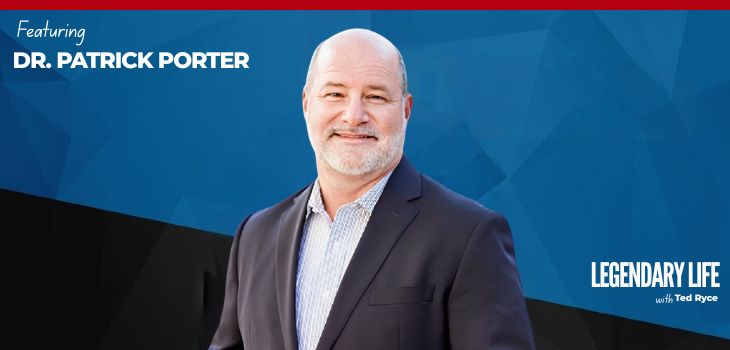
In this episode, Ted speaks with Dr. Patrick Porter about how brain function, stress, and subconscious programming influence everything from habits and performance to recovery and sleep. They explore brainwaves, neuroplasticity, and why many people stay stuck despite effort.
This conversation offers a deeper look at how to align your brain with your goals—and why that may be the missing piece. Listen to the episode to learn how to start training your brain more effectively.
Today’s Guest
Dr. Patrick Porter
Dr. Patrick K. Porter, PhD, is a pioneer in brainwave entrainment and the founder of BrainTap, a leading neuroscience technology platform that helps people reduce stress, improve sleep, and enhance mental clarity.
With over three decades of experience in personal development and brain health, Dr. Porter has trained thousands globally, authored several books, and recently released Brain Fitness Blueprint (October 2025). His mission is to empower people to take control of their brain health so they can live with greater purpose, focus, and vitality.
Connect to Dr. Patrick Porter:
Website:
LinkedIn: Dr. Patrick Porter
Podcast: Brain Fitness Podcast with Dr. Patrick Porter
Book: Brain Fitness Blueprint: Integrating Ancient Wisdom and Modern Technologies for Peak Performance
You’ll learn:
- How subconscious patterns shape behavior and why repetition drives long-term habits
- The role of brainwaves in stress, focus, learning, and recovery
- Why managing stress and improving sleep are critical for brain health and performance
- How mental rehearsal and recovery influence physical performance and results
Chapters:
00:00 Introduction
04:05 Daily Rituals and Self Care
05:10 Why Neuroscience and Light
08:13 Open Mind and Subconscious Training
12:36 Evidence Based Health Claims
13:43 Dementia Energy and Entrainment
18:14 Brainwaves Basics Beta to Delta
26:01 Stress Builds Growth
27:36 Brainwaves and Modern Life
29:12 What Is BrainTap
30:20 Sound and Light Tech
40:34 Stress Sleep and Brain Breaks
43:40 Sports Recovery and Rehearsal
50:30 Recovery Mindset and Wrap
Related Episodes:
How To Boost Brain Health & Fight Dementia
8 Science-Backed Foods To Supercharge Your Brain
Links Mentioned:
Connect with Ted on X, Instagram, Facebook, LinkedIn
Want More Strategies Like This?
Join Unstoppable After 40, my weekly newsletter for high-performing men who want to get leaner, stronger, and more energized after 40.
Each Friday, I share practical insights on fat loss, longevity, performance, and mindset — without hype or fluff — so you can build a body that matches your success in about 2 hours per week.
 Join the Newsletter
Podcast Transcription: How to Train Your Brain for Better Focus, Recovery, and Performance with Dr. Patrick Porter
Ted Ryce: Dr. Patrick Porter, welcome to the Legendary Live podcast. Really excited to dive into this conversation with you about Brain Health today.
Patrick Porter: Yeah, thanks for having me, Ted. Great to be here,
Ted Ryce: and let's go ahead and get started. You have an interesting, interesting story in how you got started because if I remember correctly, you said that your dad was really into personal development, and during that conversation with you.
I couldn't help but to think, um, of the parallels where I was really interested in psychology. Then got into, uh, brain science. Um, talk about how having a father who's into personal development, like how that led the way or if it had any effect at all. I mean, uh, to what you do today.
Patrick Porter: Certainly it did. My, my dad changed his whole parenting style.
He, he first used the silver method to help him stop drinking. Then he, he then he was bit by the self-help bug. Then he went back to school to be a psychologist. And I think one of the things that changed for us was the way he parented it was totally different than before when he was an addict. And, you know, he has problems with alcohol.
I'll give you an example. When we got, when we got in trouble in the porterhouse, we didn't get sent to our room to think about what we did. He had a rose of self-help books. We had to go over the bookshelf, pick out a book. And then go read it until we found something we could apply in our life. Then we had to come out and tell 'em how we were gonna apply it.
And we got a probationary 24 hours. If we were applying those principles, we got to stay ungrounded. And his whole thought was that in prison they teach, they send people to prison, but they don't give anything to do with their time. So they're in there scheming about how they can get away with whatever they did instead of what could they have done differently.
And I think that was one thing. And then he, he also had a saying that, uh, one of the books that was really. Instrumental was as a man thinketh. Uh, because in there it says, you know, that what you think in your heart is gonna become, you know, reality for you. Really. It's basically what they're saying in the book.
And there's a place that's, and it's in the Bible too. It's says, faith without Works is dead. And he says, you can have all these goals, you can do all these things. So we, we had to sit down and do goals, you know, and I'm 12 years old, 13, I don't wanna sit down and do goals. I want to go out and play with my friends.
And then, then we had to break down those goals into what we were gonna do on a daily basis. So he said the, if we do the daily basis, he said If you do these small things every day, these big things will happen. And they did. I mean, it was like, so I didn't have the, I mean, you wanna have the big things out there to know, uh, like the milestones, but the reality was, what am I gonna do on a day-to-day basis that's gonna change?
And one of his favorite things was, it's not what you do occasionally, it's what you do daily. And I think those things kind of. Are kind of guiding me still to this day. What do I do daily that's going? I always have a plan every day I get up, I, I spend about two hours on myself, getting myself ready for what I'm gonna do, whether it's doing my cold plunge, doing my sauna, doing my lights, doing my brain tap, whatever it is, and then doing, and then every other day I do physical workouts, you know, to keep my muscles going.
But I have a plan every morning and I, I would take care of myself first 'cause he's, you know, you are not, be much good to other people if you're not taking care of yourself. So those are some, some key points my dad made.
Ted Ryce: Yeah. Fascinating. And when did you get into neuroscience? Was that something you were always in interested in when you got into school?
But you have your PhD. That's a long journey. That's a lot of work, right? It's unimaginable amount of work. So talk about why neuroscience.
Patrick Porter: I kind of fell into it. I didn't really know I was getting into it. You can imagine back in the late eighties, early nineties, there was no neuroscience like this. There we were doing, uh, I went to school for a psychology and uh, my degrees in Christian counseling.
And so I went to school, really learn about the Bible and helping people in churches to keep their faith and to overcome diversity. And then I did that for about a year and I realized. Even though it takes a lot of heart to do that, it's one of those things that I knew I had to make more money. That was the driver.
Because when you're a counselor at church, you know, if they don't get, they can't pay. You don't get paid. If they have $5, they give you $5. And so, so I went back to school and learned some things and I got to do, I got to create. My background before that was my dad was a Silva instructor, so the Silva Method uses a sound in the classroom.
We would call that the is chronic tone sound, but at the time they just called it the Silva Sound. And what it, what it would do is we would use GSR machines to, to test it, but everybody would synchronize to 10 hertz frequency, which is alpha. It's a super learning state. During the seminars, this was back in the seventies and eighties.
So I always was wondering how did that work? I was very curious about that. So I got a job in Scottsdale, Arizona, working with a company called Light and Sound Research. There's a whole story around that, but I, I was one of their researchers. So we were, we were looking at LEDs in relation to how lights work and how they change brain function and so very based stuff that we were doing.
But what we were trying to do is get people out of pain, and we did, we, we showed 'em, if we can get 'em into Alpha and Theta, that pain diminishes in some cases, goes away completely. But it wasn't neurofeedback even then. It wasn't neuro anything. It was still, that was biofeedback. You know, we were looking at, you know, with skin temperature and respiration, these kind of things.
And then what happened was they came out with something called the mind mirror, which was one of the very first commercially available EEG machines. Nothing like what we have today. I mean, if you saw today, people think that's such a joke, but it was a panel of LEDs and it would be, it would show right and left hemisphere, which was more dominant.
And it was very crude about the brainwaves, but once I saw that, we started working with it, I was bit, I wanted to learn more and more. So a lot of what I've learned over the years was through professional trainings. You know, I probably spend minimum of 40 hours a year in professional trainings. Still to this day.
My dad had a saying, either you're green and growing, or you're riping, you're rot. So that was one of the things that he built into my brain and my mindset. So I'm, whether I'm going to a conference and being a speaker and then I, I stay in the classrooms and, and listen to some of these guys. 'cause there's a lot of really smart people out there and they're learning so much every day.
This, this world is changing. We're learning so much about. Just at a cellular level even, you know, what drives behavior, how DNA works into this, this equation. I, you know, when I talk to people about it, they're like blown away. You know, there's codes in the body that are activated by light. We have light sensors in our eyes that are very unique and specific that, uh, are activated by blue light.
That, and there's certain things that we take for granted. But once you get the science, you'll start to understand how people with these type of behaviors get the maximum physical, mental, and emotional results, rather than the people that aren't, because there's. The brain and body are working together.
Just, I think mostly it's, I'm one of those people that I can never learn enough, you know, so I'm always out there. I'm not fixed on what I know. I try to go into situations without kind of like what my, my dad would tell us is like, and they say it, I guess, in Buddhism too, but they say, you know, go in with the child's mind.
You know, if I go in there with everything that I know, then I'm not gonna be too open to learning. And, and what we know is in, in thinking of quantum physics, because I'm also the dean of brain-based medicine at Quantum University. When you only, when you think you have the way, you've actually shut down all neurological pathways to any other choices.
So it's really important in a learning environment that we keep our mind open so that those neuro pathways, that's why think of a neuron as an infinite portal to possibilities. But as soon as you connect it to something you think you know or you think you have the right way, and I'll just use the medical curriculum for that.
Because if you go to a doctor, all he is doing is going to his, his desk reference manual. He's putting a set of problems into it. It spits out a drug that's not a solution. A drug is not a solution to these problems because a drug, A drug, the body becomes dependent upon the drug. What is, what is that drug supposed to do?
What's the mechanism of action? That's what we should be looking at. What are the behaviors, attitudes, beliefs, treatments, to get that mechanism of action to happen? One of my favorite sayings, I use it almost every day, is you can't have the pill without the skill. So you've gotta learn the skill while you're taking the pill.
It's okay to take the pill if you need to in short terms, but, um, you know, and I'm so, I'm always fascinated with, you know, the body's doing all the work anyway, and the subconscious level and the mind's playing a part in it. But your mind, everyone out there listening, your mind is only controlling 5% of your world.
Your subconscious is controlling the rest, and that's why you have to train it. You have to spend time to actively train the brain or it trains you based on your life experiences and you know, people you're around and attitudes you have, but it'll do it unconsciously. So you wanna have a little bit more control.
And that's what fascinated me because I was, you know, as I said in the, when I was younger, I was a troubled kid. My dad retrained my brain. It didn't take long. After six, six months to a year, I was doing this on my own. I remember asking for Christmas one year, this is when cassettes were out there. So those people listening that remember cassettes, they, they came, I got a thing in the mail in a catalog we were looking at, and it was an alarm clock that would wake you up to your cassette so you could put your own music and is what they say.
But I asked my dad, I said, can I get this for Christmas? I said, I want to do my affirmations. So my affirmations would wake me up every morning and I'm still do something like that today. So that way the first thing I hear in the morning is what my achievements, what I really want to, because you gotta keep your top of the mind awareness on what you really wanna achieve.
If not, something else will become more important and then those goals become secondary. And really, I, I say goals, but I mean outcomes. What outcomes do I want to have today? What do I, who am I gonna talk to? What am I gonna do? Like when I get on this podcast, I wanna be open to answering questions. I wanna, hopefully, if I can get one new thought in somebody's mind out there, I know the whole brain's gonna have to rewire around that new thought.
So I'm thinking these kind of things. How can I word things? How can I state things so that there's something of value out there?
Ted Ryce: What I love about what you're saying is that I don't think a lot of people, they, they don't realize. About this idea of training your brain, how the subconscious is running the show and the, and, and it's important, right?
Because, uh, if the subconscious wasn't running the show, then every time you got in your car, you'd have to think, okay, so how do I drive this car again? No, you haven't programmed, but we don't realize that just like you have right now, you can, when, when I first started driving, I was, I shouldn't have even got my driver's license, right?
I'm like, I'm lucky to have received it. I'm lucky she didn't fail me. But now if I drive a car, I can talk on the phone and sometimes I'll arrive somewhere and I won't even know how I got like, whoa, how I'm already here. And I didn't get into an accident. I, I, you know, I was using the hands free, or, or the air pod.
So where I wasn't like actually talking on the physical phone, but. Those are programs that we run, and the way that got programmed into my brain is through repetition, repetition, repetition, and people, I feel like, at least from the conversations I have with people, they don't realize that the things that they do or the things that they've done, especially growing up.
Creates these programs, kind of like what your dad did for you after he learned about these techniques. So what I love to do is, is to also talk about something you're very passionate about. When I was on your show, you had all these forms I had to fill out and you, you were very clear. You, you, you wanna promote evidence-based strategies because.
Patrick, I feel like we're in this amazing, incredible world. You still do 40 hours a week of continuing education. A lot of people aren't, let's say, professionally in the health field, though they're on, they're following their favorite TikTok, Instagram or X influencer, maybe podcasts. And people say things and it's just like, oh, is that true?
So can you talk about. The importance? Like why, why is being evidence-based so important?
Patrick Porter: Well, I, I think today, uh, more than ever, we're being bombarded by every influencer on the planet. Everybody's a, everybody's an instant hero, you know? Oh, you go take a training, you go figure out a piece of information.
There's no backup evidence for that. So I always say a master. Of course they've mastered themselves, but they have other masters that they've created. They have done the same thing. They've done maybe even better than them, you know, uh, that way, you know, the teachings are there. So for me, I think that when I make a statement like we did with our dementia study, and I say that we reverse dementia 100% in six weeks.
Here's the study, here's exactly what they did. Now we have it at a bigger college, 88 people, same thing's happening. We're doing it in our 3000 clinic. Same thing's happening. So, but if I told somebody just off the streets, I can help somebody with dementia and it's, you know, you can get rid of it in six weeks, they're gonna look at me, they're gonna laugh because they don't realize it's an energy equation.
So in, if the brain voltage drops below seven, you're gonna have dementia symptoms. It's just like running any other electrical circuit. If you don't have the electricity to run that circuit, it's not gonna run. If it drops below four, you're gonna have Alzheimer's. So what is the mechanism of action light?
We need to get more a TP going in the brain. Now exercise is a big part of that, right? So we had 'em doing planks by the end of the time, right then six weeks, they're doing planks, they're doing, they're doing full squats. They're doing things that they never thought they could, we didn't make 'em do 'em at first.
We, we, there's a strategy for that, right? You can't over push the muscles, but you need to stress those out. And we need to get the BD a, which is the miracle growth for the brain. We need to get that growing. And then we gotta get them to practice brainwave entrainment because the brain is, has been unpowered.
As an example for the listeners, if you spoke more than two languages as a child, there's a circuit in your brain that doesn't shut off and you learn languages faster and easier than other people. If you only learn one language, the brain, which is an energy hog, it, it weighs only two pounds. But uses 20% of the energy of the system.
It's, if it doesn't have to light up that circuitry, it doesn't. And so what happens is that that circuit goes dormant. So just like the example you gave of getting the car and having to learn how to do everything again, the brain's gonna have to start up that circuit. Learn everything again. Now it's possible, right?
You can brute force it. I, I learned Spanish in school, but you wouldn't know I had a year of Spanish if you hear me speak Spanish because it wasn't hardwired. Because in those, when you're a kid and you're learning, you're in a high state of alpha and theta. When you're an adult, you're in a higher state of beta, which is reactionary.
You're just pulling information in. When you're in alpha and theta, you're actually interplaying. There's an interplay. So if you can imagine in a learning state, I need to put you back into the best learning state possible. In fact, those brain waves are called Micronesia, super memory, and what I tell people, it's not, they're not habits.
Don't think of 'em as habits anymore. Think of your life as a series of rituals, because those rituals bear fruit. Whatever you're doing today, whatever you're doing on a day to even the way you brush your teeth, the way you shave, the way you do all these, there's a certain way, and if things are out of order, you get upset, or there might be a little agitation like, what happened to my toothpaste?
What happened? You know, these kind of things. Just little things because the circuits are used to running. And when they connect. So when you say evidence-based or you have some people, we use a series of, uh, anecdotal evidence. Like they might have a series of people, you know, as cheerleaders that got good results with their stuff.
But people, I found they don't believe those either anymore. You know, like somebody telling, I mean, of course video's always better than audio and, and, uh, audio's better than written, you know, all these ways because we're, we're convincing people. But something, if you can have real science that is verifiable and other people can prove it, like my studies.
It's never just brain tap. In fact, it's the ones that we published are not brain tap at all. They're universities mimicking studies we did in the lab. But if we do 'em in the lab, people won't believe them either. But if we can get like Ames, Bo Paul to do it, or Duke University or Seminole College or, uh, like we did, uh, follow up one with Harvard, you know, whatever, whatever school you're gonna go to, they're gonna validate it.
They're gonna take the credit for it too. But that's okay for me because it's still proven out what I want, you know? And most of them I'm listed on as a, as a, you know, research guide. But we let them do this because we want it to be. As far off, hands off as possible because I know how you can manipulate numbers and, and research.
Some of the research isn't so valid. So I always ask people, when you look at research, look who funded the research. We never funded any of our research. The university picked it up and did it because we had a compelling story and they had a graduate student that wanted to, you know, get their PhD or their master's by doing that study.
Ted Ryce: So important. Yeah. Reproducibility. And also, right. I, i if the, if someone's funded a study, it doesn't always mean that it's not good, but it definitely calls into question conflicting interest. Right. A conflict of interest. So it's really cool to hear that you've done that. I want to get into BrainTap and why it's important, how it's different from other ways of, uh, you know, training our brain.
Right. Before that though, I want to talk a little bit about brainwaves, because you've referenced brainwaves a bit. Can you talk about what the average person who's maybe heard Theta Alpha? Right. I've had other people on the show talk about that, but just to, just to dive into that a little bit more, what, what should the person, average person know about brainwaves?
Patrick Porter: Well, the one thing is when you're in a fear state, frustration, anxiety, uh, you're probably in a high beta state, we call that the reactionary mind. If you do that too often, your brain will pattern to that. Now, it's okay to have beta beta's not a bad thing. If we didn't do it, we wouldn't be able to drive back.
Ted Ryce: What does that, can you explain what that means? What your brain, if you spend a lot of time there, 'cause I feel like a lot of people do these days, right? What does that mean? It'll pattern to that beta brainwave.
Patrick Porter: Yeah. So think of your brainwaves like fingerprints. Everyone has unique brainwave pattern. We call it a symphony of brainwaves.
You never have an isolation of just one brainwave. If you did, you wouldn't be able to function. So think of these brainwaves also as wifi networks. And um, to give an example, when we did our study with autistic children, when we got them up to 23% of their brainwave activity in, in alpha when they were awake, 90% of them started speaking without a speech pathologist.
That means the ability to speak didn't come from a lesson. It was innate. It was part of that brainwave state. So that's why when you think of people that have a fear of speaking and they say they can't remember things they stutter, that's because if you have too much beta, it actually suppresses alpha.
You only have a hundred percent. So think of a hundred percent of your energy. And so if you have 45% beta, that's perfect. Don't see that very often. But let's, Anne Wise, who was one of our researchers, she came up with what she called the master brainwave. It's not just one brainwave, it's all of them. So, uh, think of when I say pattern, let's say what we see in the new, the pattern we see today is, which will frighten you.
90% of the people we see have over 60% of their brain in Delta. So think of Delta as the, you're supposed to be in Delta when you sleep. So I, what I'm seeing in the is a brain profile or the fingerprint is like the sleeping profile. When that happens, those people that have that, there's a couple reasons they could have it.
One is they have damage, there could be a problem, there could be high toxins in the brain or in their environment, or their thoughts could be negative. But either way, they have a lot of inflammation in the body. That inflammation shows up as high delta because the body knows, in order to deal with that inflammation, you have to stop making so much inflammation, you know, so it knows, hey, if you go to sleep, your body's gonna heal itself because that's when the body does most of its healing.
Most people don't realize that during sleep you have more neurological activity. Than you do when you're awake. And by the way, you have every brainwave going when you're sleeping except beta. So really that's the only difference between being awake or being asleep. Beta gets turned off. So there should be very little.
There'll still be a little, because you wanna know, like, like a sleeping mother will hear their child cry three bedrooms down when the dad might not, because in their reticular activating system or their default mode network, they're not so concerned. They know the baby can cry, they'll, they'll be all right.
The mother jumps up and, you know, runs down the hall even though it's not perceptible to the conscious mind, but there's that, there's that connection because that beta brain is still there. That's why if a loud noise happens or something happens in your house, you're still there because it's just there a little bit.
Now the one brainwave that they're really giving a lot of emphasis to today because of dementia and Alzheimer's and things is gamma. Now, gamma was used to be associated with high anxiety and things like that, but now they know if, if somebody has, let's say, 5% or more of their brain in Gamma, they're probably very good at something like what we find is that they're very good at sports, like athletes that have that.
I mean, I had somebody in here the other day that was 54% gamma. Now that's a little too much. But they were, they were like a high performer. They could you give them a problem? They would just, because this is a, it's a higher state of theta, and I'll get to that in a minute. But, but think of gamma as the bass drum.
What they find is as the brain gets older and gets stressed out and doesn't repair, and we start losing energy, that they start losing gamma. And think of it, if you don't have the bass drum, you can't keep the band together. So think of gamma as the bass drum of the brain. And, uh, this is a, this is 40, 40 beats.
40 cycles per second or higher. It could go, I mean, they've, they've done studies with Buddhist monks meditating at 300 cycles, but the average person won't go over 80 or 88 typically. So when these are cycles, so think of it like electric circuits and these circuits. Our broadcasting out, and that's, they're very low frequency because we, if we measure the brain, we have to put some probes on the brain.
Now, if we measure the heart rate, which a lot of people have, HRV or heart rate variability, we can measure that actually from 18 feet away because it's magnetic. This is electrical, this is magnetic. So these two fields work together, and by the way, your heart is dictating what brainwaves you're creating.
It has what they called neutrino cells that actually broadcast or communicate within the body twice as much as the body, as the body does to it. That's why we can use HRV, like for training and, and recovery and thing things out, because the HRV is is tuning in and we can also do ECG, which means. We can get, we don't have to use EEG for the brain.
We can use ECG, which means the heart actually has the information about the brain's frequencies and it broadcast that out to the body. Because when you're in a high state of beta and you need to run. You don't want the body to have to interpret anything. It just says, we're gonna drop that. We're gonna open up the livers sugar stores, 25 grams of sugar, dump it out into the system, the body.
Now you're supposed to be running from something, but if you're sitting at your phone or you're sitting in traffic or you're doing that, sugar has to go somewhere. So the insulin pump has to kick on, you know, the whole drill. And now you have insulin lock in the body because you have too much circulating sugar and the body doesn't know what to do with it because you, it was a, it was really caused by brainwave activity.
'cause the brain was overproducing overdoing at that moment. So then when we drop into, we said alpha was the intuitive bind. That's where you go and you're doing your creative work. You're maybe you with a friend or family member, and time seems to fly. That's when you have more alpha and you're daydreaming.
You're just creative. You're going with the flow. Now what we find in our studies here, and we've studied over 30,000 brains, is that most people are missing theta when they're awake. This is why they can't sleep. So Theta's responsible for, we say breakthrough thinking because it, it actually bridges the unconscious to the conscious so you can have, you know, and also it's responsible for triggering GABA production.
GABA is an inhibitor neurotransmitter, which means you can, if you have a lot of stress going on, worry, things like that, it will help you to downregulate so you don't over, you know, overemphasize the negatives, you know, things like that. But GABA also is a precursor to DMT. So a lot of people doing a psilocybin and these, uh, psychedelics to try to have the breakthrough.
What they're really doing is they're trying to get more ba, they're trying to get more theta activity going because this is where in theta, in gamma seem to be, have a teeter-totter relationship. So, um, you know, you, whichever one is more, you kind of controls the story. They the show. But each, each of these, these frequencies also of the 54 neurotransmitters we have and a neurotransmitter is what connects those.
You have a thought and it connects with another thought. There's a little neurotransmitter, that's why they call it transmit. So it takes neurology and transmits it from this area to that area and starts to recruit cells. If you don't have neurotransmitters, you'll have mental disorders. Like today, when they say we have a mental health crisis in the world, I say, we have a physiological crisis in the world.
They're not moving and breathing. They're not lifting heavy weights. They're not getting their their brain to do. We need to have periods of stress and we need to have periods of non-stress. Right now we have periods of stress that seem to go from one period of stress to another kind, stress to another kind of stress, to another kinda stress.
You know, people aren't taking that time out. To recover. And if you don't have recovery, you don't have growth. Just like in weightlifting, I can't lift every day the same thing, the same way my muscles are gonna atrophy. But if I mix it up and do, you know, and you, you're the expert at that, but when you mix it up, but you're, you're giving the muscles time to recover, now you can go back.
Stress 'em out again. Then you go to recover and pretty soon the body starts to build muscle because it realizes, you know that it, these things are gonna be happening. It starts really future pacing, we call. It starts thinking about what possible things could happen in the future. Now, I've lifted weights for the last, whatever, let's say three years, and you're getting all these, so it goes, there's a good chance I'm gonna be lifting weights, you know, within the near future.
So I better, you know, build muscle, be ready for that stress. And then the more you build, the more you, you know, you keep having to stress out the system. So we only learn and grow under stress too, by the way, that that's, that's one of the laws of neurology that says that those neurons that fire together, wire together and those neurons that don't fire unwire.
So if you're not working out and you're not stressing your body, your body will continue just like that circuit I was talking about with learning languages. It'll just start unplugging circuits. And this has been happening since the moment you were born. One of the most frightening things out there for every leader and everybody out there is that you are the smartest person you're ever gonna be when you're born.
You had a 100 billion neuro bit processor. You're probably wired. You had, you learned whole environment, you learned how to speak, you learned how to walk, you know, all these things. But you learn from, from where, whatever our DNA structure is when we start, and the influence of mom and dad. But we really had to start turning on those mirror neurons to, in a, in a very big way.
So your brain was 18.1 volts then. So as we age, it goes down. Everybody listening, you're probably around 10 to 11 volts, which is good. That's where we kind of max out after 21, and then it should remain that way until we die. But what happens is we have neuro pruning, which means the brain continuously is looking to, for ways to save energy, conserve energy, so it keeps unplugging the brain, these brainwaves, when you recruit them, when you do different.
Now, this is something we used to do in nature. So we walked near a forest, we'd walked near in a forest. We're now triggering alpha activity can hurts, frequency. When we step by the water, we trigger that. When we climb a mountain, we're triggering theta. So our lifestyle used to trigger these brainwaves, but now we're sitting in the houses, we have our own lights, we're indoors, we're not getting outside, we're not grounding all the things that bring about a healthy body.
So we have to do some, what they like to call out there in the world today, biohacking or health optimizing based on your lifestyle. But we're really changing gears within our brain structure to get those to happen. 'cause also memories are connected to these brain states. You know, so then that recruits information we need to make good decisions.
Ted Ryce: Patrick, uh, thanks for the clinic on brainwaves and the connection with our daily lives and learning. And now I wanna you, you, since you brought up biohacking, let's talk about BrainTap. Because what I love about BrainTap is you've done all these studies, you've talked about how. Yeah, you've funded some, but you also got these other universities to get involved to pick up on your idea because there was something very interesting there.
So talk about BrainTap, what it is and why it's important for someone listening. Why. Why they should consider it with all the other options out there to train their brain.
Patrick Porter: Sure. Well, one of the things in the biohacking world, I would say that at least 75 to 80% of all biohackers have brain tap. When I go to Dave Asprey's event, there'll be two to 3000 people in the audience, and we'll say, who's got a brain tap?
Almost everybody raise their hand because we can measure its results. And when you think about brain fitness rather than physical fitness, of course physical fitness, we need time between to get our muscles grow with our brain. We also need time between to get our neuron structure to grow, but it's different.
We can do up to three sessions a day. The reason that's important is in the morning you need a different training In the morning, you need to train your brain to trigger norepinephrine, cortisol, and neoprine rine. So we call it digital coffee, so it's a different, it, it's not meditation. We're actually training the brain to recruit these through neuro networks, and so we're using light, sound and vibration through that.
Every one of the processes in BrainTap are all validated without BrainTap. So what I did was I, I married technologies that were already proven and then just like a relationship, just like if you were a leader in a company and you wanted to bring together best C-Suite team, you gotta make sure you get the best C-Suite team to get those results.
So what I did to think of, I went out and said, what is, what is the one thing we can do? So first we started using binaural beats. They were very available in the seventies. And then we said, what if we do the same thing that the binaural beats are doing, but we do it with light? What would happen with the brain and what we found out was we recruited more neurological activity.
So it's just like lifting more weights or running distance, more distance. So the brain got to exercise a little bit more and then we have to move the brain. Because what we found out was if you listen to the same thing for a certain period of time, your brain will just consider like wallpaper. It's no longer a threat.
It's no longer triggering activity. It's just there like, like music that might play in the background, or if you live near a train track and the trains go by, you not. Somebody comes over and goes, how can you live here? Those trains go by and you go, I don't even notice the trains anymore, because your, your brain says, that's not a danger anymore.
I don't have to worry about it. It basically is very good at filtering out things, so we have to keep tricking the brain really by bringing new information. So then we said, why don't we add in isotonic tones? The difference between a binaural beat and a nicer chronic tone is that, uh, the binaural beat needs speakers like needs earphones because you need to feed in different information.
And what we found out was when you hear information in the right ear, the left brain lights up. When you do put information in the left ear, the, the, you know, vice versa, your brain is doing this mix. And then when, then when we add in another mono, this is a mono is chronic tone are mono. So this is what Silva did when I talking about the Silva sound earlier.
So this sound don't, you don't need earphones, but what it did, it bridges the gap between somebody who doesn't have perfect hearing. Because if you don't have perfect hearing in both ears, Ural beats we found don't work. The brain disregulates it needs, they, it, or it creates a different tone than you intend because it's, it's how I, for those who don't know how binaural beats work, if I put a 200 hertz frequency in one ear and a two 10 hertz frequency in the other, the brain doesn't hear the 200 or the two 10.
It hears a phantom sound of 10 hertz. The difference, so in the, the spooky thing is that we're doing this all the time and I, and so when we did the sound, now what we did was, we said, now with light back about 10 years ago. We were doing the studies with autistic kids, and these were nonverbal kids, so we didn't know if they were hearing us, understanding us.
So what we, what we started, there was a lot of work being done on energizing the, the cells of the body through light, and they call 'em chromo forms. These are little, right now, every one of you has, every cell of your body has something called a chromo. Formm. Think of it as a battery. It absorbs information that then triggers the body to, if you have enough energy, you can make a TP, and then that amplifies everything.
So what we wanna do is how could we use frequency like an NOJE frequency, a GIO frequency, or rife frequency? These are all frequencies tested in science and how can we use those to trigger different regions of the brain? So even though we don't talk about those during the sessions, all of our sessions have these frequencies built into them.
They're all for very, whatever the, let's say that we're doing the one that says current procrastination and motivation. So what we're gonna recruit is we're gonna be recruiting more, we're gonna be turning off the amygdala, which hijacks the blood flow to the frontal lobe. We're gonna be turning on the frontal lobe energy because that's where that executive function is, and we, nobody really procrastinates.
What they do is they prioritize something becomes more important than the one thing they wanna do, because we're always doing everything we need to do or want to do. We're not what I mean, need. Pretty soon you put things off to the point you have to do them or you can't, you know, the, the car won't function or something, but if we want to do it.
And, you know, so what we're doing is we're, we're changing the priorities and it's really about being honest with yourself because, and that's why I say turn procrastination into motivation because if it's really something you need to be done, but you're focusing, there's some little things that keep getting in the way that, like gravel under your feet just keeps slipping away because the other, other problems happen.
You have to set a priority or a boundary and you have to, it has to be well thought out. And that's where the, right, that's where the frontal lobe comes in. If you use the amygdala, that's the emotional side. You'll make excuses why you're not getting it done. And those excuses are, are not gonna serve you.
That's why we have a saying here. You either have results or excuses. You can't have both. So if you wanna give yourself excuses, you're not gonna get the results. So, and the brain works very specifically. So when we're doing these sessions, so when we started using light in the ears, we said, how much light in the ears do we need?
We looked at lasers because a lot of our doctors were using lasers because in auricular therapy, which is, it's actually like a Chinese medicine, they would use needles or, or seeds or even the finger. They might press the ear and get different things to happen in the body. And the new science called photobiomodulation was just becoming popular then.
And so I said, well, what if we put the lights in the ears, what will happen? And so we used a nosier frequency that actually turns the nervous system off. It downregulates the nervous system like you're doing. A guided imagery or relaxation technique, but it's doing it with light, no words. And those, so the ear lights are actually pulsing.
They're not solid, they're pulsing at different frequencies. And in the cell, every cell does this. I didn't, the cells do this naturally. So we're using the natural processor, what they call mechanism of action in the body. Every cell right now, whether you're under a light or in a room, whatever, it's absorbing all the information from the room you're in right now.
Even between every, even things you don't think about. And it's making adjustments. Now what we know today, we didn't know then, but today we know that it's making adjustments to the DNA, that's what they call epigenetics. So every 40 seconds, every DNA pair in your body is regrading. It's every 40 seconds or so.
It's evaluating your environment. It's just, it's always in a state of flux. So I was in a state of movement. You are not the same person. But for the listeners, think of this. There's a story that the ancient Risi say, and they say you never step into the same river twice. So like I live on a river. I look out at the Noose River and it looks the same, but the reality is, is that's different water.
There's different fish swimming there. The sediments at the bottom are different. That is a different river. I call it the same name, the same as you. Every morning when you get up, you are different. In fact, nobody listening here is lo is physically older than seven years. Every, every system has changed now.
They don't all change at once. So that's why there's a saying that you've died a thousand times because every moment a part of you is dying and a part of you is being reborn because at a rate of 50 million cells per second, you're changing. Now, where does it get its information? From the electrical system, from your, your brain and where you stored information.
Now that information is not just stored in the brain, it's stored in every cell as information and material. So the more energy we have by eating properly, thinking, properly moving, these kind of things, then that information flows down the body. We are, and one of the, that's why they say one of the biggest things you can do for mental health is check your distributor system or your balance.
If you don't have good balance, that's a sign you're on your way to some pretty bad, uh, neurological problems. So that's, and and there's a few other things like your sense of smell because the, that cranial nerve one for the smell was the first nerve that you built in, in, when you're building your body as a baby, your body did that.
So it's, that's why if you can't smell peanut butter, they say you're five years away from Alzheimer's. So the sense of smell is really important. Now, we, we don't hardly get outta nature. A lot of things with our smell. We're in the same environment, smelling the same things. We need to, that's why it's, it's good to get out when they say smell the roses, you know, you know, we need to get out and, and all of our senses need to be exercised.
So the Kizzy kinesiology or the kinesthetic part of the body, we're doing that. We, we also, if you came to our lab, we have chairs. There are zero gravity chairs that have sound transducers through them because. They sound, you hear sound in every cell. Your, your, how it gets that information is everything is vibrating and teaming with energy.
So the, the cells are actually pulsating and breathing and they're, they're oscillating. And if they, if they're in harmony, then we feel good. If they're out of harmony, then we might have an upset stomach. We might have an ache in the wrist or the elbow because the frequencies are not there that create harmony when your body's in a state of health and harmony.
We don't have these negative states. We have neutral or positive states.
Ted Ryce: Got it. Yeah. Um, that was, uh, well, I'll, I'll just say this right now. If you want to hear more from Dr. Patrick, uh, make sure you go to his Brain Fitness podcast. You can find that out at BrainTap. That's B-R-A-I-N-T-A p.com. And, uh, that's the, the hub for all things that BrainTap, including the podcast.
But, uh, Patrick, you said so many important things. Uh, one of the things that struck me more recently is about the senses and how one of the biggest indicators for Alzheimer's or, or. Is, uh, hearing loss. And when I first heard that, I was like, that probably means like people aren't hearing things well, so they interact less and they're not as social because you don't want to get into conversations.
And can you hear, can you say that again, but. Uh, and, and this is your world, and you know, feel free to follow up here, but it's, no, it's what you said. It's that the hearing, the vibrations that go in, the, the sound waves that go into your ear, turn into vibrations through the whole auditory. Uh, complex that produces a sound in your brain.
It's like it if you're not hearing as well, it doesn't stimulate your brain as much. It starts to atrophy like you talked about. We don't use our brains kind of like if we don't use our muscles, starts to atrophy. So, so it's really important While, you know, exercise and, and diet are key, there's these other things that are equally as important.
So I'd like to dive into, if, if you have a follow up there, go for it. But, um, I'd like to dive into, you know, you talked about procrastination with, uh, uh, using brain tap to deal with procrastination, which is, as you said, a prioritization issue. Not really. You're putting off your, your deprioritizing and reprioritizing scrolling on your phone.
What else do you use it for? I, I, you mentioned a study with autism, but for the person who's listening right now is probably over 40.
Patrick Porter: Yeah. The main things that we work on, and then we work with almost everything. 'cause we have 3000 different, uh, sessions on the app. But the, um, the two things that we, primarily anybody at any age, but especially if you're in the business of training and motivating other people and leading as a leader, you need to deal with your stress.
If you don't have an answer for your stress, I don't care what else you do. So we help with downregulated stress like in the middle of the afternoon. We have sessions that reboot the brain, which we showed at Google and Microsoft. We did a study with Julia Art, which is now a, a book, and it's becoming a book now, but it's also a, uh, Ted talk where she talks about how we took this, the programmers, and we told 'em to do a 20 minute break in the middle of the day.
At first, they resisted, they said, we can't do that. We got too much work to do. But then because they were programmers, we could, we could measure their output. So there was a very specific thing we could measure. What we found out was when they did the session at, at that day, every day they did the session, they got 26% more work done on average.
So that meant by taking that 20 minutes off, they actually got a day and a quarter's worth of work done. So what we're saying is people need brain breaks. They don't just need a break to go get a cup of coffee or do whatever they need to. And so when you, when you think about that, so dealing with the stress, it's not about getting rid of stress, it's about building capacity to handle stress.
You know, that capacity is what's make, gonna make the difference. The next thing is sleep. And by the way, in that, in that study, we didn't have 'em do any of our sleep programs, but we have a, we have hundreds of sessions that help you to sleep better, but they, they didn't use any of them. They just used the afternoon one and they had a 54% improvement of their sleep score.
'cause they got rid of the stress early in the day and it didn't build up to the point they're in bed and they, they're trying to get rid of all this stress and anxiety in their brain can't function. So, but downregulating, the, the one of the reasons it's so important to prove to work on your stress is that's the only time a part of the body called the G Gala Lymphatic system, which was discovered in 2015.
So imagine that they discovered a new part of the human anatomy. Before 2015, there was no map of the human body that showed the lymph system going beyond the shoulders. But in fact, they, in every physiology book, it says if there's a blood vessel, there's a lymph vessel. But the problem is that it doesn't activate until you're in level four sleep.
So with two thirds of the world not sleeping. That means they're not detoxing. That means you're gonna, your brain's not gonna work as good. Imagine you're, you're in a toxic environment. You're not gonna be able to breathe as well. You're not gonna be able to function as well. Well, the same thing's true with the cells of the brain.
We need to detoxify. That happens at night when you're sleeping. And then those are two main things that are core to every program. But like we have sports programs that people use, like we have ones for football, for basketball, for almost every sport.
Ted Ryce: What does that do? How does the using a brain tap improve?
Like, I, I get it with, you know, you, you stimulate the brain with these various sense, right? Using the light and the ears and the vibration, the light in the eyes, and it do downregulate stress. If you do that, it'll help you sleep. But when it comes to sports performance, for those people listening who play golf or tennis or, like me, I, I do Brazilian jiujitsu.
How does that lead to performance enhancement?
Patrick Porter: Well, that sport starts in the brain. I don't care what sport you're doing, you have to think about what you're gonna do. They say thoughts or ancestors to action, so you can do the actions, but if you get in a state of stress because you haven't rehearsed it.
That's why battlefield testing, you know, if you're in the military, you do that, but, and we've done a lot of tests with the military and we showed 'em, when you're under a stress, that's not a bad thing. But if you don't recover from that stress, it could be because the recovery phase is so important. So you do your physical workout now you've got this BDNF going, and you've got this miracle growth for the brain.
You've got your, you've got the right. Physiology, but the reality is that you don't get neuroplasticity unless you take at least five to 10 minutes after that time to rest. Because if you just change gears to get the brain, do it. Let's say you're just working out and you had a great workout, but you didn't stop and take five minutes to let that settle, which means you can now rehearse in the mind what you just did in the physical.
If you do that, then the brain hardwires that neurology. Now, the next time you come in, you don't have to learn it again. Now you can amplify it and each time you start amplifying it. When Tom Brady was using our, our devices, he, you know, when you think about going in at halftime, you just thrown three interceptions and you come out and win the Super Bowl.
Well, you know, I wasn't there, but they say that his, his, uh, chiropractor was using Brain Tap. So when you reset the brain. You know, you gotta reset the brain every day. So in sports, sports starts in the head. When I, when I became, I was a, I was one of those 98 pound weaklings when I was a freshman, but I made a goal to be captain of the football team.
I was captain of every team and I was, I got a scholarship. Because I not only did the work, but I was mentally prepared for it. I wasn't surprised. A lot of people have imposter syndrome because they don't, they don't get their brain and their body to connect, so then they become successful and they all falls apart because they don't believe it.
They, they, they have all the physical talents, and in sports it's usually not the most talented person that wins. It's the one that thinks they can, you know, so it, and there's gonna be just like in, in your wrestling there. Or jujitsu, you're gonna, when there's a, somebody has an offensive, you're gonna have a defensive.
Counter. So the more you have that hardwired into your neurology, the faster it's going to be. There's not gonna be any thinking because you've already rehearsed it. The more you rehearse, and I have a saying, you get what you rehearse in life, not what you intend. So it gives, you can rehearse physically, but in physical space and time, you don't have enough time to do it.
Like we work with kickers, for instance, a kicker can only kick so many balls because they'll fatigue their leg and they'll actually get bad. They'll get worse if they practice more. So we have to teach them to do it mentally. Now, the your physiology does not know the difference between real or imagined.
That's why you see a lot of these great athletes that got their eyes closed and they're going through all their moves in their head, they're actually running that neurology. They're not fatiguing the muscles, but they're running the neurology. So now when they get into this, they get into those situations.
It's not a surprise to them. They know exactly what to do. They know how to do it, and that's every sport. Like golf, for instance, one of the first things is that they teach in mental, the mental game of golf is that everyone's gonna have a bad shot. No one has, I've not seen one perfect round. Something's gonna wrong.
But how did they recover after that? So that means what they taught 'em to do was before they leave that, that addressing that ball, they see that ball going perfectly three times. And what the brain does, it will throw out the physical one with the negatives and it'll only remember the positive. So the next time you know, you, you address that ball.
Now your mindset's right? You're, you're focused on the positive, your neurology set. Basically you follow through and you can't help but win. You know, at least be the best you can be at that moment, you know? So that's part of the mental game of golf. Now, when you think about your life, the same thing's true, because everyone's playing the game of life.
How are you? I mean, could you imagine going to your favorite movie and the actors and actresses never rehearsed? People do this every day. They get up every day and they do the same thing and then they complain to everybody. And what I tell people is that think of your whatever your, whatever causes you the most problems in your life.
You should not be talking about them. Could you imagine if Superman carried around kryptonite and told everybody, this is my kryptonite. Well, then you're giving everybody your triggers. Then when you wonder why they use those triggers against you, you wanna put your kryptonite into a lead box and put it in your backyard.
Don't tell anybody about those things. You wanna be talking about the positives. So you run those neuro networks, your, those patterns. So it's all about keeping your, whatever the positive change you wanna make in your life, keeping that at the top of your mind. And I always tell people one way to, one way this kind of works is when you get a new car, you know, you think you bought the only car like that.
Then you drive it off the lot and you're driving home. You realize there's three or four cars like that, or maybe more, but you didn't see 'em before because they weren't the top of your mind. But when you practice using brain tap or visualization techniques and relaxation techniques, that keeps it in the top of your mind.
So now you're focused on the positive, not on any negatives. When the negatives come up, hopefully you can handle them, but you're focused more on the positives. And then it seems like those negatives aren't too bad.
Ted Ryce: Such a great conversation and also relevant I think to people, although it's not a sport when I'm working with people trying to change their behavior, a lot of what people don't realize is like, listen, you're gonna keep defaulting if you don't, if you're too stressed, if you're not sleeping well, you're, what you're trying to do when you're learning something is you're trying to create new patterns and, and in this case, write new habits with health and fitness.
And if you, you can get the reps in. But if stress gets in the way or poor sleep gets in the way, it's like you wake up and you have to relearn it. It's not solidified. And that's what I hear you kind of saying with, with Brain tap in sports, right? It's like you, you go, you go in and uh, you know you're training, but it just feels like you're not getting ahead.
And it may not be, it could be the way you're practicing or it could be the way. Your physiology is from too much stress or poor recovery From stress. Not enough sleep. So do you use the Brain tap, like after, I think you said something about training, doing a sport, then using the brain tap after to solidify the learning.
Is that how it works?
Patrick Porter: Yeah. What it does, even at the Mind Muscle Junction, I wrote an article for, uh, muscle Magazine a few years ago that talks about acetylcholine. If you have more alpha activity, you're gonna build more muscle. If you have more, if you have more beta, you, you burn, you make less muscle. So being in the right mental state while you're doing these uh, activities actually has a difference.
The body responds differently during those. So it's really important that we stay and that when you do that afterwards, when your body's raging because you just did this workout and you can calm it down, teach the brain to calm it down, then it recruits all those healing properties that are part of the body.
And it's really about how quickly we can heal to get the gains that we want to have, especially in sports. And it's true in life too.
Ted Ryce: I think so many people don't get that. They put in the work, but they don't do the recovery. Is that common with, uh, the people you work with as well?
Patrick Porter: Oh, yeah. Well, Tom Brady says, for every one minute of exertion, you need two minutes of relaxation recovery.
When you look at him, he doesn't look like a world class athlete, but he is because he spends his time efficiently. You know, he, he basically focuses on. The recovery phase and the mental game, which is so important. You know, they say you can't outthink Tom Brady because he is already, he's already thought of every conceivable thing, you know?
And that's why he's such a good announcer now by doing the football games. 'cause he's already been through it all. He knows what they're thinking, knows what they're doing. He. And that was part of his mental game. Now we didn't have anything to do with that. He had mental coaches, but he used it to recover.
Like if you went on his jet, you'd use a brain tap. He has two of them on his jet. So I mean, there are, people will use it because of recovery. 'cause when you get on an airplane, most people don't realize every hour in the air is like getting an x-ray. So your body is getting compromised. That's why you lose energy.
But if you, when you land, or during the flight, if you recharge the nervous system, it doesn't hurt you as much.
Ted Ryce: So important. Well, Patrick, I feel like we could easily go another hour here, but I wanna be respectful of your time and mine and for people listening right now, definitely check out, uh, Dr.
Patrick Porter's Brain Fitness podcast. That's available wherever you listen to podcasts, including this one, right? And then also check out his braintap.com website. If you're interested in learning more about experiencing BrainTap for yourself. You can read the research. They have everything listed there.
Uh, the science, you know, all sorts of things. You can ask questions, uh, for support. I'm really fast. I'm not in the US at the moment, so, uh, in getting things here in Brazil, or I won't bother everyone, uh, who's listening right now with that. But I, I really want to give this a, a try to see I would, any type of edge you can get, especially in the fast-paced life that we're living at the moment where AI and.
Right. We need to be able to learn as much as we can, recover as fast and as efficiently as we can. And yeah, this could be something that could really help. So, Patrick, uh, thanks so much for sharing your time, your wisdom, and your knowledge today. Any last words for the listeners before we wrap things up?
Patrick Porter: Just know that you're far greater than you've been allowed to believe. We just need to activate those circuits and, and get you going. You're, you're, there's a lot more possible for you listening. So
Ted Ryce: love that message. Thanks again, and if you're listening, make sure you check out Patrick's website, his podcast, and, uh, looking forward to doing this again.
Thanks so much. Thanks for listening.
Patrick Porter: Thank you.
Sign up to receive email updates
Enter your name and email address below and I'll send you periodic updates about the podcast.