What does it mean to be a man in today’s world? For many high-performing men over 40, success in business hasn’t translated into confidence, clarity, or connection in life.
In this episode, Ted sits down with Ed Latimore—a former professional boxer, physicist, best-selling author, and speaker—who’s returned to the ring at age 40, not just to compete, but to reconnect with something deeper. Ed opens up about what combat sports taught him about resilience, masculinity, and self-discipline, and how these lessons shaped his identity far beyond the boxing gym.
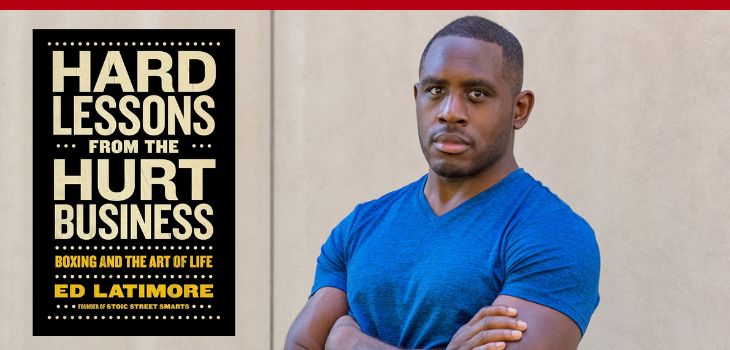
They also talk about Ed’s latest book Hard Lessons from the Hurt Business, the crisis of masculinity in modern society, and the importance of structured challenges for personal growth. Whether you’ve ever thrown a punch or not, this episode will hit home if you’re navigating life, adversity, or a new chapter after 40. Listen now!
Today’s Guest:
Ed Latimore
Edward Latimore is a best-selling author, former professional boxer, and influential voice in personal development and digital branding. Known for his raw, insightful takes on discipline, emotional mastery, and self-improvement, Ed has built a loyal following by sharing the hard-earned lessons he’s learned both inside the boxing ring and through overcoming personal struggles.
Connect to Ed Latimore
Website: edlatimore.com
Instagram: @edlatimore
LinkedIn: Ed Latimore
X: Ed Latimore
YouTube: @EdLatimore1
Books:
Hard Lessons from the Hurt Business: Boxing and the Art of Life
Not Caring What Other People Think Is a Super Power: Insights From A Heavyweight Boxer
Sober Letters To My Drunken Self
You’ll learn:
- Why Ed decided to return to boxing at age 40
- What combat sports reveal about identity, purpose, and growth
- How masculinity is evolving—and what strong men need now
- The mental side of training, aging, and staying sharp
- What inspired Hard Lessons from the Hurt Business
- Ed’s approach to writing, speaking, and personal reinvention
- The surprising health fixes that improved his performance
- Why embracing adversity is the real path to fulfillment
- And much more…
Related Episodes:
The Secret To A Happy Life with Ed Latimore
How to Leave your Comfort Zone and Enter your ‘Growth Zone’
Links Mentioned:
Connect with Ted on X, Instagram, Facebook, LinkedIn
READY TO TRANSFORM YOUR BODY AFTER 40?
Watch my Lean After 40 free masterclass to discover how successful men are losing 15-20 pounds and building lean muscle in just 12 weeks—without weight loss drugs, time-consuming workouts, or giving up their social lives.
Podcast Transcription: Boxing and the Art of Life: How to Use Structured Challenges for Personal Growth with Ed Latimore
Ted Ryce: Ed. Super excited to catch up with you, man. It's been a couple years. You, you, you're a dad. Now, since we last spoke, you wrote a new book that we're gonna discuss called, uh, hard Lessons from the Hurt Business, boxing In The Art of Life. Uh, you just had a fight and people were giving you some crap about it because. Right. They're like, why are you fighting at 40? But,
Edward Latimore: uh, people don't understand, man, you know, the exchange with the guy. My, my bigger issue, you know, I can ex, I can deal with like someone being genuinely concerned, but it was, it was the way he expressed it, which did not come off like it was concern. It was like, bro, what do you like?
He literally said, bro, I'm like, come on, man. Like, and like, we don't follow, he doesn't follow me either. Like, it's not like he's one of the, the followers, it was outta left field. And I was just like, you know what? At first I hadn't even take it a certain way. I was just like, you know, you, you mistake my motivation.
I'm not fighting for money. Um. And I guess I should, I could have said that, but I was, I was peeved that he, you know, came in and acted like it. It, it always bugs me. One of the things that's always bugged me on social media. Is when someone decides to come in and, and talk to me like, I don't know what I'm doing about my life.
You know, you, you kick your tips about social media, but when you come and telling me, you know, I've, I've lost friends in real life when they trying to tell me who to follow, and I'm like, you outta your mind, like, like, we're not doing that. You can tell me you don't like that person. We can just not discuss them.
But when you start telling me who I gotta listen to or who I gotta follow. That's a, that's a dead situation as far as I'm concerned. 'cause now you, you've, you've expressed what you think of me, whether you think of that consciously or not, you think that one, I'm gonna just like battle what you want to do.
Like I'm not an adult with my own discernment. And two, you, you're, you're calling into question. My ability to discern people and let me figure things out. Like we can, we can just kill that. But also, uh, someone, you know, coming and trying to tell me. Or, or imply that like, I have not thought about the risk of something.
Like I'm just some dude that hopped into the ring randomly at 40. Like, like, like, like it's, it's, it's so presumptuous. I think that was what, what an annoyed me about it too, is it was, it was presumptuous, like, like there's not training and like, I don't know what I'm doing and like, I haven't weighed out the, like, it, it was, it was fairly annoying and I thought, I mean that's why I asked for feedback because I thought I handled it.
Better than a lot of people would. And I also did the,
Ted Ryce: uh, it's just you, I think what you're talking about too, it's, it's good for people to know, like what you're talking about. We are, we're, if you want to call us both content creators, I, I'm really more of a coach, but I've. Learn how to create content to market myself and also educate people.
And you actually kind of a fun fact that maybe some people either don't know or don't remember, but you kind of tutored me on, on, uh, or mentored me, uh, on writing. And, um, yeah. So don't take, uh, if you're out there, uh, we we're very, very, let's say, selective. About the content that we put out. Everything is very well thought out.
I mean, in my case, maybe you fire from the hip sometimes, but I would even imagine if you still do that, it's still very, very, uh, selective, right?
Edward Latimore: Well, what's happened in terms of that and how the, the creation process has evolved, at least on my end, is like, I'm, I'm very clear on what my, what, what, what I want to do.
I want to make social media. Not worse. I can't make it. I mean, I can do my best to make it better, I guess. And that's kind of what I do. So that means like the tweet is not like, like there's some things I won't even touch, like even with a, with a retweet and a funny comment because I don't wanna, you know, put gas behind that for people to see it.
I can make people laugh or teach 'em something that's like most of my con, not all, that's all of the content. I don't, I don't do the rage bait. I, I think I've become even more disgusted over the years with how people use. The divisions in society to grow their engagement and to grow their following. I, I just don't want any parts of it.
I would, I would much rather, you know, have a, a clean conscience. And when I say clean conscience like. You know, if, if I don't get as many followers, 'cause I don't have a hot take or I don't make my stance clear or something that's cool, like I, I can deal with that. I don't, I don't care. Like, I don't, I don't, at the end of the day, you gotta, there, there's a real relationship you have to have with the audience.
I am eternally grateful for my audience. And if I had the time, and I still try to, like anyone sends me a message, knows I respond to the message. I, I could have shut my dms off a long time ago and no one would think I was crazy for doing that. But I don't do that because I want people to be able to communicate even, you know, even if the occasional troll gets in with a random threat behind an, an anonymous picture, whatever.
All the other people I met and, and the businesses brought me too. Um. Is great for, so I say all that to say I love my audience and the people in it, and anyone who decides that I'm worth following or whatever at the same time. I still gotta live my life like it's my life. And one of my cardinal rules is like, you, you're not just gonna come and, you know, stink up the joint or try and try and control or, or move or do anything like that.
So I have the all, I have to also have. Same detachment online that I have in person. You know, I'm, I'm the guy that I can, I can stop talking to my family. I don't talk to 'em now. My mom was alive. If I had to be like, we're not talking for a minute. You got, you gotta be on ice. Um, that's fine. And that, that type of boundary, I think has kept me psychologically very healthy.
Not just the real life, but. Online. And so look, you know, every, every now and then, I, I would rather err on the side of, at least in this particular instance, I, or this particular kind of scenario, I would rather err on the side of establishing my boundary and how I'm gonna behave than. To extend grace. Now, I'll never, but, and I think I can do that because I don't come off like, I don't throw names and I'm not disrespectful.
I never forget that there's a person on the other side of that scream. But at the same time, you're gonna remember that I'm a person and, and it's clear that I'm a person. Like my, my face said, and name is out there. And if you can't, can't behave, man, I'm gonna, I'm gonna tell you about yourself and if you can't take it.
That's cool.
Ted Ryce: I like to fight. I'm not a fighter, but like when people, it's like, cool, I, I was, you know. Like, and that's kind of what we're, we're, we can kind of segue into, right? Because I think that combat sports like Boxing, jiujitsu, MMA, Muay Hai, it really, I think it does two things. And I, and I, I want to hear, you know, I haven't had a chance to read your book yet.
It just kind of, right, uh, we, we wanted to get you on the show. But like it does two things. One, you feel, for me, I feel the need to throw around, throw to, I don't feel the need to throw around my weight because I need to test myself. 'cause I, I, I know who can kick my ass. I, I get my ass kicked all the time by guys who are, oh man.
Some of the jujitsu schools here with, um. Multiple world time, uh, multiple world champions. And um, and then the other thing is like, yeah, you just kind of like, you kind of see where other people are coming from, especially guys. I think guys are in a bit of a crisis. Um, some, maybe not my clients, but a lot of.
Well, my clients maybe have health crises, but like a, a confidence crisis, like a way to, you know, spending too much time online and trying to, you know, get dominance and dominate other people online when, you know, you and I are just kind of showing up and Yeah. Make it, we're, we're trying to run a business.
Right. That's really kind of where, kind of why we're there, right?
Edward Latimore: Yeah. You know, look, look, look at the, at, at the end of the day, I mean, I think people are gonna be people, and what I mean by that is that. We're like, um, we're like a conquering species. Like, like we need something to be attacking us or for us to attack.
There, there needs to be a sense of conflict and if you remove that conflict, uh, we find something else. One of my favorite books, the Epidemic of Absence You Explore is like the rise in food allergies and the the author posits with the research to support the argument. That the reason the food allergies and that, that as a country's GDP rises, as does its incident of food allergies.
And the, the, the, the TLDR oversimplified version of this is that. A higher GDP generally means the country is cleaner and has access to better processing or more processing, you know, depending on your perspective. And so the immune system is, is left with fewer things to work on, but your immune system doesn't go, ah, you know what, I'm gonna take the, I'm gonna take this, this generation off.
Nah. It just goes, I gotta attack something else. And so you end up with autoimmune disorders and that's, that's what a food allergy is. It's, it's a, it's effectively a chronic or, or an acute, uh, symptom of a chronic autoimmune disorder, right. You are, you can't eat this protein and, and tree nuts mess you up.
That's me. I'm allergic to tree nuts. You know, who knows if that would've, uh, if I was born a hundred years ago, I'd still be allergic to tree nuts, but I'm here. My son's looked to tri nuts too, which is crazy. They told us it wasn't genetic, but you know, lo and behold, man, he's got the exact same allergy.
It's crazy. But, but yeah. Uh, we, we need it. My my point in bringing that up is that we're, we're, we're kind of built for this, this conflict, but I also go just 'cause you could, doesn't mean you should, and so you need to, we, we gotta find healthy outlets to redirect that. I don't think every guy's meant to be in.
I'll fight. I, I don't, I don't think most people are meant to fight. And of the ones who are meant to fight, some of them people ain't got the, they don't know how to turn it off. So sanction bouts ain't for them. So we got a place for those people. Prison for those of you not, not able to figure that out.
But, but, uh, but of the, of the, you know. But there's a competition aspect. Like I know some people that like, they, they, they never played an organized sport in their life, man. But they're, that, that trivia them. Board games don't, man, they don't play about them board games. The, the rules are rules. And to me that always seemed crazy, but I understand it because wherever you get your sense of, of proving yourself against entropy is where you're gonna get it.
But once you find a place to get it, you, you tend to tamp down other places, like, so back to that crisis of men. I think that's one of the biggest, biggest pieces right there in that crisis of men is that, uh, systematically there are fewer and fewer outlets with this competition to take place. And, and that doesn't just mean, you know, recess is being cut back, for example.
That that's certainly one place, a physical outlet. I always talk about how God's today. Uh, if, if you wanna talk to a girl today, if you're born after like 2000, you'd be 25 today. That's crazy. Oh. But, um, that means, or if you were born in the year 2000, well you, you never had to, you know, you never had to like, ask a girl out in person and you never had to call our house and you never had to like.
Deal with being shot down in her face. You just sliding the dms and I don't care how bad she lets you down in the dms, it ain't as bad as her. Like the, the worst, the worst put, the worst let down in the DM is still better than the best, uh, than the best let down in person. It is just not the same. And then all the steps you gotta go through, see, and, and there's a bunch of research about how the younger generations are taking fewer risks.
You might be familiar with. How, uh, gen Z drinks way less than any other generation, and I'm, I'm, I'm not a means justify the end type guy. But one of the reasons why they're doing this is they're not partying. So, okay, they're not drinking, but they're also not socializing. They're not meeting, you know, the, the rates of sex for this generation are, are through the floor because there's no risk, there's no, there's no outlet.
But that outlet, it, it doesn't go away. Just like your, your immune system doesn't go away when you get rid of the pathogens that it had to, to fend off just to keep your ass breathing. You're gonna find something else. And I think online. Trolling is one of those places. Uh, and even if it's not trolling, I think it is, it's.
It's 10, 10. It, it, it's like a weird, constant state of passive aggression. I've noticed o one of the things that I tried to do when I was asking for feedback about that message is I wanted to hear the ages of the people who, and, and along with their response, 'cause that, that told me a lot. My initial hypotheses was the younger they are, the more they lean toward hasad because it, it seemed like a young guy type response based on my, my, um, experience and, and for the most part.
Uh, that was directionally accurate, but not to the extent that I thought it would be more, um, a lot of the older people, you know, actually kind of saw a fault on both sides, you know? Yeah. Sometimes you can be the bigger guy and just step back, but, but I, I think, I think that part of my personality is just the day you catch me.
And when you catch me, what I'm thinking about doing and what the is going on. So, you know, I didn't escalate it to like a full blown manual f you and calling them names. That's not me. But I'm also, you know, I'm going to point out how this is an odd response and yeah. Competition, conquer, you need it.
Ted Ryce: Yeah.
And it needs to be put into the right. Arena, like you said, and let's talk about your book. So why'd you write this Hard Lessons from the Hurt business? So the, the kind of story of the
Edward Latimore: book is, I just, just thought it was time to write another book. I figured that, you know, I, I've seen the success of authors who have a way less interesting story than me, I think.
And I said, you know what, I can, I can do this. I can put out a book. It'll just be a cool piece of intellectual property. I'll, I'll be like, in my head, I'll be like, verified, um, by having a publishing house and an agent behind me. And, and all that stuff has so far come with some pros and cons. I mean, we still haven't published the book, so I'll see what the, what the next year looks like.
But. When I initially started writing a book, I thought I, you know, I was gonna write a book about boxing and kind of how it relates to life, and it was gonna be detached. I wasn't gonna be part of it and nothing like that. It was gonna be kind of the, this treaty about why boxing is, is great. My agent, who my, my agent took one look at my proposal and was like, yo, this is not the book you need to be writing.
After he did some, did, did a look into like who I was. My life was, and he's the one that, that how he reworked the proposal, this is key here, how he reworked it. Um, it, it, it got a great deal and it got everyone excited. So I start writing the book still Thinking with I'm, I'm writing that kind of book, sort of.
Um, but I had a flash. I said, how am I gonna start writing this? And I started writing. Just an autobiography of sorts. And I got up until I started boxing and I realized this ain't the book they want. So I started writing that other book, right? Little more detached. You know, I make some more, some of my story in there, there's some research and stuff, and it, it actually ended up teaching me quite a lot that I didn't know because I had to do so much research and then I turned, I turned the draft in at the end.
I put those five chapters at the beginning that I wrote up to boxing, and then I amended it to the rest of this book. It was, you know, this, this mix of different themes from boxing. The agent loved it, right? I mean, not agent. My, um, the, the, uh, acquiring editor at Penguin. He loved it. He was, I'm getting texts saying he'd be like, he loved what I put down.
He was really excited. I'm asking my agent, I was like, yo, is Howard does he say this to all the authors or is he really excited for real? He's like, no, Howard's pretty, pretty solid. He really likes this. Uh, and then crickets, I didn't hear nothing, and then I got the feedback back. The official feedback written down and it hit me what I was supposed to do.
I failed the assignment. I was writing a memoir, but no one told me I was writing a memoir and I got it. Funny story, brother. All along in between like me getting that feedback back and the next draft and the meeting, I guess I, they, they had, they have these meetings behind closed doors and stuff where they're just talking about the different authors and the projects coming up with the house.
And I got told, they were like, okay, they, we need a subtitle for your book. We need something soft though. 'cause hard Lessons from the Herb Business is kind of a, a harsh title. We wanna soften it up. What do you think about boxing and the art of life? And I hated it. I wrote back so fast like. Yo, I don't know what you're thinking.
Shove this. We got, I got a bunch of other ideas, yada, yada, yada, yada. And then I went through the feedback a little more, realized what I was Right. Supposed to write. And then, you know, 'cause they pushed back it, it's a bit more of a collaborative process than people. I mean, I don't know how it used to be, but I know the Penguin is, is a bit on the cutting edge and the author collaboration seems to be very important to them.
So they, they weren't going to push, they weren't gonna go along with it if I wasn't like 100%, but they pushed back 'cause they felt strongly about it. But after I got the, the feedback, I said, you're exactly right. That is what we need. That's a great subtitle. No more questions from me because it really fits what I was trying to do.
And, but yeah, from, from a pure, like why I wrote it in the, in the simplest way to, to elevate me and my brand and move to the next level, I'm, I'm starting to understand and have a lot more faith in what I offer to the world because I haven't always had that. That's one of the reasons why I put so much energy into learning.
All the social media and SEO and teaching now because I'm like, no one really wants to like hear the Ed Latimore story. Um, and I'm starting to have faith, you know, not just 'cause of the book, but like documentaries and what people call me in to speak on. I go, okay, no, I've, I've got something incredibly unique and powerful.
Let me start organizing things around that, like my speaking and my, and this book. So I look at this book, but not just as a. It's a crowning achievement because I, I tell people, writing the book is really the easiest part, and it is, doesn't mean it is easy. Um, especially, you know, my son was, we moved, I had got, he was like, he wasn't even a year old man.
He slept like shit. It was just, it was terrible. So I was like walking around like a zombie, trying to find little bits to write and think, because you gotta think for you write and writing is part of thinking, so you gotta build on this time to edit. I was just, I was exhausted for most of the writing process.
I got through it and worked it out and I'm, I'm, I'm just, just proud of that. I'm, I'm more proud in terms of like things I've done. There's like my kid, but, but you know, I didn't really do anything impressive there yet. We'll see what he grows into. Uh, and then this book,
Ted Ryce: yeah. Very cool man. And, and I love the, the description where you talk about like the discipline of boxing served as your rite of passage into manhood.
And um, you know, with the idea that women, once they hit puberty and they're responsible for. Getting pregnant and, you know, having babies and making that decision. And that's a big discussion right now in our, in, in our country guys. We don't have like any turning point, right? It's, it's go to school, go to college, get a job, get married, become a dad.
But you know, kind of like how you just referenced. You, you did kind of the easier part with your son, for example. You, you have to wait to see later. And it's like, but a lot of guys, at least I grew up thinking this way. Like, no, I, I, I make money. That means I'm a man or, you know, I have a career. But the reality is like, we need a little bit more.
Like, uh, how some of these, like the, I think it's the za. In, in West Africa, hunt a lion, you know, and, um, I, I'm like drawing a bit of a blank of rites of passage, but, uh, you know, Spartans with what they ha went through in ancient Greece and anyway, so like we don't have that in modern times. Can you talk about like, how.
You viewed or you view the process of learning boxing as like how that was a rite of passage for you and, and what people listening right now can take away from that.
Edward Latimore: So, you know, there's, there's like, uh, three aspects to boxing in this regard. There's like, there's this, the, the, the conditioning aspect.
You have to get your body to a point where it can sustain the workout and sustain the um. Energy demands because, you know, boxing is an anaerobic and anaerobic sport. You gotta be able to do both. You need metabolic flexibility of the highest degree. Otherwise, you, you, you smoke, you won't be able to do it then.
There's the skill, learning how to punch defense hands, you know, head movement, stuff like that. And then there's the other part, the third part that no one talks about. And we can best sum that up by kind of saying, or what I like to say is that, you know, you can do one of two things, but you can't do both.
You can, you can live like a normal person and, and eat like a normal person and, and, and party and relax like a normal person. Or you can be a good fighter. You cannot do both. What, what it, what it takes to like, like even this, this, this training camp, which was
Ted Ryce: Do you mean professionally or you're just like, even if you're doing it casually,
Edward Latimore: I mean both.
I mean, even as an amateur, you know, as a casual person, sure. But the more seriously you take the sport, the more seriously you have to take the sport. And, and the sport is going to demand things from you emotionally that you perhaps did not know or the cause of doing business. Uh, a great example of this is you, you just need to put so much time into it, so much time, and if you're not prepared to give that time up, you can't get good.
Then that's just the act of time. You gotta recover. If you're not recovering, you're gonna gradually be worn down and you won't do well. You've gotta, the way regular people eat you, you can't do it. It just like, like even as a heavyweight, you, I mean, I guess you can, but you shouldn't. You gotta be smart with how you eat.
Then you gotta realize that you know how you deal with people. It's gonna make a big difference because especially as you're coming up, unless you're a superstar, and even then it's gonna matter. These people are gonna support your career. So you gotta learn how to deal and interact with the crowd and how you manage your public persona.
'cause nobody wants to support an asshole or a criminal or degenerate. They wanna support, you know, forgetting any stereotype a person might have about a boxer. The only way you succeed at the local level, which is how most of us have to go to get to anything beyond that. You have to be involved in your community to some degree you like.
Like if, if you're a loner and people don't like you, you will always be the B side, which means you will always come in as a guy who they know won't win this fight, and they will use you up until your record is too bad to to be worth paying you anything to comment. That's the reality. So you have to learn the people thing.
You have to learn the reputation management. You have to learn the self-discipline and the self restraint. All of these come together. We haven't even got to the fear part. 'cause there's like the fear of getting hit, whatever. That's easy to deal with. If you stick around for more than one sparring session and one boxing match is an amateur probe, congratulations.
You've conquered that fear. You might still be afraid, but now you know, it ain't really anything to be afraid of. It's the, uh, the psychological torment. And that's the only way to describe it, is it's like a torment. Waiting until you get called up to fight. Then you go to fight. Everybody's looking at you.
'cause that's what people do. They look at not the thing that's the center of attention, but the fight. If you're on a football game and a fight breaks out in the stand, guess where you're gonna look every time. It doesn't matter if there's the game winning drive, people gonna turn their head if they hear some punches being thrown.
Um, that's how it's,
Ted Ryce: it's very true. Yeah. So
Edward Latimore: all of this comes together. And you have to learn to manage yourself in a way that is just not expected today. And you have to do it knowing that there's a good, I mean, you, you can lie to yourself, but eventually the reality of the situation comes in. Um, you have to do it knowing that there's a good chance it's not gonna be worth it other than what you get internal.
You're probably gonna get hurt in the meantime too. Like, uh, if, if you manage to make it through unscathed from a camp, congratulations. This was probably the first camp I made it through Unscathed. And that's only, and I, and I bet it's because I, I wasn't in the gym every day. I couldn't be, I got family now and on top, so, so I was only getting up to the gym three, maybe four days a week, you know?
But, you know, you know, one of the positives that really has come out of the, how of this return is that those four days that I'm there, and when I'm there, it's not more than two hours. I am so zoned in, I got a solid routine. Every moment is used and, and I'm getting better each time 'cause I know what I'm supposed to work on, which is like a big difference between then and now is now.
Uh, you know, or then I didn't, I knew there was things I needed to learn and get better, but no one could teach them to me because it had to do with like my base athleticism and how you use your hips and coordinate all that. Once I figured all that out in between like now and then that eight year period.
Everything I was taught I could just throw on. No problem. Uh, it, it was actually really impressive and I got a lot of help too. From some, from some great. Um. One of the sponsors of the, of the Fight, actually Rebel Health Alliance. They, it's, it's this telehealth concierge service. I recommend everyone check 'em out.
Uh, but their, their doctors recognized for my blood work that I've been dealing with a, a form of hypothyroidism my entire life, which is not, not pure hypo, I don't think they have a name for it, assuming I don't have Graves disease, which I don't think I do. But, um. I have incredibly high reverse T three, like chronic all the time, like way higher than it would be if I was just fasting for a long time or on a carb restricted diet.
So it's super high and my free T three is like not on the floor, but lower than it should be. And so what that did was that put a full break on my metabolism and I would be watching myself like counting calories, like I'm just not. I'm not slimming down. What is wrong here? I got on Leo Thine once they diagnosed it.
Leo Thine 25 and and for people who don't know that, that's artificial. T three, I got on that 25 micrograms per day. In 10 days, maybe I shed almost 10 pounds and I a total of 15. But like I walk around now at two 15, uh, and, and pretty easy. And I'm like, like in, in great shape. And it was all 'cause of this thing I've been dealing my whole life.
Same with my, um, my breathing. I had asthma as a child, but um, I thought it went away. Turns out it doesn't really go away. It's kinda like herpes. It's just like, you know, popping outta nowhere. And so I monitor my blood, uh, my COP, not my COPD. We'll get to that monitor my blood and my CO2 levels just keep creeping up and up.
And finally they get into the CO2 range or into the COPD range. And I'm like, okay, this is dumb. I can run like two miles, like a, like a deer. What's wrong? Turns out my lungs are just inflamed. I got on a daily inhaler. I had no, and I had one at an is an amateur, but I, I stopped using it as a pro. And so, you know, with my metabolism fixed and my breathing fixed, I'm, I'm in, in great shape, mean you saw the picture.
Sometimes when I look at that, like, like I actually didn't realize I was that, that lean. I, I, I looked at the picture and I was like, yo, I got like abs just showing for no fucking reason. That's cool. Didn't know that was happening because it's not like, because I had made a decision to not try and cut. I said, well take this fight at heavyweight and see, because the plan is to come back at Cruiser 'cause I'm only six one.
And look where I'm naturally walking around at two 15. Not, not, not, I don't want the smoke from somebody. 6 6 2 42 45. And that's like their athletic weight. I
Ted Ryce: don't, I don't need that. So, ed, are you back in boxing? You didn't do this fight as like a one off to kind of
Edward Latimore: No, not just a one off there. Too much time, dude, this dude as a one off?
No. Um, I, I have, I have a thought process here and the thought process goes roughly like this. I know a lot more. I am still in great shape. I have this incredible record that I can cash in on 'cause I understand the business of boxing. I'm actually surprised no one has come out of the, out of the woodwork yet.
We'll give it a few weeks. It'll probably take one more fight saying, Hey, why don't you come fight this guy for 20, $30,000? And it's not about the money, it's about the press that comes with it and how that's going to help me with everything else. And I get to prove and see that I'm, that I'm doing something really cool.
Um, I want to test myself. I wanna see how far this can go, especially with what I know now that I didn't know. And how it's made sparring and training so much easier. It's made the gym fun. It'll really help with book sales too, the book sales and everything related to that. Uh, over the next year, I that I hope to build myself into a 20 to $30,000 speaker and, and do that once or twice a month.
I believe that I have the story, the ability to tell it and the credibility to go along with it. To make all that happen, but just in case people, you know, they, they forget who y'all are. I'm gonna go fight again because, 'cause that's, that's cool man. I'm, I'm lucky I get a chance to use this gift and this gift is, you know, one I gave myself with sobriety, not drinking is really, I mean, it really put the brakes on, on the aging pro.
Like, I look at people who are my age and I'm like, we're just not the same species. Um, not even close. On top of that, the other gift that I had no control of, which is this genetic profile, which is, which is great. I mean, I'm, I'm healthy, I'm moving. I've been aligned with the right people. One of the things that, that did not exist the way it exists now, when I filed before.
What I can do with the internet and sponsorship and I didn't have the audience I have now that's gonna really play heavily into the cards, I think. I think pretty much what I'm doing is, is I'm going to try and get out of boxing what I meant to get. But the technology and the infrastructure wasn't around yet, and I didn't have the audience or, or the, or the following, you know, before when I fought, I was just the guy who fought and I was in school, and now I got this physics degree.
Now I got this book finished. Now I got this huge following on, or, or at least a decent sized following on, on four different platforms. Now I've got, you know, you can look my name up and see a bunch of other stuff. Now it's like I'm a guy who fought. Before I was a guy who fought and there was some other cool stuff about me.
Now there's all this stuff about me that's like set in stone and I fight. It's a very different ball game and it opens up a lot of different opportunities. I think that that's kind of the plan.
Ted Ryce: No, and I agree with you. I'm especially in the age of AI where. Just everything is getting, uh, my business partner, there's like this AI video of this elderly woman being interviewed by this younger guy.
I don't know if you saw it, but he's like asking her questions and she's like, well, you know, I found my husband when I was 25 and he was 75. Like, it, it, it was all ai, but it looked so real, right? And I was like, this is not real. And she's like, are you serious? And what, why bring that up is because. Because I, I'm kind of getting back into speaking as well.
It's like that's the thing where it's 100% if you're stepping in the ring, if you're stepping on stage, it's real and it's something to really connect to versus like. Who's even writing their stuff. I mean, I know you hand, hand write your, your tweets and, and the things that you write and, uh, you know, I use AI to help, but I go in and make sure my tweets are my voice ultimately and the things that I want to say.
And so what I, what I mean by that is like, I think, I think that's the way forward, unless you're gonna double down on. AI content or you know, just mass produce nonsense and, and go that route. You have to build a human connection, is what I'm kind of trying to say. And yeah. And people, how, how many more times do you think you're gonna fight?
Are you just gonna take it match by match or take fight mass by match and see where it goes? That's cool, man. Well, I thought it was great. I mean, you know, the, um. If you're healthy and you didn't take a lot of like the, the thing with me in boxing, 'cause I did a little bit of it. Never, you know, n never very seriously.
But it's like the, the concussions, you know, that's the thing that I'm, uh, more concerned about with, with striking sports. Yeah. But, uh, you know. Yeah, man, if you're, if you take good care of yourself and you, and you're not training like crazy Right. And or training improperly.
Edward Latimore: Yeah. You know, and, and the cool thing too is I've learned a lot about how to deal with that aspect too.
Like if, if I take a headshot, I took a headshot one time in sparring a few months ago, and I just took the week off. I didn't do anything. I was like, because I'm not beholden to anyone, which is nice before, you know, I get injured. I, I need to fight. I gotta, I gotta get paid. I got a contract to fulfill. Nah, not this time.
I don't, I don't have to do any of that. I can sit back and be like, I'm hurt. Let's chill out. But, um, I get to, I get to like really be in control and have a good time and, and do what I, the other thing too is one of my dreams was like to be writing and fighting, like, and then I guess I was doing that, but like, what, with a book out.
It's a reality. It's, it's cool.
Ted Ryce: Yeah. Very cool man. And I, it's so interesting what you said where just taking some time off and being in the position to do that. Because I think about Muhammad Ali when, uh, you know, when, when he was still around and like the shakes from the Parkinson's. And then, um, I don't know if you know, do you know who, uh, Hickson Gracie is from the Gracie family?
Edward Latimore: Yeah. Yeah, I know Hickson Gracie. Yeah.
Ted Ryce: Yeah, he also got, um, Parkinson's recently, and although he wasn't a boxer, I mean those guys with the Valley tudo and the MMA, the old school days, right. It's like a lot of head trauma and uh, they didn't take time off. Right. Those, those guys, man. But that's cool. That's cool.
Are you doing anything other than taking off to like maybe working with Rebel Health or they. Doing anything specific to like, I don't know, fortify your, your brain, anything like that? Well,
Edward Latimore: you know, one of the interesting kind of downstream effects from their, um, recommendations is I got a baseline MRI, which is something I never did.
I just went and got a baseline MRI recommended by a neurologist who had to fill out the form for me to be cleared to fight. And so now I got this base and I'll be able to see now, you know, this is what I look like. Now let's see where it goes in the future. And, um, it's a, it's a good time. I am, I am excited about everything because, because it's.
You know, I was, I was, you know, working on some stuff with my, in the gym one day, and my coach said, what are you doing? I was just like, you know, dancing in between sets. And I said, you know, I realized two things. One, I realized, you know, really what the secret of the movement is and that that's a, a discussion or something that a friend of the Tom, but that's the base that I put all the new knowledge on.
And the other thing I realized is that no one cares. Like, like no one, no one has high expectations for what I'm trying to do, except me. And that's, that's refreshing. Like no one cares. I mean, they might care now because they, 'cause I'm, I'm doing a lot with the publicity that I got from it locally. And, and, um, I'm gonna, that's actually one of the things I need to take a note to do, to like, send this, send this, this piece out that was written by a Post Gazette and, and get that out so they can learn more and see more and be interested in like, doing more with it in, in different outlets.
But that's, um. At now.
Ted Ryce: Yeah. Cool Ed. Well, man, I'm, I'm super psyched for you. I think it's cool. Uh, just I've been flirting with the idea. I just got my black belt in Jiujitsu after. Oh, congrats man. Thanks, man. After 20 years, most people get it in eight to 10. Oh, hey, well look man, one. I didn't graduate from college until I was
Edward Latimore: 33.
Ted Ryce: Yeah. And, and my story was, I was doing quite well actually. I got my blue belt in a year, my purple belt in a year. I was winning a lot of competitions and people were thinking like, you know, maybe I had it shot at being like one of competing in, in the worlds and that type of thing. But, um, just had too many injuries.
Was flirting with an MMA fight, but I got injured. In the process of training, and I was a personal trainer at the time. I was like, and there was no money then. No money. There's still no money in MMA now. Still no money, like at the lower end, but there was really no money. I've had friends of mine, they're like, Hey, what's up Ted?
Um, I got this fight coming up in two weeks and I'm selling tickets. I'm like, dude, you're not relaxing, recovering. You're hustling and trying to sell tickets. You gotta sell. That's that thing I was talking about. You gotta
Edward Latimore: sell those tickets. Did, did you have to do that as well? Oh, for sure. Always said.
That's just, you know, but, but you know, here, here's an example of something I have now that I didn't have then. Oh one, everyone uses the internet. Like we, we, um, before I was selling them tickets by Handman driving and hustling. Now, you know, it's, it's Venmo Cash app, Ticketmaster it one way or the other.
So that's easier. But the other thing too, because I've got this massive audience. Is, it's a lot easier to broker sponsor packages to cover the cost of a fight because you gotta pay for a fight, you gotta pay the, uh, the guy fighting. You gotta pay for 'em to get there, even if you don't fight for anything.
And it's a lot easier to just get a sponsor to do this. And if you can pull that off and it's, it's easy for me. I've got, um, I, I've just got a lot to offer a sponsor. In terms of, in terms of reach and, and association and recognition, it's easy, it's fun. That actually reminds me, I, I, I'm carrying this black notebook around because there, there, and in this period there are all these little things that I have to do and.
They're important. They're all important, but they're, they're so, like right now I'm up to number 67. I started numbering them and I, I cross them off when I do them a little bit at each nut time before I go to bed, and then I wake up early or whenever the babysitter's here. But between all the things I have to do, it's really important to make sure I write things down.
So that's done. And that way I won't, and so I can like forget about it. And then, you know what? That frees up. This is a great productivity hack. I have found, at least for me, when I have time to sit down, even for an hour, sometimes I don't feel like that's enough. And I was like, why is that? What's, because I feel like I don't know exactly what I gotta do.
Like if I'm not in the middle of a project. So if I just take notes throughout the day, the minute I sit down and just flip it open, look, okay, I can do that. Let's bang it out and get it done. It ends up being, being, you know, a lot easier to work with and a lot easier to do things.
Ted Ryce: Love it, ed. Well listen man.
Um, so, so your book's coming out on, it's available for pre-order right now is coming out on August 5th. August 5th, that's right. And so it's hard lessons from the her business boxing and the Art of Life. I'm glad you stuck with that subtitle. I, I really, I really get the vibe of it when you. With that subtitle, it's like, ah, you gotta, this is about really how to face life in modern times as like, uh, I don't wanna say as a warrior, but as someone, you know, we're so soft today.
Edward Latimore: Yeah. That's
Ted Ryce: what
Edward Latimore: I'll say. You know, but that's, I, no, that's not okay. Um, I almost said that's okay. What I meant to say. There's good and bad, right. Yeah. You know, it's good that we live in a world where we, we can be soft because Exactly. You know, look, I, I don't, I don't really, I get the tra thing. I do. I really do.
But I also know that is a case of only looking at the upside. Now, I, I was poking of this guy. He didn't get the joke because that's, you know, at the upside. He had a post up about how, how great it was in the 18 hundreds compared to the 19 hundreds or something like that, and I said, for who? You, I'm a black guy.
Like, he's like, ah, you know what I meant? I'm like, no, what you mean? I'm
Ted Ryce: like, what did you mean? I don't know what he means. I had a dude tell me one time, he is like, oh, yeah, you know, I, I was born in the wrong era. I should have been, I should have been like born in the Viking era. I'm like. Dude, you just probably would've gotten murdered.
Like, and you, you know, like, why do you think you're gonna be on, you think you would be on top? But the reality is, you know, it's a roll of the dice and you could very, uh, easily end up in a real bad place.
Edward Latimore: Look here, here's how wild, here's how hard some times were. I, I put together an essay and then a video on why we like the value of hard things when, you know, the earliest we were taking the census on this was like eight, was like 1880, so it was likely higher before then.
In 1880, the child mortality rate, the number of children who died before reaching the age of five was 47%. Basically coin flip. I was a coin flip if you're gonna make it to your fifth birthday or not. And, and just making it, that don't mean like anything good, that just means you survived from a metric.
That doesn't mean you made it in one piece or like you were healthy or you had food or water or anything. AC and refrigeration, what the hell is that? You know? But, but yeah, it's, um, there is a value in, in challenge, not, but, but we, we have to be smart about it and we have to be intentional about it now.
And I think that's one of the, the biggest. Of boxing is that the challenge is intentional. It's intentional. You step into it knowing it full well, um, what you're, what you're stepping into. But if you stick with it even just a little bit, you, you have to transform. But I think that's like all combat sports.
I, I'd imagine the same is, uh, true for Brazilian jujitsu.
Ted Ryce: Yeah, I could see like a really tough guy doing well. In boxing, but if you don't have any wrestling experience, at least. Even with like your buddies, like you're just, when I did Brazilian Jiujitsu the first time I was 20, 27, 28, I was deadlifting 350 pounds.
D uh, you know, I, I did mui Thai, I was kickboxing, and you know, I was a tough guy. I had a skinny 16-year-old just wipe the mat with me. After that, I was hooked. I was like, I gotta learn. I gotta learn this. This is like magic, you know? Yeah. It's awesome, man. It's, it's, it's a skill. Yeah, it's a skill, you know, it's a skill boxing too, you know, at the, at the more, let's say, basic levels.
It's like you're box, you're, you're blocking, you're punching, you're pairing. And, but you know, like, uh, it's, it's just, it's an amazing, it, amazing art, amazing combat sport. Yeah.
Edward Latimore: Yeah. It'll
Ted Ryce: change your life if you
Edward Latimore: let it. Percent, you gotta let it change your life. A lot of guys, you know, you can. Like I said, you, you, you can be a good fighter or you can be a good regular person.
You can't be both, and, and that's not a negative, uh, or at least that should not be viewed as giving up something. You, you are giving up something, but what replaces it is just superior and, and every measure.
Ted Ryce: Absolutely couldn't agree more. I think if you're a guy and you haven't found that ch, that masculine challenge yet.
Combat sports or where you should start. And the good thing about some of these is that you don't, even if you do boxing, you don't even necessarily need to spar. Right? When I was doing Muay Thai, for example, when I was living in Thailand, uh, I, I spar sparred very little. I just wanted to hit pads and get in shape.
I was a juujitsu guy. I was, i'll sparing jiujitsu or do little MMA style stuff, but you know, I'm not, like, if we boxed, you would just, it would not be good for me. Not be good. Wouldn't be able. With any skill boxer, to be honest, you know, I'm, I'm not, not good at it at all. You might surprise yourself. Well, I've done it before.
I know how, how bad I am. I can, yeah. Just, you know, uh, when I was doing kickboxing and stuff. But anyway, man, really excited. Uh, I think it's super cool. Looking forward to following your story and Ed, other than, uh, going to Amazon, which the link will be here and sending people to your. To your Twitter, um, where else should we ask people to
Edward Latimore: go?
You know, you, you can get the book on Amazon. You can get the book on Barnes and Noble. Somebody sent me a receipt the other day. You can pre-order and, uh, from Target, like you can, you can get the book anywhere. That's one thing the publishers do very well is distribution. As far as following me, interacting with me, Twitter, Instagram, YouTube, all Ed Latimore website is ed latimore.com.
And what else do I LinkedIn Latimore, so. Just, just check it out. I am, I'm everywhere on the internet. And um, that's why they used to let you sign. Let you, that's why they pay you to write books. 'cause they think because you're everywhere, uh, you'll be able to sell books.
Ted Ryce: There you go. Yeah. I'm also toying with that idea, although not about combat sports or, or uh, martial arts, but yeah, man.
Really excited for you, man. Looking forward to following the journey. I'll have all those links on the show notes page for this episode. And really great to reconnect Ed and, uh, just enjoying, just enjoying your, your forties, uh, comeback here.
Edward Latimore: Hey, man, thank you.
Ted Ryce: I'm, I'm enjoying it too. Awesome. Well, let's catch up again soon.
Sign up to receive email updates
Enter your name and email address below and I'll send you periodic updates about the podcast.