Most men over 40 don’t fail with nutrition because they lack discipline, but because they’re focusing on the wrong things.
In Part 1 of the 2026 Body Blueprint, Ted explained why most men over 40 age faster than they should.
In Part 2, he broke down why weight loss alone doesn’t equal health.
In Part 3, he showed how men should train to preserve muscle and strength with minimal time.
And in Part 4, he explained why cardio and cardiovascular fitness are essential for longevity—even if you already lift.
In Part 5, Ted tackles one of the most confusing areas after 40: nutrition. He explains how to think about eating for metabolic health, longevity, and performance without rigid diets, extremes, or giving up your social life. You’ll learn a clear, evidence-based nutrition hierarchy that cuts through the noise and helps you make smarter decisions that actually fit a busy lifestyle — and support long-term results in 2026 and beyond.
You’ll learn:
- Why lifting weights alone isn’t enough to protect your heart after 40
- Why VO₂ max is one of the strongest predictors of longevity and early death
- The biggest cardio mistakes men over 40 make that accelerate aging
- Why high-intensity workouts alone can backfire if you skip aerobic training
- How to build heart health in a time-efficient, sustainable way in 2026
What Ted discusses in this episode:
(00:00) Introduction
(02:30) Understanding VO2 Max and Its Importance
(04:35) How Cardiovascular System Ages
(07:08) Ted’s Journey into Cardiovascular Training
(10:07) The Importance of Aerobic Base and Zone Training
(21:11) High-Intensity Interval Training Explained
(24:37) Reversing Heart Aging: Key Study Insights
(26:00) Testing Your Aerobic Performance
(28:58) Strength and Cardio: A Balanced Approach
(29:45) Conclusion and Next Episode Preview
Related Episodes:
Your 2026 Body Blueprint — Part 3: How Men Over 40 Should Train for Maximum Muscle in Minimal Time
Links Mentioned:
Connect with Ted on X, Instagram, Facebook, LinkedIn
READY TO TRANSFORM YOUR BODY AFTER 40?
Watch my Lean After 40 free masterclass to discover how successful men are losing 15-20 pounds and building lean muscle in just 12 weeks—without weight loss drugs, time-consuming workouts, or giving up their social lives.
Podcast Transcription: Your 2026 Body Blueprint — Part 5: Nutrition After 40 Without the Confusion, Extreme Diets, or Quitting Your Social Life
Ted Ryce: Let me start by asking you a question. Are you confused about nutrition? Because if you're over 40, you've probably heard completely opposite advice from very confident people. One person says carbs are killing you. Another says, fat is killing you. Someone else is, says it's sugar or seed oils or gluten, or the antinutrients and vegetables, or breakfast or maybe skipping breakfast.
Look. You care about your health, but the more you listen, the less clear it becomes who you should trust. So look, in this episode, my goal is simple. Over the next, let's say 30 minutes, I hope to get it done In that time, I wanna help you understand how to think about nutrition for longevity, disease prevention, and even will touch performance.
We're gonna do it without dogma and extremes and without pretending. The science is more certain than it actually is. And if you don't know what I mean by that, you're gonna wanna stay tuned. So nutrition is one of the most argued about topics in health, and it's because. Of a lot of reasons people treat nutrition like a religion, and there is a lot of conflicting advice, a lot of conflicting research on nutrition.
And one of the reasons why that is, is because nutrition is really new science, unlike physics, which has hundreds of years. Or drug research, which gets billions of dollars in funding nutrition. Science is relatively young and underfunded. The kind of studies we'd love to run are basically impossible at this point, unfortunately.
For example, imagine trying to study longevity properly. You'd have to put people into what's called a metabolic ward, a controlled environment where every calorie they eat is measured. Then keep them there for years, maybe even decades, to see if chronic caloric restriction had an impact on, um, or fasting, had an impact on longevity.
And then what happens if it doesn't work? You just ask someone to give up 10 years of their life for an experiment that failed. I mean. At least we learned something, but that kinda research, it's just not realistic. So certainty is limited in nutrition, but that doesn't mean that we're lost because despite all the noise, clear patterns do emerge, especially when you look at the totality of data, the randomized controlled trials on human beings, and the epidemiological data that we have and the things that we see over and over and over again.
And so when it comes to longevity and Nutrition's role is pretty simple partly, and probably the majority of it is about prevention and the much smaller part. So the 80% is about prevention, and the 20%, let's say, is about optimization. I'm gonna be covering both. In this episode, but I want you to understand nutrition is one of our strongest tools to reduce the risk of the four major aging, threats, heart disease, cancer, metabolic disease, and dementia.
And once you understand that, a lot of confusion starts to fall away when you start to realize this is more about big picture, at least at the moment. Maybe in the future with AI and all the things that, all the breakthrough technology that we have, we're gonna get super certain on, Hey, you know what, you just lost like 10 minutes of your life based on, uh, you know, that because of the, the medium fries that you ate, for example.
But we have the certainty around nutrition, especially when you look at some of the people who've lived to a hundred and beyond. What their diets were. It's not as clear as you might think in terms of the specifics, but again, big patterns emerge. So let's start with a big picture framework. So to make sense of nutrition without getting lost in the weeds, I like to use a framework that I would call the big picture of Nutrition for health.
And what matters here is that it's a hierarchy and not a set of rules. The bottom matters more than the top. So if the foundation is broken, nothing else can save you. So at the base of the pyramid is energy balance. We'll talk about this more in depth in a second, but I just wanna break these down and just list them out for you.
Energy balance then comes macronutrients. That's protein, carbs, and fat. Then comes food quality and micronutrients then comes what you might call diversity of your diet. And then at the very end. Is meal timing and distribution and really sitting over everything is adherence and or sustainability. So most people like to argue about the minutia of nutrition, but longevity is determined by the bottom up.
So let's get into it. Let's talk about energy balance. So energy balance is the foundation of nutrition, whether you like it or not, whether you track your calories or not. And by the way, just in case you're not with me here, energy balance is how many calories are you eating versus burning? So this is where a lot of smart, well-intentioned people get stuck.
They focus heavily on food quality. They eat organic, they eat whole foods, they get their cruciferous vegetables. They know what sulfur AE is. They're uh, making sure they get plenty of healthy fats. They're doing all the right things, but they look down, they still have a belly. And look, if you're carrying excess body fat, especially central fat around your waist, that is an energy balance issue.
Even if you're eating avocados and drinking green juice and eating grass fed organic steak, cooking organic butter, all of that matters. But because you have excess body fat, your risk of diabetes, heart disease, and certain cancers and even cognitive decline goes up simply because you have an imbalance in your energy.
This nuance gets lost online. Now, look, a lot of people start getting into are, are you telling me that food quality doesn't matter? No, I'm not. But for most of us, we're not living on soda ice cream and Oreo cookies. Okay? And if you're listening to this podcast, chances are you're not on the Oreo and Cheeto diet.
Most of us are eating a mixture of. Good food or whole foods, let's say. And then we're also eating some processed and even ultra processed foods. Most people just, we eat a mix of stuff, some very health-promoting, some less so. And in that situation, energy be balance becomes the dominant, bearable. For example, I, I'll give you an example here.
I gained 10 pounds in two weeks of hanging out at my cousins. I ate good quality food, but way too many calories. And I've lost four pounds in two days, even though I had a hamburger and french fries yesterday. Okay, so energy balance, that's because of energy balance, hamburgers and especially the french fries.
I think we can. Some fitness professionals don't like to in, in the evidence-based community, at least don't like to label foods as bad or harmful, but fried foods are, are harmful. You should not be eating them for sure. But again, what matters most is overall diet. And in, in this particular case, how many calories you're eating.
And look, calories aren't a diet ideology. They're energy accounting. So what's called chronic overeating over years drives metabolic disease and overeating. This is where it gets kind of tricky, is dependent on how much exercise you're doing. You've probably seen some of the Olympic athletes, like I think Michael Phelps.
Uh, if you rem you know, you're, if you're listening to this podcast, you know, I'm sure you're old enough to know who that is. He was, uh, famous for saying something. He ate around like 10,000 calories a day when he was training, but he was training like three times a day or something ridiculous. I don't remember the specifics, but you've probably heard paces of that from athletes, especially endurance athletes.
And he was super lean, right. So another thing that's important here is being underweight is also dangerous. I'm not gonna talk about being underweight, but I just feel that it's always worth mentioning people who have eating disorders. There's a high mortality rate for those people. And the big issue is they're, they're, they're undereating and undereating, especially when done, or specifically when done as a child in development.
It can affect your brain development and you can be permanently screwed as a kid if you don't have enough calories. Now, in the US that doesn't happen. But if you look at what's happening in South Asia where there's a lot of food insecurity and people with not enough to eat, this is something worth understanding because it helps put our issue, which is overeating.
Into context, so look for longevity. The goal isn't extreme leanness. It's being lean enough to maintain metabolic health while still being well fed enough to preserve muscle. I wanna tell you something. The only way to know if your approach or whatever diet you're doing is actually working is to look at data.
You cannot tell yourself a story about how healthy you are just because you're choosing what you have. Been educated probably online as like, oh, I'm making good decisions here with my food choices. So the way you do this is you get a DEXA scan. What's your body fat percentage? If it's higher than 20, you've got work to do.
If you're a man, if you're a woman listening to this, I know I mostly market to men here, but if you're a woman, if you're over 25%, you've also have work to do if you want. If health and longevity is your goal, and it goes beyond that, blood work matters too. Let's say you're doing all the right things.
According to the influencers that you follow, but then you get your blood work done, and let's say you get your blood work done with me and I measure your fasting insulin and fasting glucose and, and calculate your level of insulin resistance, what's called the homa ir. I always forget the homeostatic.
Forget what the acronym stands for. But that is, that's how you detect insulin resistance 10 years before your fasting glucose and hemoglobin A1C start to show issues with blood sugar regulation. Also, what do your lipids look like? Because if you're cholesterol, some of these guys who do keto in carnivore and they lose a lot of weight, it's great, but if you look at their lipids, sky high cholesterol levels, like dangerously crazy high cholesterol levels.
Inflammatory markers are also important as well. Highly sensitive reactive protein, for example, although that could be affected by other things, not just diet or what we're talking about here. For example, oral health can influence highly sensitive reactive, uh, c reactive protein. So look, what I'm trying to say is it doesn't matter how clean your diet looks to you.
What matters is what does your data show? And another thing is that nutrition doesn't work in isolation. As we've talked about, you know, a little bit earlier, your training volume, your sleep quality, your stress levels, all of these influence how many calories you can eat, how your body handles them. But energy balance, in other words, how many calories you take in relative to how many you burn is the foundation.
Everything else depends on it. So now let's talk about macronutrients. So for those of you who don't know, just a quick re uh, reminder. For those of you who do know macronutrients are protein, carbohydrates, and fats, and some people also include fiber and alcohol, meaning like alcohol, like beer, wine, vodka, et cetera.
In this as well, because alcohol, you can actually live off of alcohol. That's not something we're gonna discuss here, but. You can look up the beer diet by, uh, uh, some guy lost a bunch of weight, just drinking only beer. Now you'll die if you do that long enough and you'll, you'll probably create some issues with your liver and the process, but just fun fact for you.
So from a survival standpoint, protein and fat are essential. Okay. If you don't eat enough protein, you will die again. Is that something you have to worry about? No, but people have died in the past when there wasn't enough to eat. If you don't eat enough fat, you will also die again in the modern West.
It's not a practical concern, but I think it's important context. Now it brings us to carbohydrates. You'll often hear low carb dieters say something like, oh, carbohydrates aren't essential for life. And it's technically true. You can live without them. And for some people, especially those who are significantly overweight or insulin resistant, hmm.
Lower car approaches can be effective temporarily. Long term carbohydrates, support, performance, training, quality, thyroid function, and overall sustainability. I mean, do you really never want to have bread, pasta, or pizza ever again? Uh, I don't wanna live like that. And here's a reality check. If you have a protruding belly, let's say you put on a fitted shirt and your med, your midsection sticks out while the rest of your body, it's, you know, relatively, let's say normal looking.
You've got insulin resistance. Almost certainly, even if a doctor gave you blood work and said, oh, you are normal, because most standard panels don't measure fasting insulin and calculate insulin resistance. So you can safely assume that if you've got that, if you got a a roundish looking midsection or super round midsection, central fat is accumulating visceral fat and not just visceral fat, but ectopic fat, which is the fat that accumulates.
Inside your organs, right? So protein deserves a special emphasis as we age, because here's the issue, you may have heard with longevity that there's studies showing protein restriction helps with longevity in mouse models. Uh, ter Longo, the Longevity Diet. Uh, he was the person who popularized this, uh, as far as I know, at least.
In terms of like the research backing this up, but here's the issue. Those of us in the US and you know, modern western world here, we're not dying because of we're eating too much protein, we're too fat. We're too inactive. And then even those of us who maintain a, a decent weight as we age, like again, going back to my dad's situation, I talked about my dad, how he lost his ability to walk, how, how he's walking with a cane, and then he was in a walker and then he was in a wheelchair.
We're suffering from muscle loss and frailty. And if you look around at the, let's say if you're lucky enough or blessed enough to have your grandparents or your parents still around, they're, uh, hopefully they're in great shape, but if they're not, you can probably see they're really struggling to get around and do things that they used to do quite easily that you and I can do easily.
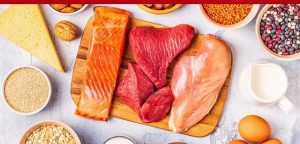
So, muscle loss accelerates if you don't actively fight it. And muscle is mostly about lifting. Protein is important too. So how much should you eat here? Practical guideline is 0.8 to one gram of protein per a pound of body weight. So that's if you're normal weight for me, that's what I would do. But if you're overweight or obese, what you can do is, is bring it down towards the 0.8 range and lean individuals.
If you're lean or lean ish. I'm lean ish at this point after, uh, two weeks in Texas eating barbecue and bacon, and I ate a lot of vegetables, but every vegetable dish had bacon in it, so yeah, so you can stay closer to the upper end. So remember, protein works best when paired with resistance training. You cannot build muscle just by eating more protein.
You need to train. Diet alone does not preserve muscle. So let's move on to food quality and micronutrients. And listen, when I talk about calories so much, I do it because I feel like it's the message that isn't getting through people's heads. How do I know that? Because when I talk to people, or people ask me questions online, on various social media platforms, it's like, man, too focused on the miners when if you're fat, you need to lose the fat.
Okay? If you got a belly, you gotta get rid of it. Your, your diet quality, it does matter. It's not saying, I'm not saying that it doesn't. For example, zinc deficiency can cause low testosterone. So many people are deficient in magnesium, vitamin D, which typically you don't get from. Diet can also be low, but food quality does matter and it matters for satiety.
In fact, a great thing to look at is the satiety index. If you wanna pause. This episode and go look that up. Food quality matters. When it comes to fat loss, the most important thing for food quality is satiety. One thing that drives me nuts about low carb people is they'll say something like, oh, carbs make me crazy.
If I eat carbs, then I'll eat more carbs. It's like, yeah. And how do you do when you snack on cashews? Because I don't know about you, and not everybody's like this, but most people are like this. If you gimme a bag of cashews, I'm gonna eat the whole thing. And it can be quite a large bag. I'll just sit there, I'll grab a handful, I'll munch on 'em.
And then it quite, it didn't really satiate me. It didn't get rid of my hunger. So I'll grab another handful, then another, then another, then another, and I'm down the whole bag and it's 800 calories. And you know what? I'm still hungry. So the satiety index is something you should look up, especially if you're in a fat loss phase, because it will heavily influence your hunger levels while you're trying to lose fat.
It's the number one thing that sabotages people is hunger and also cravings, but it's not just satiety, it's the micronutrients as well. So in wealthy countries like the United States, Canada, most of you are. 'cause we see the statistics. Most of my listeners are in the United States. So outright nutrient deficiencies are rare.
That's why it's important to get your blood work done because you can catch, for example, I had a, a client who had anemia. He needed more iron. How did we know? Because we looked at his blood work. And um, iron by the way, is one of those things you need to be careful with. You can really hurt yourself if you're, if you're have, uh, if you get too much iron in your system, it'll damage your organs again.
So outright nutrient deficiencies are rare. That's why it's important to test though. One of the reasons why that is, is because you can walk into a grocery store and buy almost anything year round. So the question isn't usually whether you're getting nutrients. It's whether you're getting enough variety and protective compounds over time, and this is where the idea of eating the rainbow actually makes sense.
For example, red foods like tomatoes and watermelon provide lycopene. That's a, a compound that's found to fight cancer. Green vegetables provide folate and sulfur containing compounds. For example, broccoli and other cruciferous vegetables like watercress have sulforaphane in them. That's something if you have a cancer risk like I do, I have a, uh, genetic risk for prostate, uh, not prostate.
Thank thankfully, uh, colon cancer. You better believe I'm. I'm trying to get Sul, uh, so sulforaphane or cruciferous vegetables in every single day. Purple foods like blueberries, for example, have anthocyanins, which is a type of polyphenol. You can also eat purple potatoes if that's something you're into.
But that's what give the polyphenols are what? Give that purple color white foods like garlic, onions, and shallots contain unique sulfur compounds as well. Orange foods like carrots and squash provide carotinoids, so you don't need to be obsessive here. And it's not clear like the. Of like, how much should we have for Optimum Health?
We're just not sure, but the more you can vary your diet, the better. And so. Rotating colors over weeks and months, increases micronutrient coverage. Right. How does that factor into longevity? We're not exactly sure, and there's some things that I would eat all the time, right? The cruciferous vegetables I would eat daily.
And again, a lot of this is supporting longevity through preventing those four big issues, heart disease, cancer, metabolic disease, and dementia. So the issue with. Varying your diet is that it's much easier to eat the same meals all the time than to focus on varying your diet. But if it's something that you can do, go for it.
Okay, so let's talk about meal timing. So meal timing is real, but it's contextual. For example, we, uh, intermittent fasting, we know that if you fast and, you know, there's so many types of intermittent fasting, I should probably just, uh, I'm referring to what people mostly refer to or what they're talking about when they, they bring up intermittent fasting, which is the 16 eight.
So you basically, you skip breakfast and you eat all your food within an eight hour period. So. What we know is that's just a way to control calories. There is some research showing that, um, skipping dinner instead of breakfast is way better for metabolic health. Makes a lot of sense. Probably not important if you're active enough, but again, how would you know that you have an issue with this?
You would have your blood work done, you'd have a DEXA scan or some other type of body fat test to show like, Hey, what I'm doing is working so. Another thing we know is like back 20 years ago, I was scared if I didn't have a protein shake after lifting weights. I thought it was like, oh, within 30 minutes I better have this shake.
And so I would always do it. Now we know that anabolic window is long. Okay? That's, that's that anabolic window, meaning if you don't eat enough within a certain amount of time, it's going to cause, let's say, less than optimal results with your training. So most people don't need to sprint to a protein shake after training.
What you need to do is make sure you eat within a couple hours of training and eat within a couple hours of training. Now, if you're an athlete. Timing matters more when performance is important. For example, there's research showing that delaying carbohydrate intake for several hours after exercise can reduce next day high intensity performance by roughly 30%.
So let's say you're doing like what I used to do with Juujitsu. I would train multiple times, like I would train consecutive days. This is something I, I should have been doing, and it would've helped a lot with recovery and performance because if you've ever done multiple days of high performance or high intensity exercise, you feel like, whoa, I am.
I, I was performed like a beast yesterday, but today I'm just like, wow, I'm like 30% worse, right? Feels more than 30%, but. So this matters a lot. Another thing is, if I have, if, sometimes what I'll do is I'll structure a workout program where I lift weights, and then the next day I'll go and do juujitsu training.
And in that case, you better believe I'm having carbohydrates as soon as I am slamming a, a post-workout shake. ASAP, and it's gonna have carbohydrates in it to help with recovery. Now listen. If you have a belly, you should be, not f you should forget about the focus on timing. You should be focusing on getting lean and training hard.
Okay. Really important because if you're one of those people, you have a belly, you lift weights and, and you grew up in the same time that I did. Where you thought something like your, your workout was gonna go to waste. If you didn't slam a, a protein shake after training, then. You've probably been doing that.
You don't need to do that. You need to eat fewer calories, get into a deficit. Focus on the deficit. Don't focus on performance. When you are in a calorie deficit, by the way, your performance can take, it can drop, and that's okay. As long as you're losing body fat. So you have to earn the right to optimize performance.
This is so important. Uh, this is what I do when I work with clients who are athletes. I really, I, I talk with them. If they're not, you know, getting paid to compete or if they don't have a big event, race, or competition scheduled, it's like, let's get you lean, because that's gonna optimize performance too.
Because if you're carrying around a lot of fat. It's putting excess strain on your system and if you have a lot of fat, you are probably even having some apnea at night and that's messing with your recovery and everything else. So it's really important to be strategic in the sequencing of this. So. Now let's talk about sustainability.
Can you keep up what you're doing? Because if you can't, let's say you found like the perfect, let's say you work with a nutritionist and they gave you the perfect meal plan that suits all your goals, and you follow it for six weeks, and then you give it up. Guess what? You wasted your money. You wasted your time.
I mean, it's okay to experiment if you're just saying, oh, let's see if I can do this. But if you were like thinking that it was the answer and then you gave it up after six weeks, it you, you just wasted your time. That's why when I start working with a client nutrition, I try to change the energy balance and other things first, and I don't change what my clients are eating as much.
I change the amounts of what they're eating. I tweak the amounts of what they're eating, but I, but I'm very slow to. Make drastic changes to their food choices because so many people think, and this is a big issue, is you think that, oh, uh, here's the way I eat right now and I really like this way of eating because that's why I'm doing it.
But here's this other perfect way of eating, so I need to stop eating the way I'm eating right now and do this perfect diet, this perfect way of eating. And that's what I really need. To be in great health and to have the body I want, and that's not the case. You don't need to do that, and it usually fails.
So nutrition sets the terrain training, provides the signal, sleep and stress determine whether the signal sticks. So if you're eating well, but sleeping poorly or not doing enough exercise, or if you're training too hard, but you're chronically under fueling, um, resilience breaks down. And so that's what I have to say about nutrition.
- Now let's talk about supplements, and this is really important supplement. I'm gonna say it to you like this. People buy too many supplements. They don't use blood work to determine whether they should be taking the supplement or not. Yes, supplements can help, but they don't override habits. Okay? So if your calories is protein, sleep.
Daily steps are in the gutter, supplements aren't gonna save you. Now they can help though. Right. And with that said, there are a few supplements with solid human data that support. What you might call longevity again, if we're viewing longevity, uh, as I talked about earlier, we don't have like long-term studies like, Hey, we did a 50 year sub, uh, a supplement study and this showed, this supplement really helped people, uh, live longer.
Right? But if we're talking about avoiding heart disease, cancer, metabolic disease, and dementia. There's a few that can help. So here's a, what might be a shocker for you? My number one longevity supplement is fiber. Now, a lot of people say, well, but can I just eat? Uh uh can. Can't I just get this from the diet?
Look, it's probably not, unless you have the perfect diet, because you have no social life or you're only hanging out with other fit people, which is probably not the case. It's not even the case with me. I go out to eat. Look, you're not going to eat enough fiber. So what I love to do. Personally is I take 15 grams of a fiber supplement a day.
Now this don't overthink it. It can be cilium husk or beta-glucan, and we're talking about soluble fiber, not insoluble fiber, right? So that's really important too. So why do we do it? Well, it'll improve gut health. It'll lower your LDL cholesterol. It'll improve your glucose glucose control. Most adults don't even come close to adequate fiber intake.
So another foundational supplement is creatine. Now, in the past it would be three to five grams per day, but what we do now is more like closer to 10 grams per day. And I think research will be coming out that shows you should probably be basing your creatine intake on your weight. But. We're still waiting for that to happen.
So right now I take 10 grams a day. If I'm sleep deprived, for example, I just flew back, if you can hear me. You know, kind of, uh, right. Uh, if, if I sound a little off, I flew from Texas to Brazil. It was a long travel and three hours time difference. So that's like going from Miami to California to San Diego, let's say, or back.
And yeah, I'm not feeling great, so I took 20 grams of creatine today. It's super safe unless you have some type of disease, of course, get your get checked out by your physician, but it's one of those things that everybody should be taking and there's only a reason not to take it if one, you just hate taking supplements or two.
Because, let me just expand on that some. Some of my clients, they hate taking supplements. They hate taking pills. They want the least amount of pills possible. So yeah, 10 grams a day. You can bump it up to 20 if you're sleep deprived or if you have a concussion. There's some interesting research on creatine and concussions where if you're, again, taking 20 grams a day, it can help.
It helps with brain function. It's really interesting. Also, Alzheimer's. There's some interesting research there. It's not huge, but. All in all, creatine is something that can give you a boost in the gym and a boost during times where your sleep is not a hundred percent or if you're suffering from some cognitive decline.
It's also we're trying a, a higher dose. Again, talk to your doctor to figure this out. Or health provider. Another one, omega threes. I don't know about you, but I do not like eating fish. I don't like it. Every once in a while I have some salmon, but mostly I eat chicken, yogurt, red meat, steak, ground beef, right?
But fish, I have a really hard time ordering fish and uh, if you're like me. Then you definitely want to supplement with omega threes because it, there's a very good chance you're not getting enough. Of course, you can run the Omega-3 index. That's something we do with our clients. So without blood work, a general range is one to two grams per day of combined EPA and DHA is reasonable for most people.
There is some. Interesting research showing that there's a connection between atrial fbri, can't even say it. Atrial fibrillation. A, well, I'll just call it AFib. So if you have a history of AFib or if there's a family history of AFib, you really want to talk to your doctor about the pros and cons. Now let's talk about magnesium.
It's one of the most common deficiencies even in the modern world, and you have to be careful with supplementing with minerals, generally speaking. But magnesium tends to be quite safe. Again, quite safe. There are conditions where you need to watch out if you have kidney disease. That's one that comes to mind, but.
For most of us who are, let's say, focused on health, and we don't have like any outright disease, magnesium is a solid thing to take. So taking, and by the way, magnesium comes in different forms. My favorites are magnesium glycinate or magnesium ate. Why? Because, uh, glycine is. Glycine and to eight are both amino acids.
They're called conditionally essential amino acids. So I, I, I have a hypothesis that we're not getting enough of glycine or toine, so this kind of just helps. And magnesium always has to come with something, right? You never just get magnesium. You get magnesium chloride. Magnesium oxide, by the way, stay away from the oxide form.
Very common, especially in magnesium blends. It's just super cheap. Supplement companies make a lot of money because they're selling you something super cheap and you think you're buying some special magnesium blend when they're just using it as a way to make more money and give you a lower quality product.
So you want to take something in the range of 300 to 400 milligrams per day. I've seen studies going up to one gram per day, but yeah. Three to 400 seems to be pretty safe, right? I like taking it before bed because it supports sleep quality, muscle function, nervous system regulation. So yeah, magnesium is a go-to.
It's something I take every single day. Now, have you ever heard of beta-alanine? Well, if you ever taken a pre-workout and then got this weird tingles in your skin. That's from Beta Alanine. It's called parasthesia. The effect, uh, and it's harmless by the way. Even though it can feel, it, it, it makes you feel itchy or weird.
And if you do any type of intervals, 'cause we talked about the intervals. If you're just lifting weights and getting steps in, you don't need beta alanine. But if you are doing intervals or if you're doing any type of sport where, like I do Brazilian juujitsu, it's quite challenging metabolically. So it gets you cardiovascularly, right?
Gets you outta breath, huffing and puffing. And so any type of exercise that you're doing. That puts you into that. Out of breath, muscles burning, feeling beta alanine can help with, even if you're doing high reps in lifting, that would probably work too, if you're doing 20, 25, 30 reps in your sets, which I typically don't recommend doing, but in case you're doing it, it can help with that too.
But especially if you're doing any type of higher intensity cardiovascular training. So what do you take three to six grams is what the research says. I always try to do more, but you're probably getting most of the benefit by taking three. Another one is El Citraline. So El Citruline supports blood flow and helps exercise performance.
And also if you're a man and you feel like you know, your bedroom performance isn't what it used to be, taking six grams of citruline per day can really help. So those are like the, now there's other things that are conditional. For example, if you're jet lagged, melatonin can help. But I don't recommend that you use melatonin to fall asleep.
It's better to take glycine and magnesium and chamomile t and l-theanine. So there's different, depending on the situation. I mean, we, I could do a whole episode just on supplements. I didn't want to do that this time. Maybe if you're interested in that, I can really get into the weeds on supplements and what I take and what I have my clients take, but.
Just keep this in mind. Everything that you take supplement, supplement wise should have a specific purpose. So if someone's just telling you, Hey, this is really great to take, if you can't show, in effect, a, a lot of supplements don't have any research on them. A lot of supplements have these proprietary blends that are complete bs, right?
So you don't even know if you're getting the amount of active ingredient that's important. So everything should be based on your goals, blood work and other things. Okay? And you should treat it as a time-limited experiment because guessing is not a strategy. So listen. We've talked a lot about this. This was the longest episode so far.
I try to keep it as tight as possible, but there's so much to cover. But I hope you took away the big principles here, right? Uh, and these are things that you know, matter no matter what. Okay? No matter what type of diet that you go on, the energy balance is gonna be important. The. Macronutrient breakdown is gonna be important.
Doesn't matter if you're doing well, let's not say carnivore, but let's say keto or carnivore is just too crazy. It's just an elimination diet. But keto, Mediterranean, it doesn't matter. Like, you know, paleo, all of this stuff is gonna matter. The food quality. Uh, if you're doing keto, you don't want to be eating the keto junk food, right?
There's a ton of keto junk food or keto ice cream. You don't want to be eating that stuff. You can run into the same problems. Even though you're on a keto diet, so there's nothing special about the keto diet. It really is about these or, or any other diet. It's really about these bigger principles, so keep that in mind.
Now, in the next episode, we're gonna talk about lifestyle factors, sleep, stress, recovery, that decide whether any of this actually works because. If your sleep is off, or stress is too high, it's gonna affect your recovery. You're gonna be pushing yourself in the gym, you're not gonna be making good progress, or it can disrupt your appetite.
So you'll be trying to follow what I outlined here, but you find yourself defaulting to bad habits when it comes to nutrition, even though you know what to do. So a lot of that sleep. And stress driven. So stay tuned for that next, because again, longevity is never built in isolation. Hope you enjoyed this and see you on the next episode.
Sign up to receive email updates
Enter your name and email address below and I'll send you periodic updates about the podcast.